Allegations of Abuse and Exposure to Extreme Cold
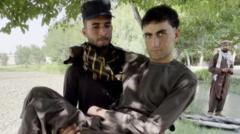
A group of a dozen young Afghan men and boys, all under 25, have come forward with harrowing accounts of their experience attempting to reach Europe in January. They allege that Turkish border guards subjected them to beatings, stripped them of their clothing, and abandoned them in sub-zero temperatures near the Iranian border. According to their testimonies, at least 20 individuals from their larger group of 50 migrants succumbed to the cold, and 11 of those who spoke to the BBC, including a 13-year-old, later required amputations due to severe frostbite.
“I raised my hands - they felt light. Both had been cut off,” Shahsawar, 21, recounted, describing the moment he awoke in a Kabul hospital to discover his amputated limbs. “My throat closed up and I couldn't speak.”
Detention and Forced Labor Claims
The migrants reported being apprehended in the eastern Turkish city of Van, where temperatures had plummeted to -15°C. Shahsawar stated he was detained upon entering the city, after which border guards allegedly lined up and beat the migrants. He described being held for several nights in a warehouse with snow falling inside, provided only with water and dry bread once daily. Alwaldin, 23, added that they were forced to perform manual labor, such as carrying wood and clearing snow, during their detention.
Violent Encounter and Abandonment
A particularly graphic incident was described as occurring on January 25. The migrants claim they were again lined up and beaten with iron bars by border guards. They were then allegedly stripped of their clothes, had their hands tied, and were forced to crawl on their stomachs towards a hill. Alwaldin stated, “Some people’s heads were broken and blood was flowing over their shoulders.” With only trousers remaining, they were reportedly released in groups of eight, pushed through barbed wire towards Iran on a stormy night with heavy snowfall and poor visibility.
Shahsawar recalled seeking shelter by a large rock, where he was joined by 13-year-old Asim and another migrant, Ahmed, whose hands were already frozen. Tragically, Ahmed reportedly died in Shahsawar's arms. A social media video from the following month purportedly shows Asim being found in the snow, wet and frostbitten, by other migrants. His gesture towards Shahsawar’s location is credited with saving Shahsawar’s life.
Delayed Medical Care and Amputations
Following these events, the migrants sought assistance in Iran but claim they were denied hospital treatment. On January 29, the Afghan embassy in Tehran announced efforts to aid migrants stranded on the Iran-Turkey border. Four days later, the group was transferred to Afghanistan, where the severe frostbite had already caused parts of their bodies to turn black. Shahsawar and ten others underwent amputations in a Kabul hospital, as timely medical intervention for frostbite was no longer possible.
Official Responses and Broader Context
When approached for comment, Turkish authorities did not directly address the specific allegations made by the migrants. However, the foreign ministry asserted that Turkish border forces comply with national and international laws, providing necessary assistance, including medical care, to detained undocumented migrants. They also stated that allegations of ill-treatment are unfounded and undermine Turkey's efforts in combating irregular migration, emphasizing the country's human-centered approach to migration management and its success in halting irregular migration flows to the EU.
Migrant rights activists, such as Şafak Bozkurt of the Van Bar Association Human Rights Centre Migration and Asylum Commission, noted familiarity with similar push-back incidents and cases of hypothermia in the region. Zakira Hikmat, a Turkey-based activist, highlighted an increase in such reports since the Taliban's takeover in Afghanistan in 2021, suggesting that heightened border surveillance has pushed migrants towards more perilous routes. Mahmout Keçen, another activist, pointed out that the mountainous terrain often used by Afghans for irregular entry into Turkey necessitates crossings in dangerous weather conditions, and he has documented numerous cases of alleged ill-treatment, push-backs, and denial of asylum access around the Iran-Turkey border.
Source: Original Article