
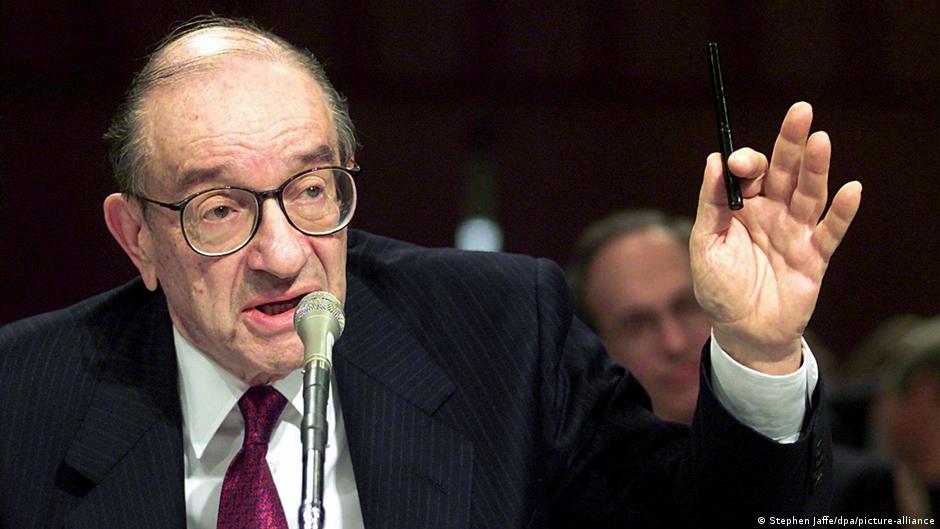
A Complex Figure in Economic History
Alan Greenspan, whose career spanned a significant period in American economic policy, remains a subject of considerable discussion. Serving as the Chairman of the U.S. Federal Reserve for nearly two decades, from 1987 to 2006, Greenspan presided over an era characterized by substantial economic growth and technological advancement. His leadership during this period earned him a reputation as a masterful steward of the economy, frequently lauded for his ability to navigate complex financial landscapes. However, his legacy became inextricably linked to the global financial crisis that unfolded shortly after his departure from the Fed, leading to a re-evaluation of his policies and their long-term implications.
Greenspan's tenure was notable for its emphasis on market-based solutions and a generally hands-off approach to regulation, particularly in the burgeoning derivatives markets. This philosophy was rooted in a deep-seated belief in the efficiency and self-correcting mechanisms of free markets. He was often credited with skillfully managing several economic challenges, including the 1987 stock market crash, the Asian financial crisis of the late 1990s, and the dot-com bubble burst. Under his guidance, the Federal Reserve frequently employed interest rate adjustments as its primary tool to influence economic activity, aiming to strike a balance between curbing inflation and fostering growth.
The Maestro's Communication Style
Beyond his policy decisions, Greenspan was also well-known for his distinctive communication style. He developed a reputation for delivering highly nuanced and often deliberately ambiguous statements, particularly during congressional testimonies and public addresses. This approach, sometimes described as 'Greenspeak,' was often perceived as a strategic way to avoid committing to specific future policy directions, thereby maintaining the Fed's flexibility and minimizing market overreactions. Journalists and analysts frequently found themselves dissecting his every word, searching for subtle clues about the Fed's thinking. This enigmatic communication became a hallmark of his public persona, contributing to his almost mythical status as 'the Maestro' of the economy.
Economic Stability and Growing Concerns
During the 1990s, the U.S. economy experienced a prolonged period of expansion, often referred to as 'the Great Moderation,' characterized by low inflation and stable growth. Many observers attributed this stability, at least in part, to Greenspan's judicious management of monetary policy. His supporters pointed to his proactive measures in cutting interest rates during times of economic uncertainty, such as after the 9/11 attacks, as evidence of his responsiveness and effectiveness.
However, beneath the surface of apparent stability, some economists and critics began to voice concerns. They argued that Greenspan's low interest rate policies, especially in the early 2000s, might have inadvertently contributed to the formation of asset bubbles, particularly in the housing market. The rapid expansion of mortgage lending, often involving complex and opaque financial instruments, was facilitated by an environment of easy credit. The lack of stringent regulation in these emerging financial sectors became a point of contention, with some suggesting that the Fed, under Greenspan, did not adequately address these growing risks.
The Shadow of the 2008 Financial Crisis
The global financial crisis of 2008, which erupted just two years after Greenspan's retirement, significantly altered the perception of his legacy. The collapse of major financial institutions, the widespread housing market crash, and the ensuing deep recession prompted a critical re-examination of the policies and regulatory frameworks that had been in place during the preceding decades. Greenspan himself acknowledged in later testimony to Congress that he had made a 'mistake' in assuming that financial institutions would adequately protect shareholders' equity, stating that he had 'found a flaw' in his ideology concerning the self-regulatory capacity of markets.
Critics argued that Greenspan's philosophical commitment to deregulation had left the financial system vulnerable to excessive risk-taking. Specific points of contention included the Fed's decision not to regulate derivatives, its stance on subprime lending, and its failure to intervene more decisively in the burgeoning housing bubble. While the causes of the 2008 crisis are multifaceted and involve numerous actors and factors, Greenspan's role as the long-serving head of the central bank placed his policies squarely under the microscope. The crisis served as a stark reminder of the interconnectedness of global financial markets and the potential for systemic risks to emerge when oversight is perceived as insufficient.
Reassessing a Complex Legacy
Today, Alan Greenspan's legacy remains a subject of ongoing debate among economists, policymakers, and historians. He is remembered as a towering figure who guided the U.S. economy through periods of remarkable prosperity and significant challenges. However, the shadow of the 2008 financial crisis undeniably complicates his narrative, prompting questions about the balance between market freedom and regulatory oversight. His story serves as a crucial case study in the complexities of economic governance and the profound impact of central bank leadership on national and global economies.
Source: Original Article