
New EU Entry-Exit System Causes Significant Delays
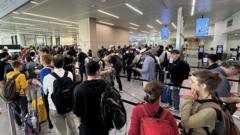
Aletta von Massenbach, the head of Berlin Airport, has voiced serious concerns regarding the new digital Entry-Exit System (EES) implemented by the European Union. She stated that non-EU nationals arriving in Berlin are experiencing queues of up to two hours, a situation she deems "not bearable over the summer." Specifically, at a terminal handling Ryanair and Wizz Air flights, waiting times can range from one to two hours, according to her statements to the BBC.
The EES, which became fully operational in April, requires travelers from outside the EU to register biometric information upon entering most European countries, with checks conducted upon departure. This system aims to modernize and enhance the security of EU border controls, intending to streamline travel in the long term. However, airports and airlines are reporting that the system is not functioning effectively, leading to significant disruptions.
Operational Challenges and Passenger Impact
Despite the European Commission's (EC) offer of additional support, the system has faced criticism. While it has performed adequately in some locations, numerous reports highlight prolonged waiting times at passport control, particularly during peak travel periods. Some passengers have even missed their connecting flights due to these delays.
Von Massenbach pointed out that a key issue is the fragmentation across EU countries, with each member state utilizing different sub-systems. She noted, "There are so many sub-systems for each and every member state... We see that the complexity doesn't really support smooth processing at the border."
First-Hand Accounts of Travel Disruption
Anne Robinson from Dunbarton shared her personal experience with the EES, which has deterred her from future European travel this year. In June, she and her 13-year-old son, Jack, missed their return flight from Rome due to the system. Upon their initial arrival in Rome, they endured a 90-minute wait in queues. For their departure, despite arriving three and a half hours early, they encountered numerous non-operational EES machines and waited another 90 minutes. By the time they cleared control, they had missed their flight, incurring an additional £250 for a replacement flight two days later, which her travel insurance did not cover.
Industry Calls for Contingency Measures
The EES digitally tracks the entry and exit of "third country" nationals, including British and American travelers, within the Schengen free movement zone, which encompasses 29 European nations. However, industry bodies like Airlines UK and Airlines for America have criticized the inconsistent rollout of the system.
They urged the European Commission and member states to seriously consider contingency measures and assess the realism of the current timeline, especially with the impending summer travel peak. Steve Heapy, CEO of Jet2, described the continued pursuit of the policy as "baffling" given its flawed implementation. He suggested that pausing EES checks where systems are not ready would significantly improve the experience for holidaymakers.
Von Massenbach mentioned a recent "very high level meeting in Brussels," indicating that authorities are beginning to comprehend the urgency and unsustainability of the current situation. ACI Europe, an airports lobby group, has written to EC president Ursula Von Der Leyen, reporting that peak waiting times at border control have reached up to five hours, with concerns that conditions could worsen. They warned of "half-empty planes at gate closing time, while passengers are stuck in border control queues."
While countries can suspend EES checks under certain conditions, ACI Europe advocates for proactive suspension when high passenger volumes are anticipated. An EC spokesperson stated that efforts are being made to minimize the EES's impact on non-EU travelers. The spokesperson attributed issues in some airports to member states failing to provide adequate border guards, infrastructure, and automated equipment, reiterating the EC's commitment to offering continued support for the system, particularly for the upcoming summer period.
Source: EU border delays 'not bearable' over summer, warns airport boss