Hydration Breaks: A Timely Intervention for England?
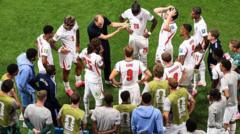
During a recent World Cup last-32 match between England and DR Congo, hydration breaks, often met with public disapproval, appeared to play a pivotal role in England's turnaround. Initially, England was trailing by a goal within the first seven minutes and exhibiting a subpar performance. These mandated stoppages, effectively dividing the game into quarters, provided England's coach, Thomas Tuchel, with crucial opportunities to address his team.
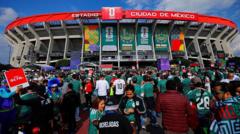
The first break allowed Tuchel to regroup his players, who had been struggling. The second break also coincided with a surge in England's momentum, leading to two goals from Harry Kane in the final 15 minutes, securing a 2-1 victory and a spot in the last 16 against co-hosts Mexico.
"I don't agree with them but it has come at the right time for England," remarked former England striker Alan Shearer. "You can see Thomas Tuchel going around all his players because not one of them has put in a performance yet. It has been slow, too many errors, they've been too open and been punished. It has to get better."
Tuchel's Strategic Utilization of the Breaks
England's statistics before the first hydration break were notably poor, with zero shots and touches inside the box. Following the break, their performance improved significantly, registering eight shots and 20 touches in the area by half-time. A similar pattern emerged in the second half; before the three-minute stoppage, they had two shots and seven touches in the box, which increased to six shots and 13 touches afterward, resulting in Kane's two decisive goals.
During both breaks, Tuchel was observed animatedly instructing his team, with players appearing receptive to his guidance.
"I make the most of it," Tuchel stated, despite his general dislike for the breaks. "I enjoy football more when it plays out with momentum and players and teams have to find their way into it in these kind of momentums. It is a free-flowing game that is more interrupted than I thought. But they are here, why would I not try and take advantage? I felt today it was easier today to speak to players, they were very calm, very receptive."
After the second break, England adopted a more aggressive stance, pushing more players forward, finding space on the flanks, and demonstrating increased urgency as DR Congo players visibly tired. Forward Eberechi Eze acknowledged the impact, saying, "At times it can sort of change the momentum and give you a bit of time to breathe. Of course, we were on the better side of it this time, but it's part of the game."
Fan Perspectives on Hydration Breaks
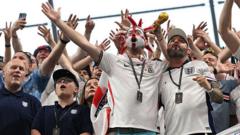
While coaches like Tuchel have recognized the tactical utility of these breaks, fan opinion remains divided. A common criticism revolves around the perception of increased commercialization, with broadcasters often airing advertisements during these intervals. Some fans also question the necessity of breaks in moderate temperatures or air-conditioned stadiums, though FIFA maintains they will occur in every game for consistency.
An England supporter in Atlanta expressed skepticism about their impact on the turnaround, suggesting the team's realization of potential elimination was a stronger motivator. Another fan noted that the breaks can be a 'factor' that shifts momentum, depending on the team's current performance. Conversely, one supporter endorsed the breaks, believing they universally benefit teams by offering coaches a chance to strategize and alter the game's dynamics.
Source: BBC Sport