The Global Spread of Eucalyptus and Its Implications
As regions across Europe and other continents grapple with increasingly severe wildfire seasons, an Australian import, the eucalyptus tree, is drawing significant attention. Celebrated for its rapid growth and profitability, eucalyptus has been extensively planted in monoculture plantations across more than 90 countries, covering an estimated 22 million hectares globally. While these plantations form a crucial part of rural economies in areas like Brazil, Chile, California, India, and South Africa, their ecological impact, particularly concerning fire risk, is becoming a pressing concern.
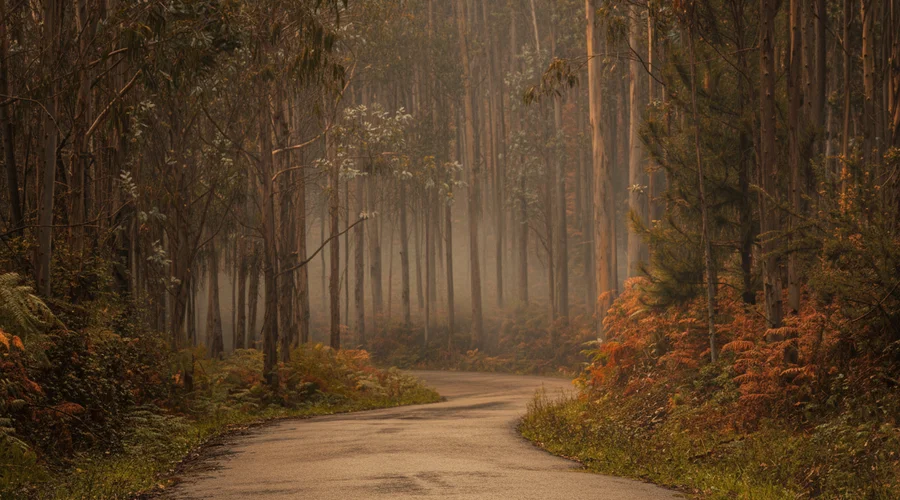
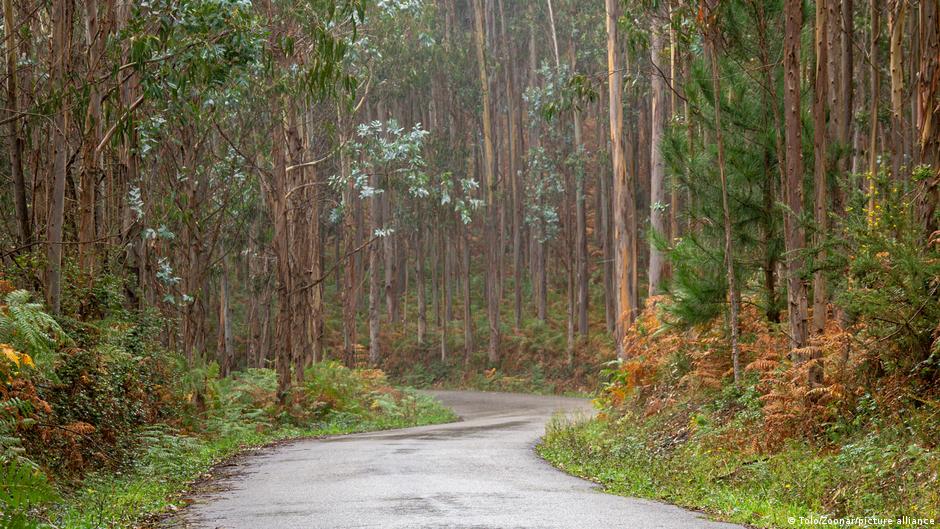
In Spain's Galicia region, for instance, vast swathes of land along the Camino de Santiago pilgrim route, once home to native oak and chestnut, are now dominated by eucalyptus. This transformation, driven by the pulp and timber industries, mirrors trends seen worldwide where the tree's economic benefits have led to its widespread adoption.
Eucalyptus and Elevated Fire Risk
Despite their seemingly innocuous appearance, dense eucalyptus forests are considered highly flammable, especially during periods of drought. Scientists emphasize that while eucalyptus trees do not ignite fires independently, they can significantly amplify their intensity and spread once a fire has started. Tim Curran, from Lincoln University in New Zealand, notes that eucalypt forests are among the most flammable globally. Introducing them into new environments can drastically alter 'fire regimes,' influencing the intensity, frequency, and heat of wildfires.
Several characteristics contribute to this flammability. Eucalyptus leaves contain highly combustible oils, and strips of bark can ignite and travel long distances as burning embers. This phenomenon was starkly evident during Australia's catastrophic Black Saturday fires in 2009, where embers reportedly traveled over 30 kilometers ahead of the fire front, sparking new blazes. In regions like Galicia, eucalyptus's rapid growth — maturing in just 15 years compared to over 80 for native species — allows it to quickly re-establish after fires, gaining a competitive advantage and further expanding monocultures, thereby perpetuating a cycle of increased wildfire risk.
The Galician Experience: A Case Study in Uncontrolled Expansion
The proliferation of eucalyptus in Galicia traces back to the 1970s, with a significant surge in plantings from the 1990s onward. A 1992 forestry plan projected eucalyptus coverage to reach 250,000 hectares by 2030. However, due to delayed updates to this plan and a lack of stringent enforcement, the actual coverage has ballooned to approximately half a million hectares. Local community leader Joam Evans Pim highlights the scale of this expansion, stating, "It's now around half a million hectares, which is a massive amount of land."
Although the regional government has since imposed a moratorium on new eucalyptus plantations, campaigners report inconsistent enforcement and persistent illegal planting. The economic allure of eucalyptus remains strong; Galician plantations, primarily supplying the pulp and timber sectors, generated €167 million in 2024 alone. However, this economic benefit is increasingly weighed against the challenges of land abandonment and mismanagement. As younger generations migrate to urban centers, rural areas are left with uncontrolled eucalyptus growth, exacerbated by illegal plantings, wildfires, and the species' invasive nature.
Governmental Response and Community Action
Critics argue that regional authorities were slow to control eucalyptus expansion. Luisa Piñeiro, director general of forest management for the Galician government, acknowledges past shortcomings, admitting that there was likely insufficient forest management and control over planted species in the 1990s. Despite this, the Galician government does not classify eucalyptus as an invasive species and resists calls for outright bans. Instead, Piñeiro advocates for improved forest management and greater species diversity, emphasizing the need for comprehensive forest plans that ensure appropriate ecological balance.
In response to the devastating wildfires that have plagued Galicia, communities are taking direct action. Following a major fire in 2006 and another in 2016, residents in Froxán, near Santiago de Compostela, formed the De-Eucalyptus Brigades. This volunteer group, which has grown from 50 to 1500 members, works to remove eucalyptus and promote native tree species on community-owned land. Their goal is to create natural firebreaks and establish self-sustaining, fire-resilient landscapes, thereby reducing reliance on constant human intervention.
"We want to create a green fire break… and eventually we're aiming to have a land which manages itself. Where we don't have to intervene, and that is resilient to fires and climate change and prolonged drought." – Joam Evans Pim, community leader.
The tragic 2017 Portugal wildfires, which resulted in fatalities, serve as a stark reminder of the potential human cost of unmanaged land and flammable vegetation. Experts, forestry groups, and activists increasingly echo the sentiment that unmanaged land poses one of the most significant fire dangers globally. While acknowledging the economic importance of the pulp industry and eucalyptus, there is a growing consensus that its cultivation must be strictly regulated, considering the ecosystems being replaced and the escalating wildfire risks.