
The Global Spread of Eucalyptus and Its Environmental Impact
As summer temperatures continue to rise, particularly in Europe, an Australian native, the eucalyptus tree, is drawing increased attention due to its perceived connection with intensifying wildfire events worldwide. While aesthetically pleasing to some, dense eucalyptus monocultures are presenting a considerable fire risk during periods of drought.
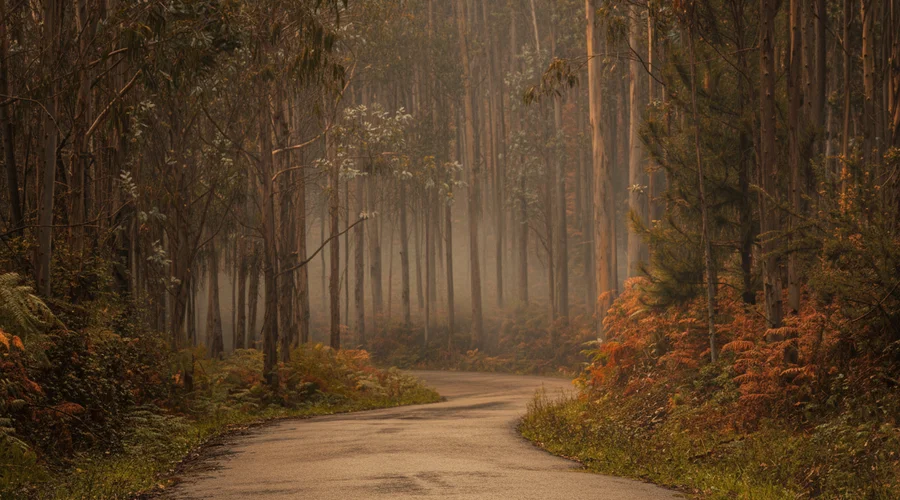
Annually, hundreds of thousands of hikers traverse Spain's Camino de Santiago, encountering vast stretches of forest along the route. However, much of this woodland, especially in northwestern Spain, is no longer composed of indigenous species like oak and chestnut. Instead, eucalyptus plantations now dominate the landscape. This ecological shift is not isolated to Galicia; eucalyptus has been extensively cultivated in various regions globally, including Brazil, Chile, California, India, and South Africa, primarily driven by the timber and pulp industries' demand for its fast-growing nature.
Currently, eucalyptus plantations span approximately 22 million hectares across more than 90 countries, establishing themselves as a vital component of many rural economies. Despite their economic benefits, these seemingly serene forests conceal a heightened vulnerability to extreme wildfires, largely because scientists have identified these trees as highly flammable.
Eucalyptus and Europe's Escalating Wildfire Crisis
Europe has recently experienced unusually early heatwaves, raising alarms about an increased risk of wildfires. Southern parts of the continent have already been affected. The previous year marked a record high for wildfires, with over a million hectares burned, a significant portion of which occurred on the Iberian Peninsula. While eucalyptus trees are not typically the cause of fire ignition, researchers indicate that they can substantially exacerbate fires once they begin.
Tim Curran, a professor at Lincoln University in New Zealand, highlighted the flammability of eucalyptus forests. He explained that introducing eucalyptus to new environments can significantly alter local fire regimes, influencing aspects such as fire intensity, frequency, and heat. The leaves of eucalyptus trees contain highly volatile oils, and their bark strips can ignite into embers that travel considerable distances, initiating new fires. A notable example occurred during Australia's devastating Black Saturday fires in 2009, where embers reportedly traveled more than 30 kilometers ahead of the fire front, sparking secondary blazes. This phenomenon, according to Curran, is not an isolated incident.
In regions like Galicia, eucalyptus plantations tend to expand beyond their intended boundaries. This is partly due to their rapid growth rate; while native oak and chestnut trees take over 80 years to mature, eucalyptus reaches maturity in just 15 years. Consequently, eucalyptus forests recover quickly after fires, giving them a competitive advantage over native species. This cycle reinforces the expansion of monocultures, thereby increasing the overall risk of wildfires.
The Dual Nature of Eucalyptus: Economic Gain Versus Environmental Hazard
Eucalyptus plantations in Galicia, which began in the 1970s, saw substantial growth in the 1990s. A 1992 regional government forestry plan projected eucalyptus coverage to reach 250,000 hectares by 2030. However, by the time the plan was updated three decades later, eucalyptus had proliferated far beyond this estimate. Joam Evans Pim, a local community leader, stated that the coverage now stands at approximately half a million hectares, representing a massive land area.
Despite a moratorium on new eucalyptus plantations introduced by the regional government, campaigners report inconsistent enforcement and ongoing illegal planting. Economically, eucalyptus is lucrative; Galician plantations, which primarily supply the pulp and timber industries, generated €167 million in 2024 alone. However, mismanagement is also a factor. As younger generations migrate from rural areas to urban centers, uncontrolled plantations are often left behind. This expansion is attributed to a combination of legal and illegal plantations, land abandonment, forest fires, and the invasive nature of the species itself.
Navigating the Path Forward: Regulation and Reforestation
Critics have accused regional authorities of failing to adequately control eucalyptus expansion for an extended period. Luisa Piñeiro, Director General of Forest Management for the Galician government, acknowledged past shortcomings, noting that in the 1990s, there was likely insufficient forest management and control over planted species. Despite this, the government does not classify eucalyptus as an invasive species, and Piñeiro opposes outright bans. Instead, she advocates for improved management practices and greater species diversity within forests.
In Froxán, about 40 kilometers west of Santiago de Compostela, Evans Pim recounted the 2006 wildfires that ravaged the local hills, leading to an invasion of eucalyptus. Following another fire a decade later, the community formed the De-Eucalyptus Brigades, a volunteer group dedicated to raising awareness and removing eucalyptus from communal lands. Starting with 50 members, the group has grown to 1,500 across Galicia, working to replace eucalyptus with native trees. Their goal is to create a 'green fire break' and establish a self-sustaining landscape resilient to fires, climate change, and prolonged droughts.
The devastating 2017 wildfires in Portugal, which resulted in fatalities, serve as a stark warning. Evans Pim emphasized the need for serious action, urging authorities to enforce existing laws and improve regulations. This sentiment is increasingly echoed by scientists, forestry groups, and activists who identify unmanaged land as a primary fire hazard globally. Researchers suggest that the economic benefits of eucalyptus must be carefully weighed against the escalating risks of wildfires. Joaquim Sande Silva of the Polytechnic University of Coimbra affirmed that while there is a place for eucalyptus and the pulp industry, its cultivation should be strictly regulated regarding plantation methods and the ecosystems being replaced.
Source: Original Article