Introduction to Venezuela's Political Climate
Venezuela has been embroiled in a protracted political and economic crisis for over a decade, leading to widespread social unrest, a significant humanitarian emergency, and a mass exodus of its citizens. The nation's political landscape is characterized by a deep division between the ruling United Socialist Party of Venezuela (PSUV), led by President Nicolás Maduro, and a fragmented opposition coalition. International actors have frequently intervened or expressed strong opinions regarding the country's governance, with various nations aligning themselves with either the government or the opposition at different times. The complexities of this situation are further compounded by Venezuela's vast oil reserves, which have historically made it a focal point of geopolitical interest.
María Corina Machado: A Prominent Opposition Figure
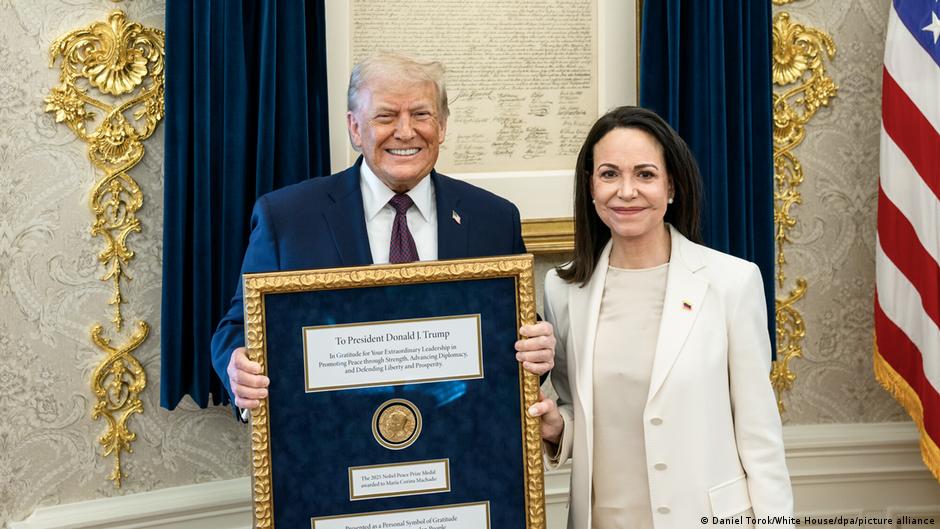
María Corina Machado has emerged as a significant, albeit controversial, figure within the Venezuelan opposition. A former legislator and coordinator of the Vente Venezuela movement, Machado is known for her unyielding stance against the Maduro government and her calls for a more assertive approach to political change. Her political career has been marked by both fervent support domestically and internationally, as well as strong condemnation from the Venezuelan government, which has accused her of sedition and other offenses. Machado's efforts to participate in electoral processes have been consistently thwarted, most notably through disqualifications from holding public office, which she and her supporters contend are politically motivated and undemocratic.
Shifting International Dynamics and U.S. Policy
The United States has historically played a pivotal role in Venezuelan politics, often expressing strong support for the opposition and implementing sanctions against the Maduro government. During the Trump administration, there was a pronounced policy of isolating the Maduro regime and backing opposition figures, including Juan Guaidó, who was recognized by many nations as the interim president. However, the international approach to Venezuela has shown signs of evolution. Recent developments suggest a recalibration of strategies by various international actors, including the United States, as the prolonged crisis has failed to yield a decisive resolution through previous methods. This shift is partly driven by a recognition of the need for more pragmatic approaches that might facilitate dialogue or a more stable transition, rather than solely focusing on regime change.
The Case of María Corina Machado and External Support
The political trajectory of María Corina Machado exemplifies these shifting dynamics. While she has garnered considerable support from segments of the international community in the past, her current standing appears to be subject to re-evaluation by key external players. Her firm stance and perceived inflexibility, while appealing to some, may be viewed by others as an impediment to potential negotiated solutions. The perception that her leadership might not be conducive to broader consensus-building within Venezuela, or that her participation could further entrench political polarization, might be influencing the perspectives of international actors. This is particularly relevant as efforts are increasingly focused on fostering conditions for free and fair elections, which would necessitate a more inclusive political environment.
Challenges to Democratic Transition
Venezuela's path to a democratic transition remains fraught with significant challenges. The government's firm grip on state institutions, coupled with the internal divisions within the opposition, complicates any efforts towards a peaceful resolution. Furthermore, the economic crisis continues to fuel social discontent and instability, making it difficult to address the underlying issues without a fundamental shift in political dynamics. The role of international actors in this context is delicate; while external pressure can be influential, it must be carefully balanced with the need to support internally driven solutions that can achieve legitimacy and sustainability. The international community is increasingly grappling with how to best support democratic aspirations in Venezuela without inadvertently exacerbating the crisis or alienating potential partners in a future transition.
Looking Ahead: Potential Scenarios
The future of Venezuela's political landscape is uncertain. Several scenarios could unfold, ranging from a continued stalemate to a negotiated settlement that could pave the way for new elections. The effectiveness of any international strategy will likely depend on its ability to adapt to the evolving realities on the ground and to foster a more unified approach among both Venezuelan political actors and the international community. The focus may increasingly shift towards encouraging inclusive dialogue, strengthening democratic institutions, and ensuring humanitarian assistance reaches those in need, rather than solely backing specific opposition figures. The ultimate resolution will undoubtedly require significant concessions and collaboration from all parties involved, both within Venezuela and among its international stakeholders.
Source: Original Article