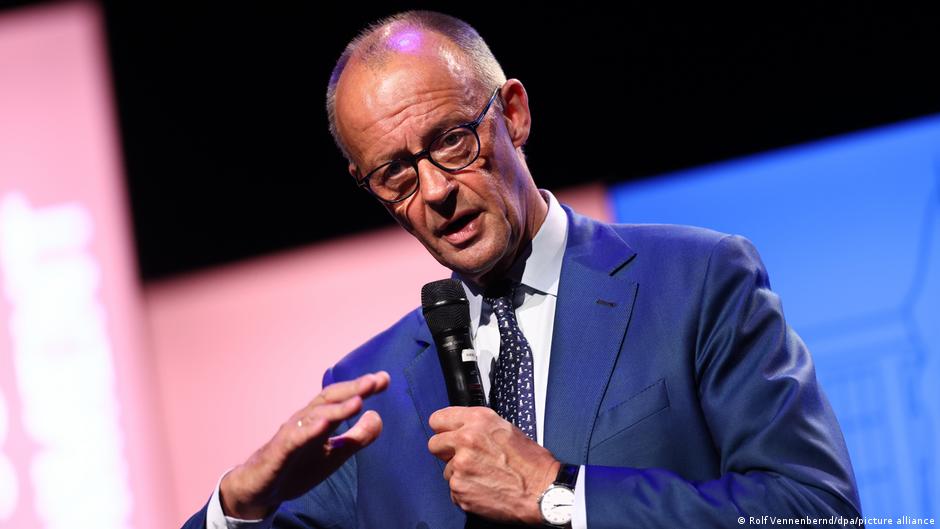
Chancellor Merz Urges Monetary Policy Dialogue with China
In a significant address delivered at the Adenauer School of Government at the University of Cologne, German Chancellor Friedrich Merz underscored the critical necessity for a direct dialogue with China regarding its monetary policy. Merz articulated that the European Union faces a substantial competitive disadvantage when confronting nations that artificially manipulate their currencies. He stated, "We are now trying to steer the dialogue with China toward a solution... an attempt to persuade China to allow its own currency to float freely, including in the context of competition in the capital markets." This statement highlights Germany's intent to foster a more equitable global economic environment, particularly concerning capital markets and international trade.
Protests Overshadow Chancellor's Cologne Visit
Chancellor Merz's visit to Cologne was met with considerable public protest, drawing an estimated 1,200 participants according to local police. Demonstrators, primarily student representatives, gathered despite high temperatures to voice their concerns during the inauguration of the new Adenauer School. The core of their grievances centered on the belief that the new institution would primarily train a one-sided, business-oriented elite, while other vital social and academic sectors face budget cuts. This public display of dissent reflects broader societal anxieties regarding educational priorities and resource allocation within Germany.
Health and Humanitarian Concerns: Ebola Patient Arrives in Germany
Adding to the day's events, a US national infected with the Ebola virus was admitted to Frankfurt University Hospital. The patient, who contracted the Bundibugyo variant of the virus while working for a humanitarian organization in the Democratic Republic of Congo, arrived at the hospital's specialized isolation unit in the early hours. Hospital officials confirmed the patient's condition as stable, assuring the public that extensive isolation protocols are in place to prevent any risk to other patients or the community. This marks the second instance of a US citizen receiving Ebola treatment in Germany, highlighting the country's advanced medical capabilities and its role in global health crises. The Bundibugyo strain currently lacks a vaccine or specific treatment, complicating containment efforts in affected regions.
Diplomatic Tensions Escalate Between Germany and Russia
Diplomatic relations between Germany and Russia experienced a fresh wave of tension, with both nations summoning each other's ambassadors. Germany initiated the action by summoning Russia's ambassador to Berlin to protest a series of cyberattacks targeting the European Union. The German Foreign Ministry condemned these attacks against Germany, EU partners, and Ukraine as unacceptable, vowing decisive responses, including potential additional sanctions. Shortly thereafter, Russia's Foreign Ministry announced it had summoned the German ambassador in what appeared to be a retaliatory move, though no specific reasons were immediately provided by Moscow. This exchange underscores ongoing geopolitical friction and the increasing prevalence of cyber warfare in international relations.
Rising Heat-Related Health Issues in Germany
A recent study commissioned by the health insurance provider DAK-Gesundheit revealed a concerning trend: approximately one in three Germans has experienced heat-induced health problems, a notable increase from previous years. The most frequently reported issues included fatigue (71%), sleep disturbances (68%), circulatory problems (64%), and headaches (52%). Women were almost twice as likely as men to report suffering from heat-related symptoms (40% versus 21%). The study also highlighted significant public concern, with nearly two-thirds of respondents expressing extreme worry about the heat and three-quarters believing current heat protection measures are inadequate. A considerable portion (59%) also felt that schools and nurseries are severely impacted by the heat, recalling the closures of educational facilities during a historic heatwave in late June across Europe. The survey, conducted from June 22 to July 1, involved 1,519 German citizens aged 18 and over.
Volkswagen Considers Significant Job Cuts
In a move signaling potential restructuring, German automotive giant Volkswagen has reportedly warned staff about the possibility of cutting up to 50,000 jobs. An internal memo, reportedly seen by Reuters, indicated that Volkswagen is facing a 20% cost disadvantage compared to its competitors. CEO Oliver Blume stated in the document that the company is assessing necessary adjustments across all brands, companies, and regions. While emphasizing a preference for "intelligent solutions" over factory closures, Blume acknowledged that competitive use cases for plants in Emden, Hanover, Zwickau, and Neckarsulm might not be viable in the 2030s. Labor representatives have reportedly resisted proposals for job reductions and potential factory closures, suggesting a challenging path ahead for the automaker as it seeks to enhance competitiveness.
Iraqi Couple Convicted of War Crimes in Germany
A German court has delivered a landmark verdict, sentencing an Iraqi couple to lengthy prison terms for war crimes, genocide, and crimes against humanity. The man received a life sentence, while his former partner was given a juvenile sentence of nine and a half years. The couple was convicted of enslaving and abusing two Yazidi girls under the so-called "Islamic State" group in Iraq, as well as child sexual abuse and aiding and abetting these atrocities. This conviction underscores Germany's commitment to prosecuting international crimes and seeking justice for victims of severe human rights violations.
Planned Increase in German Tobacco Tax
Germany's coalition government is reportedly planning a more substantial increase in tobacco duty than initially projected. According to a report by Redaktionsnetzwerk Deutschland (RND) newspapers, citing a draft from the Ministry of Finance, the price of a pack of cigarettes is expected to gradually rise to approximately €12, up from the current €8. This adjustment, which represents an increase of about 40 cents beyond recent decisions, also includes a hike in tax on fine-cut tobacco. The RND report suggests the increase aims to address a budget deficit and aligns with the government's public health objectives to reduce smoking rates among both young people and adults. Currently, about a quarter of Germans aged 15 and older are regular smokers, according to Eurostat figures.
Source: Original Article