Germany Debates a Fundamental Shift in Organ Donation Policy
Germany's lower house of parliament, the Bundestag, has reignited discussions surrounding a potential overhaul of its organ donation system. The country currently operates under an 'opt-in' model, requiring explicit consent for organ donation. This stands in contrast to a growing number of European nations that have adopted an 'opt-out' or presumed consent system, where individuals are considered donors unless they formally register an objection. The renewed debate comes as Germany grapples with persistent and lengthy waiting lists for organ transplants.
The issue was last thoroughly debated six years ago, in 2020, when parliament ultimately rejected the 'presumed consent' approach. Instead, a compromise was reached, stipulating that citizens would be prompted to indicate their organ donation preference when renewing national identification cards. However, an inter-party group of parliamentarians has now launched a fresh initiative to introduce the 'opt-out' system, proposing that all German citizens be considered organ donors unless they explicitly state otherwise. This proposal underwent a two-hour debate in the Bundestag, highlighting the ongoing urgency of the matter.
The Case for 'Opt-Out': Bridging the Gap Between Intent and Action
During the recent parliamentary discussion, a significant majority of speakers voiced support for the 'opt-out' system. Gitta Connemann, a parliamentarian from the conservative Christian Democratic Union (CDU), emphasized that while previous efforts to increase donor numbers had been comprehensive, they had not yielded sufficient results. She noted, "We strengthened hospitals, we supported transplantation ambassadors, we have intensified education efforts, we started campaigns, we created an online register." Despite these measures, which have resulted in approximately 40% of the population being registered donors, a considerable disparity remains between public sentiment and documented preference.
Connemann highlighted a crucial statistic: over 85% of Germans hold a positive view of organ donation, yet only about 45% have formally documented their decision. This gap underscores the argument that the current 'opt-in' system may inadvertently be preventing potential donations due to inertia or a lack of proactive registration, rather than outright refusal.
Opposition and Ethical Concerns
Not all voices in the Bundestag supported the proposed change. Christina Baum, representing the far-right Alternative for Germany (AfD) party, argued against the 'opt-out' system, citing the fundamental right to physical inviolability, which she contended extends beyond death. "From that, we can only derive maintaining the current rule: The active consent to organ donation," she stated. Baum also raised concerns that a shift in legislation could potentially encourage international illegal organ trafficking, a claim that was not substantiated with evidence during the debate.
Germany's European Context and the Growing Crisis
Germany's current 'opt-in' stance places it among a minority of European nations. Countries such as France, Italy, Austria, Spain, the Netherlands, Belgium, Poland, and Portugal have all implemented some form of 'opt-out' system, indicating a broader trend towards presumed consent across the continent. The statistics from the German Organ Procurement Organization (DSO) paint a stark picture of the crisis: in 2025 alone, 633 individuals in Germany died while awaiting a donor organ. Currently, over 8,200 people are on waiting lists for life-saving transplants, with the majority requiring a kidney, facing an average waiting period of approximately eight years.
Campaigners Advocate for Change and Innovative Solutions
Angela Ipach, co-founder of the initiative Opt.Ink, is a vocal advocate for the adoption of an 'opt-out' system, believing that a legislative change is long overdue. She expressed frustration with the lack of progress since the last parliamentary vote in 2020. "Six years have passed since the last vote in the Bundestag, and the numbers haven't changed at all," Ipach told DW, adding, "Many people have died. In what other area is it possible for nothing to happen for six years? Anyone who opposes the presumed consent system must now propose an effective solution."
The Opt.Ink campaign, born out of frustration following the 2020 rejection of 'opt-out,' encourages individuals to get a distinctive tattoo – a circle alongside two semi-circles, resembling the letters 'O' and 'D' – to signify their willingness to be organ donors. According to the organization, approximately 30,000 people now bear this tattoo. Ipach, whose sister tragically died at age 30 after a four-year wait for a lung transplant, noted that the campaign has gained significant momentum, mobilizing hundreds of tattoo studios and even conducting tattoo sessions within the German Bundestag itself in May 2024.
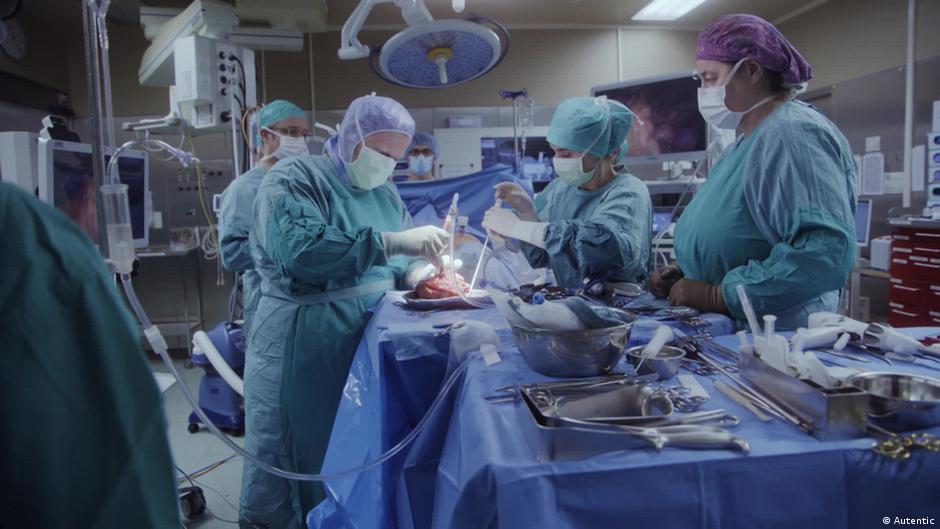
Frank Logemann, a transplant coordinator at the Medical University of Hannover and another proponent of change, highlighted the difficulties faced by medical professionals in initiating conversations about organ donation with grieving families. Logemann, who often engages with spouses or children when brain death is imminent, emphasized the critical timing of these discussions. He explained that there is no 'perfect' moment, and often, shortly after a death, relatives may be disinclined to consent to organ donation. "The most important thing is to reach out to the family early enough in their grieving process and determine whether the critically ill person would have wanted to be an organ donor," Logemann stated. He concluded that waiting until brain death is confirmed to address the topic is "definitely too late," underscoring the need for a system that proactively addresses donor wishes.