
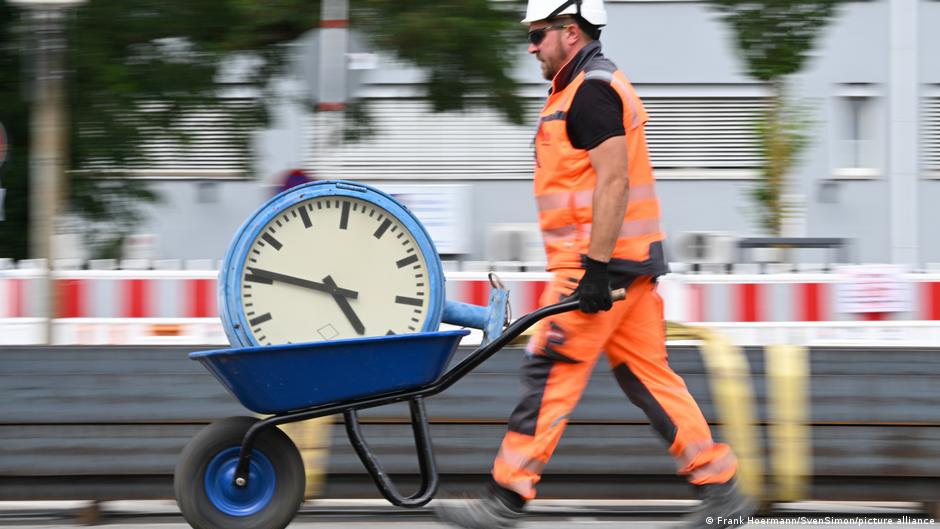
Germany's Rail Network: A System Under Strain
Germany, once a benchmark for efficient and punctual public transportation, particularly its extensive rail network, is now experiencing considerable difficulties. The national railway operator, Deutsche Bahn (DB), is facing a period of extensive modernization and repair work across its infrastructure, leading to frequent delays, cancellations, and detours. This situation has prompted concerns about the country's transportation capabilities and the impact on both passenger and freight services. The issues are deeply rooted in years of underinvestment and an aging network that is struggling to meet contemporary demands.
Decades of Neglect Catching Up
The current state of affairs is largely attributed to a historical pattern of insufficient investment in the maintenance and expansion of Germany's railway infrastructure. For decades, the focus often shifted towards road networks, leaving the rail system to gradually deteriorate. While other European nations were actively upgrading their rail lines with high-speed capabilities and advanced signaling systems, Germany's network saw a more gradual pace of development. This deferred maintenance has resulted in a critical need for comprehensive overhauls, from track replacement to bridge repairs and signal modernization. The sheer scale of the required work means that disruptions are not merely temporary inconveniences but a systemic issue requiring a long-term solution.
The Impact on Passengers and Economy
The consequences of these infrastructure challenges are manifold. For millions of daily commuters and long-distance travelers, delays and cancellations have become a regular occurrence, leading to frustration and eroded trust in the railway system. Businesses relying on rail freight transportation also face significant operational hurdles, impacting supply chains and potentially increasing costs as goods arrive late or require alternative, often less efficient, transport methods. The reputation of Germany as an industrial and logistical hub could be indirectly affected if its core infrastructure continues to falter. Moreover, the environmental benefits of shifting transport from road to rail are undermined when the rail system itself is unreliable.
Ambitious Modernization Plans Underway
Recognizing the severity of the situation, Deutsche Bahn, with support from the German government, has embarked on an ambitious and costly modernization program. This initiative, dubbed the 'General Overhaul' or 'Generalsanierung,' involves a systematic renovation of key railway corridors. Instead of piecemeal repairs, entire sections of track, including all associated infrastructure like signals, switches, and overhead lines, are being completely replaced. While this approach is expected to yield a more robust and reliable network in the long run, it necessitates extensive closures of major routes for several weeks or even months at a time, leading to the aforementioned detours and disruptions. The first major corridor to undergo this comprehensive renovation was the Riedbahn line between Frankfurt and Mannheim, which saw a complete closure for several weeks in 2024.
Financial Commitments and Future Outlook
The German government has committed substantial financial resources to these infrastructure projects, with billions of euros earmarked for rail upgrades over the coming years. This funding is crucial for addressing the backlog of maintenance and for future-proofing the network. However, the sheer volume of work means that the benefits of these investments will not be immediately apparent. Experts and officials alike acknowledge that passengers and freight operators will need to contend with ongoing disruptions for at least the remainder of this decade, and potentially beyond. The long-term vision is to create a high-performance network that is more resilient, punctual, and capable of handling increased traffic volumes, aligning with Germany's climate goals and economic needs. This transition period, however, will test the patience of many.
Challenges Beyond Infrastructure
Beyond the physical state of the tracks and signals, Deutsche Bahn also faces challenges related to its operational efficiency, workforce shortages, and the integration of new technologies. The complexity of managing such a vast and interconnected network, particularly during an extensive renovation phase, requires meticulous planning and execution. Attracting and retaining skilled personnel, from train drivers to engineers and maintenance workers, is another critical factor for the successful implementation of these modernization plans. Furthermore, the adoption of digital signaling and control systems, while promising greater efficiency, also presents its own set of implementation hurdles and requires significant investment in training and infrastructure upgrades. The journey toward a fully modernized and reliable German rail network is thus a multi-faceted endeavor, extending beyond just fixing physical infrastructure.
Source: Original Article