A Millennium-Old Masterpiece's Journey
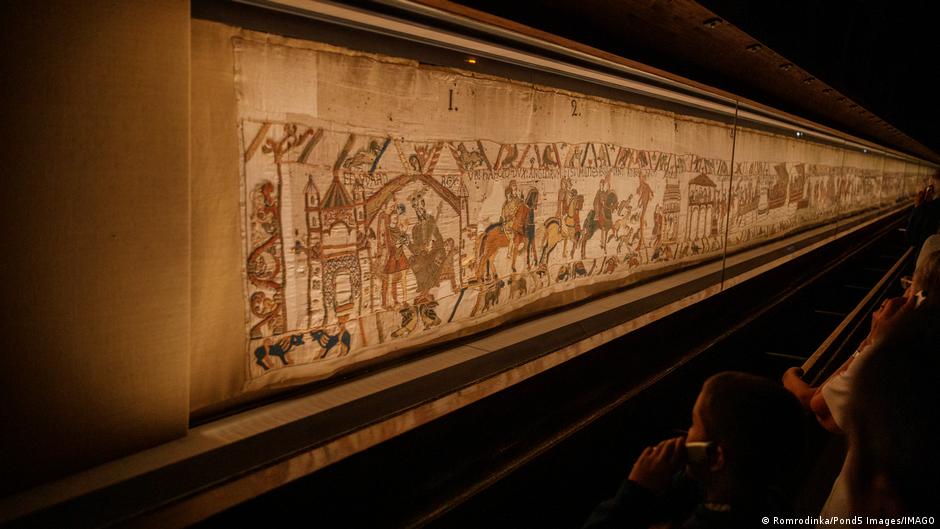
The Bayeux Tapestry, a renowned piece of medieval art and historical documentation, has made its way from France to the British Museum in London. This monumental transfer, conducted under strict secrecy, signifies the tapestry's return to British soil after approximately 1,000 years. Its arrival sets the stage for a major exhibition slated to open in September, offering the public a rare opportunity to view this intricate artifact.
The tapestry, an embroidered cloth nearly 70 meters (230 feet) long, depicts the events leading up to the Norman conquest of England, culminating in the Battle of Hastings in 1066. It serves as a unique visual record of 11th-century European history, providing insights into military tactics, daily life, and political narratives of the period. For centuries, it has resided in Bayeux, Normandy, France, making its temporary relocation to London a moment of considerable historical and cultural significance.
The Logistics of a Historic Transfer
The transportation of such an ancient and delicate artifact was an undertaking of immense complexity, requiring meticulous planning and execution. Details surrounding the transfer operation remained confidential until the tapestry's safe arrival, underscoring the fragility of the artwork and the high stakes involved. Specialized conservationists and logistics experts collaborated to ensure the tapestry's preservation throughout its journey across the English Channel.
The process likely involved custom-designed environmental controls to maintain stable temperature and humidity levels, crucial for preventing damage to the aged textiles and embroidery. Furthermore, security measures would have been paramount, given the tapestry's invaluable status as a cultural heritage item. The successful completion of this transfer highlights the advanced capabilities in art logistics and conservation available today.
Significance of the Bayeux Tapestry
The Bayeux Tapestry is not merely an artistic creation; it is a primary source for understanding one of the most pivotal moments in English history. Its detailed imagery narrates the story from the perspective of the Norman victors, offering a unique window into their interpretation of the conquest. Scholars have long debated various aspects of the tapestry, from its exact origins and patronage to the subtle nuances of its visual storytelling.
The tapestry's rich narrative includes key figures such as Harold Godwinson, the last Anglo-Saxon king of England, and William the Conqueror, Duke of Normandy. It portrays scenes ranging from political discussions and preparations for war to the brutal realities of battle, all rendered with remarkable detail in wool thread on linen. Its artistic style, though characteristic of the Romanesque period, also exhibits distinct features that set it apart.
Educational and Cultural Impact
The upcoming exhibition at the British Museum is anticipated to draw significant attention from both academics and the general public. It provides an unparalleled opportunity for visitors to engage directly with a piece of history that has shaped the cultural and political landscape of Britain and Europe. Educational programs and scholarly discussions are expected to accompany the exhibition, further enriching the understanding of this medieval masterpiece.
The return of the tapestry to Britain, even if temporary, resonates deeply with national identity and historical consciousness. It allows for a direct confrontation with the narratives of conquest and cultural exchange that have defined the relationship between England and France for centuries. For many, it will be a chance to witness firsthand an artifact they have only previously encountered in textbooks or digital reproductions.
Conservation and Future Prospects
Beyond its display, the transfer also offers an opportunity for British conservation experts to collaborate with their French counterparts, potentially leading to new insights into the tapestry's material composition and long-term preservation needs. Such international cooperation is vital for safeguarding global cultural heritage.
While the current exhibition is a temporary loan, it underscores the ongoing diplomatic and cultural ties between the two nations. The Bayeux Tapestry's journey across the Channel is more than just a logistical feat; it is a testament to the enduring power of historical artifacts to connect us with the past and foster cultural understanding in the present.
Source: DW.com