Energy Price Hike Affects Millions
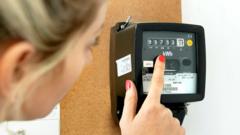
Millions of households across England, Scotland, and Wales are experiencing a 13% increase in energy prices starting Wednesday. This rise impacts those whose tariffs fall under the regulator Ofgem's price cap. Consumers without smart meters are strongly encouraged to submit meter readings to ensure their previous energy consumption is not charged at the new, higher rate.
Factors Contributing to Price Changes
While the immediate impact of these price increases may be mitigated by warmer summer weather and reduced energy usage, analysts from Cornwall Insight predict that elevated energy prices, influenced by global geopolitical events, are likely to persist into the winter months. Despite a projected slight dip of 0.5% in Ofgem's price cap in October, the situation continues to pressure the government to provide support for vulnerable households. Previous government initiatives aimed at reducing bills have been highlighted, and Chancellor Rachel Reeves has indicated potential targeted assistance in the autumn. However, the future of such support could be influenced by changes in political leadership.
"The Iran ceasefire gave the markets some breathing room, but this is a pause, not a resolution to the conflict. What comes out of the final agreement, if there is one, will matter enormously for energy prices," stated Craig Lowrey, principal consultant at Cornwall Insight. "Even in the best-case scenario, the enduring effects from the conflict will be with us for a while."
The new price cap translates to an approximate £18 monthly increase for a typical household's electricity and gas usage, with gas bills rising by 24% and electricity bills by 5%. Standing charges remain largely consistent. Ofgem has also adjusted its definition of "typical" energy consumption downwards, reflecting recent reductions in household energy use and improvements in energy efficiency. The new estimate stands at 9,500 kWh of gas and 2,500 kWh of electricity annually.
Impact and Recommendations
The energy cap covers approximately 33 million households in England, Wales, and Scotland; Northern Ireland operates under different regulations. Households on fixed tariffs will not see changes until their current deals expire, accounting for about 40% of bill payers. However, those on variable deals with standard meters are advised by price comparison websites like Uswitch to submit readings immediately to avoid higher charges for past consumption.
Calls for Social Tariffs and Debt Concerns
In response to rising costs, the Trades Union Congress (TUC) has advocated for the implementation of a social tariff for energy bills. Such tariffs, which offer discounted rates to eligible individuals often receiving benefits, are currently available for some broadband and water services but not for energy. The TUC suggests that a higher tax on bank profits could fund these energy social tariffs.
Meanwhile, the amount of money owed by customers to energy suppliers in England, Scotland, and Wales reached a record high of £4.79 billion in the first quarter of the year, marking a 15% increase year-on-year. National Energy Action highlighted that even recent heatwaves underscore the need for debt relief and property upgrades, emphasizing that "Energy inefficient homes take lives in winter and will increasingly threaten the most vulnerable in summer." Energy UK, the sector's trade body, provides information on various support schemes available to customers facing payment difficulties, stressing the importance of contacting suppliers directly for assistance.
Broader Economic Context
The energy price increase coincides with a report from Royal London, a pensions and investment company, indicating that 30% of UK adults are financially vulnerable, possessing limited savings and capacity to withstand financial shocks. While some improvements in personal finances are noted, millions remain close to financial instability, potentially a single bill shock away from a crisis.
Source: Households urged to submit meter readings as energy prices rise