Intensified Attacks on Kyiv Precede Key International Meeting
In the days leading up to the NATO summit in Ankara, Ukraine's capital, Kyiv, experienced a significant wave of Russian missile and drone strikes. These attacks resulted in numerous casualties and extensive damage to residential areas and critical infrastructure. The timing of these bombardments has led observers and experts to speculate on Russia's underlying objectives, particularly in relation to the upcoming international discussions.
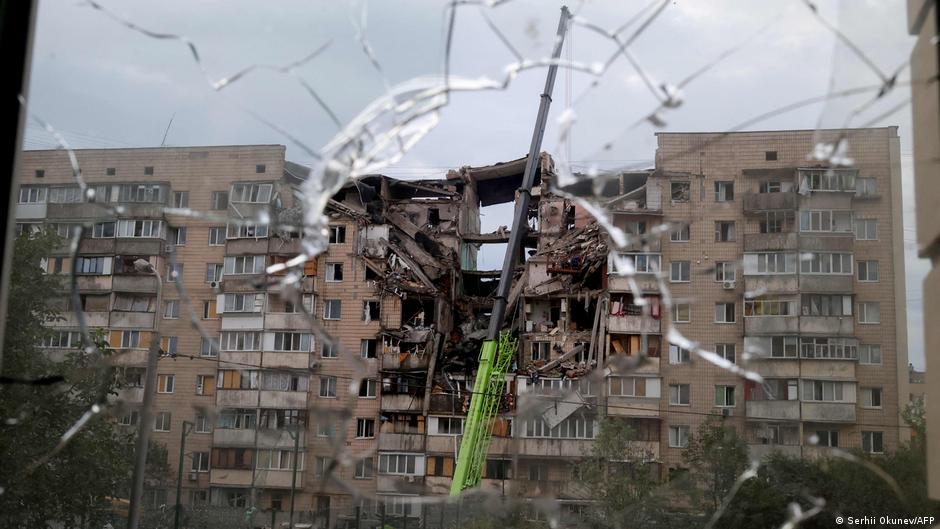
Overnight on Monday, July 7, 2026, Kyiv was subjected to a particularly severe assault. Reports indicate that at least 22 individuals lost their lives, with dozens more sustaining injuries. The Kyiv region bore the brunt of these strikes, accounting for 15 fatalities. Emergency services have been actively engaged in clearing debris from over 20 affected sites, highlighting the widespread nature of the destruction.
Ukrainian Leadership Highlights Air Defense Deficiencies
Ukrainian President Volodymyr Zelenskyy had issued a pre-emptive warning on the evening of July 5, cautioning citizens about intelligence suggesting an impending large-scale Russian attack. In a message disseminated via Telegram, President Zelenskyy stated, "This reflects Putin's mindset — immediately after the U.S. Independence Day and ahead of the NATO summit in Ankara. Russia wants to cause even more harm and kill people." He urged the populace to adhere strictly to air raid alerts and appealed to international partners to expedite the delivery of interceptor missiles for Patriot air defense systems.
His warning proved accurate, as Ukrainian authorities reported that Russia launched 68 missiles of various types overnight, including Iskander-M ballistic missiles, 3M22 Zircon and Oniks cruise missiles, alongside 351 drones. While Ukrainian air defenses successfully intercepted a substantial proportion of the cruise missiles on July 6, they were unable to intercept any of the ballistic missiles. Yurii Ihnat, spokesperson for Ukraine's Air Force, attributed this critical vulnerability primarily to a shortage of Patriot missiles.
Ukrainian Defense Minister Mykhailo Fedorov commented on the nature of the attacks, asserting, "Ballistic attacks are once again hitting civilians. Because the enemy cannot achieve its goals on the battlefield, it is increasingly directing ballistic missiles at residential buildings and killing civilians." Similarly, Ukrainian Foreign Minister Andrii Sybiha characterized the recent bombardment as "one of the most brutal attacks ever, involving dozens of ballistic missiles." Sybiha implored NATO leaders to acknowledge the hardships faced by Kyiv's residents, emphasizing on social media platform X, "Protect Ukrainian children from Russian ballistic terror. There is no more urgent task."
Interpreting Moscow's Message to NATO
Analysts suggest that the timing of these intensified strikes is a deliberate message from Moscow to the NATO alliance. Oleksandr Kraiev, an analyst at the Kyiv-based Ukrainian Prism foreign policy think tank, believes that Vladimir Putin aims to signal that no decisions made by NATO in support of Ukraine can deter Russia. Kraiev told DW, "He wants to intimidate Europeans and NATO allies so that at some point they view their support for Ukraine as pointless, with the message: 'No matter what you do, Putin will attack anyway.'"
Ivan Us of Ukraine's National Institute for Strategic Studies echoed this sentiment, drawing a direct link between the bombardment and the NATO summit. Us posited that Putin seeks to project an image of Russian strength and demonstrate its capacity to strike civilian infrastructure in NATO member states should they continue to support Ukraine. Furthermore, Us noted that domestic support for the conflict within Russia has shown signs of wavering. He suggested that these attacks also serve to reassert Putin's desired narrative within Russia, stating, "Russia must create and maintain an image that makes it appear powerful, strong and victorious in this war. The attack on Kyiv is meant to demonstrate that Russia still has a chance."
Potential Repercussions and Future Support
In response to the latest assault on Kyiv, European Commission President Ursula von der Leyen underscored Ukraine's urgent need for additional air defense systems, confirming that this issue would be a central topic at the NATO summit. She also indicated progress on a 21st sanctions package against Russia, stating on X, "We will keep increasing the pressure until Russia ends the bloodshed."
Experts interviewed by DW observed a potential shift in Washington's perspective regarding Putin and the conflict in Ukraine. Kraiev suggested that U.S. President Donald Trump, for instance, may now perceive Russia as an unreliable partner that actively sabotages peace efforts rather than supports them. Conversely, Trump is reportedly viewing Ukraine as making strategic gains, effectively halting the adversary on the front lines, targeting Russia's energy sector and economy, and proving to be a stable negotiating partner. Kraiev anticipates that the NATO summit in Ankara could reinforce this evolving perspective, with allies potentially formalizing their support for this shift in a joint declaration.
Kraiev concluded that Putin's strategy of attempting to break Ukrainian resolve through attacks has historically backfired, intensifying international support for Ukraine. He recalled that similar tactics in 2022 led to an increase in deliveries of advanced air defense systems, particularly Patriot systems. Us expressed optimism that the summit would encourage NATO countries possessing Patriot missiles to provide them to Ukraine, possibly in exchange for NATO guarantees. Discussions might also include the possibility of granting Ukraine a license for domestic production of these missiles. Additionally, the expert projected that the summit could approve a substantial $140 billion (€122 billion) in military aid for Ukraine over a two-year period, channeled through NATO.
Source: Original Article