
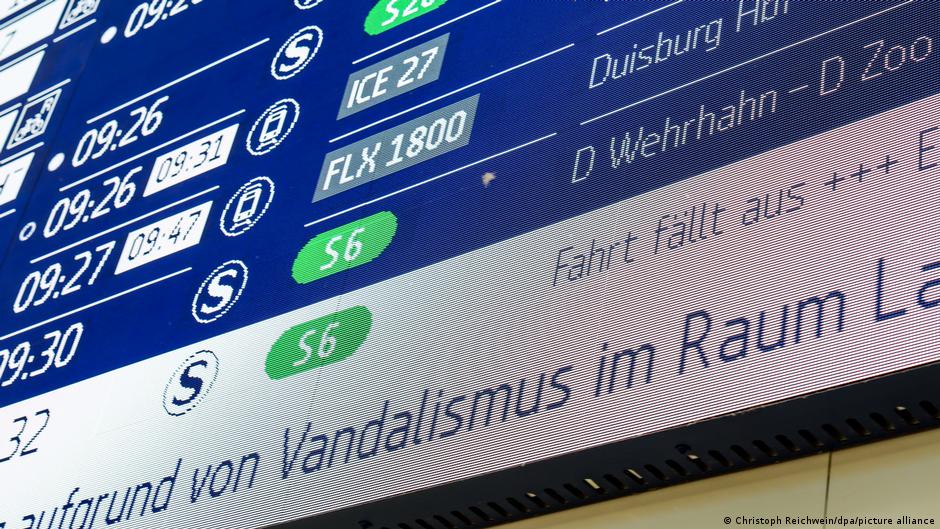
Claims of Responsibility Emerge Following Railway Incident
A group calling itself 'Angry Birds Commando' has publicly stated its involvement in an incident targeting a railway line connecting the German cities of Cologne and Düsseldorf. The group asserted that it deployed incendiary devices along this critical transportation route. This declaration comes amidst broader discussions regarding the intersection of environmental activism and acts of sabotage.
The alleged action, if confirmed, represents a significant development in the landscape of environmental protest, raising questions about the methods employed by certain activist factions. The railway segment in question is a vital artery for both passenger and freight traffic, underscoring the potential for widespread disruption should such incidents occur.
Motivations Rooted in Environmental Concerns
In their statement, the 'Angry Birds Commando' group articulated a clear motive for their alleged actions: a strong opposition to industrial technology, which they contend is a primary driver of environmental degradation. This stance aligns with a subset of environmental movements that advocate for more radical approaches to combating climate change and ecological destruction.
The group's specific targeting of infrastructure suggests a deliberate strategy to disrupt systems they perceive as complicit in environmental harm. Their rhetoric points to a deep-seated frustration with the pace and effectiveness of conventional environmental policies and the continued expansion of industrial practices.
Impact on German Infrastructure and Public Discourse
Incidents of this nature invariably prompt a re-evaluation of security measures for critical infrastructure, particularly in a country like Germany, which relies heavily on its railway network for economic activity and public mobility. Authorities are likely to intensify efforts to safeguard such assets against similar future occurrences.
Beyond the immediate security implications, the claim of responsibility by the 'Angry Birds Commando' is expected to fuel public debate on the boundaries of environmental activism. While many advocate for peaceful and legal forms of protest, incidents involving property damage or disruption to public services often spark condemnation and calls for stricter enforcement against those who resort to such tactics. The incident serves as a stark reminder of the diverse and sometimes extreme methods employed by groups seeking to draw attention to environmental issues.
Historical Context of Environmental Direct Action
The alleged actions of the 'Angry Birds Commando' are not entirely unprecedented in the history of environmental movements. Throughout recent decades, various groups have engaged in forms of direct action, ranging from non-violent civil disobedience to acts of sabotage against facilities or infrastructure deemed environmentally destructive. These actions are often justified by perpetrators as necessary measures to prevent greater ecological harm when conventional political avenues are perceived as ineffective.
Understanding the context of such groups involves examining the ideological underpinnings that lead individuals to believe that property damage, or even the threat of it, is a legitimate means to achieve environmental objectives. This perspective often stems from a belief that the scale of the environmental crisis demands urgent and disruptive intervention, moving beyond traditional lobbying or public awareness campaigns.
The Role of Technology in Environmental Debates
The group's explicit condemnation of industrial technology as a cause of environmental destruction highlights a recurring theme in environmental discourse. While technology is often presented as a solution to environmental problems, certain factions view industrial and technological advancement itself as inherently destructive to natural ecosystems. This dichotomy fuels ongoing debates about sustainable development, the role of innovation, and the societal impact of technological progress.
The 'Angry Birds Commando' appears to align with a more Luddite-esque perspective, suggesting that a fundamental re-evaluation, or even rejection, of certain industrial technologies is necessary for ecological preservation. This viewpoint contrasts sharply with those who advocate for green technologies and sustainable industrial practices as the path forward.
Ongoing Investigations and Public Reaction
As investigations into the railway incident continue, authorities will be tasked with verifying the claims made by the 'Angry Birds Commando' and identifying those responsible. The situation underscores the complex challenges faced by law enforcement in monitoring and responding to threats from groups that operate outside conventional organizational structures.
Public reaction is likely to be varied, with some potentially sympathizing with the environmental concerns raised, while others will unequivocally condemn any acts of sabotage that endanger public safety or disrupt essential services. The incident serves as a flashpoint for discussing the legitimacy and effectiveness of different forms of environmental advocacy in contemporary society.
Source: Germany: Left-wing group says it is behind railway sabotage