
Rayner Backs Burnham's Devolution Aims
Angela Rayner, the former Deputy Prime Minister, has publicly endorsed Andy Burnham's initiative to transfer more power to communities, suggesting that the incoming Prime Minister must prioritize further decentralization. Rayner indicated that the Labour government under Sir Keir Starmer had, at times, appeared to uphold the existing system rather than challenging it.
During a speech on Wednesday, Rayner advocated for a bold approach, stating that caution would not be sufficient to counter the rise of Nigel Farage's Reform UK. Her comments followed remarks from senior minister Darren Jones, who expressed interest in Burnham's concept of a 'No 10 North'. Burnham has proposed establishing a new Downing Street team in Manchester to help achieve his objectives.
Jones, who serves as the chief secretary to the prime minister, also highlighted the importance of strengthening central government by creating a dedicated prime ministerial department in London. Burnham is widely anticipated to become the next Prime Minister later this month, following Sir Keir's recent resignation and the subsequent Labour leadership contest.
Burnham's Vision for Decentralization
Launching his bid for the Labour leadership on Monday, Burnham articulated his desire to redistribute power across the UK, aiming to foster economic growth in every region. A central tenet of his platform is to devolve authority from senior civil servants in Whitehall to local communities. He contended that Whitehall had impeded progress in Greater Manchester, where he served as mayor.
"It is time for Whitehall to accept that growth cannot be ordered from the top down - it can only be nurtured from the bottom up," Burnham stated.
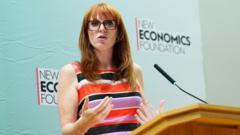
Rayner acknowledged her own efforts in government to advance devolution within English regions but stressed the necessity for more profound cultural transformations within central government. Speaking at a New Economics Foundation event, Rayner asserted that "Whitehall empires hoard their own power" and called for a "rewiring of England by devolving power and money to the country as a whole."
She described encountering "institutional resistance to fiscal devolution" during her tenure, but expressed confidence that such obstacles could be overcome. As an example, she cited measures to empower English regional mayors to levy a tourist tax on overnight stays. Rayner further added that the "devolution revolution" would only reach its full potential if central government also adapted, with Number 10 making it a core mission. She identified transport, children's social care, and derelict buildings as key areas where mayors should be supported to deliver results.
In her concluding remarks, Rayner expressed optimism for a "fairer future," noting that the work has commenced. She emphasized that "the scale of the challenge demands we go further and faster," and praised Burnham's vision for fostering "good growth in every British postcode and hope in every heart. An economy that serves people, their place and our planet - not the other way around."
Debate on Centralization vs. Devolution
Earlier, Jones addressed the Remaking the State conference in London, acknowledging Burnham's valid points regarding how "overcentralisation of power and bureaucracy in Westminster can stifle growth, decision-making and opportunity."
"I just say to Whitehall with the direction the political winds are blowing, I think this is a clear warning," Jones remarked. "Devolution must mean devolution, not duplication."
Jones has been responsible for structural adjustments within government machinery and for enforcing policy delivery. In January, he unveiled a plan to "rewire Whitehall," which included initiatives like reducing bureaucratic checks and establishing taskforces to drive policy priorities. He has frequently critiqued government inefficiency and the need for change, a point he reiterated at the conference. Jones noted that reforming government operations can both "distract the system from delivering on everyday issues the public faces" and present opportunities.
"We either take this opportunity to remake the state and show the public we can get the job done, or we risk handing it to the populists who just want to tear it all down and leave people to fend for themselves," Jones cautioned.
However, Jones's emphasis on delivery teams has drawn criticism for being "heavily centralising," as highlighted in an article co-authored by Patrick Diamond, a former head of policy planning in No 10. The article argued that such an approach views delivery as a top-down control mechanism rather than building capacity within local institutions and services that require sustained improvement.
Burnham has yet to detail how his plan for "the biggest rebalancing of power our country has ever seen" would integrate with Jones's proposed Whitehall reforms. His suggested 'No 10 North' in Manchester, Burnham stated, would ensure "power flow" across the country, focusing on essential utilities, reindustrialisation, and regeneration.
Source: Original Article