Rising Tensions Along the DMZ
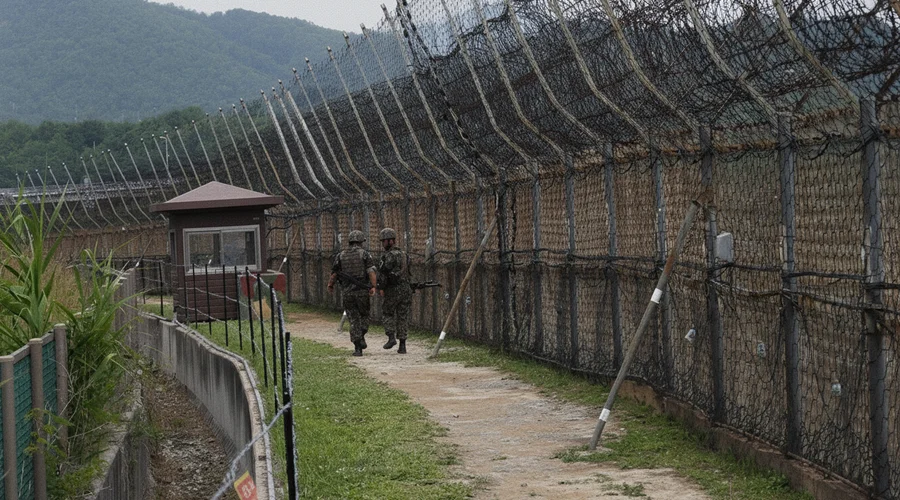
South Korea has officially communicated its apprehension regarding recent actions undertaken by North Korea within the Demilitarized Zone (DMZ), the heavily fortified border separating the two nations. These activities, involving significant engineering work, have prompted Seoul to question their compliance with the 1953 armistice agreement that concluded the Korean War.
The 238-kilometer-long (148 miles) DMZ has served as a critical, albeit often volatile, division between the two Koreas since the cessation of active hostilities in 1953. Over the decades, this zone has witnessed numerous incidents, including infiltrations, discovery of invasion tunnels, and occasional exchanges of fire, underscoring the persistent tension on the peninsula.
North Korea's Shifting Stance and Border Assertions
In a late June meeting with the United Nations Command (UNC), South Korea’s Defense Ministry highlighted concerns over North Korean engineers' activities at various points along the DMZ. These developments are viewed by some analysts as an attempt by Pyongyang to test boundaries and assert greater control, potentially emboldened by its strengthening ties with Russia and China.
Professor Choo Jae-woo, a foreign policy expert at Kyung Hee University in Seoul, suggests that North Korea is deliberately probing the limits of acceptable behavior. He remarked to DW, “They are testing the limits. They know they have the support of both Russia and China in all their endeavors — military, economic, geopolitical — and Pyongyang feels that now is the time to see how far it can go.” Choo also speculated that similar assertive actions might extend to the Northern Limit Line (NLL), the disputed maritime border in the West Sea, which has historically been a flashpoint for deadly clashes.
Reports indicate that North Korea intensified its border activities around April 2024, following an announcement by Kim Jong Un that Pyongyang would redefine its relationship with South Korea. Kim declared an end to the previous goal of reconciliation and reunification, instead characterizing relations as being between “two hostile countries and two belligerents at war.”
Engineering Works and Their Implications
North Korean engineering units have been observed constructing new fences, anti-tank berms, and ditches, digging trenches, building new military access roads, and clearing land to lay new minefields. While these works are primarily on North Korea’s side of the Military Demarcation Line (MDL) — the exact halfway point within the 4-kilometer-wide DMZ — their proximity to this line is a significant concern for South Korea.
Seoul’s military has noted that some of these activities are occurring less than 100 meters (approximately 330 feet) from the MDL. South Korean Defense Ministry spokesperson Chung Binna stated on June 25 that such proximity effectively undermines the DMZ’s intended function as a buffer zone, potentially breaching the armistice agreement.
Dan Pinkston, a professor of international relations at Troy University’s Seoul campus, drew parallels between North Korea's actions and China's incremental territorial assertions, such as those in the South China Sea. Pinkston characterized Pyongyang as a “revisionist power that is dissatisfied with global governance and is looking to take advantage in any way it can.” He emphasized that with the apparent backing of Moscow and Beijing, Kim Jong Un feels he can “push the envelope.” However, Pinkston also clarified that, to date, the confirmed actions do not constitute a direct violation of the 1953 Armistice Agreement.
The UN Command's Assessment
The United Nations Command (UNC), responsible for overseeing the armistice, issued a statement to DW indicating its ongoing monitoring and assessment of activities within the DMZ to ensure compliance with the 1953 agreement. The UNC clarified that “Construction, fortification and other defensive measures do not automatically constitute Armistice Agreement violations,” and that such activities are evaluated based on their specific context and adherence to the armistice provisions.
A UNC fact sheet from June 23 specified that constructing roads and fences and laying mines are permissible under the armistice terms, provided they remain north of the MDL. The UNC also noted that there have been no indications of North Korea introducing “heavy weapons or drone capabilities” into the DMZ, which would be a clear breach of the agreement.
Nevertheless, the UNC is actively investigating reports of North Korean fences potentially crossing the MDL and mines being laid on the South Korean side. The statement underscored, “Emplacing mines south of the MDL ceases to be defensive and is an automatic violation. Any confirmed crossings will trigger immediate armistice violation protocols.”
Monitoring Future Developments
Professor Choo Jae-woo believes that North Korea's constitutional amendments, redefining the nation’s boundaries, are a driving force behind these actions. He explained, “They now see the MDL — the exact half-way point inside the DMZ — as their southern border and they are taking steps to extend their control over that land to the very limits. They no longer see the DMZ as a buffer zone, they want to control it as their territory.”
While Pinkston maintains that currently confirmed North Korean activities may not be direct violations, he stresses the importance of diligent monitoring by South Korea. He concluded, “Barbed-wire fences, minefields, anti-tank barriers are all defensive measures, but the nature of warfare has changed dramatically in the last couple of years and the South will be observing very carefully to make sure these do not develop into violations.”
Source: Original Article