South Korea's Supreme Court Upholds Ex-President's Sentence
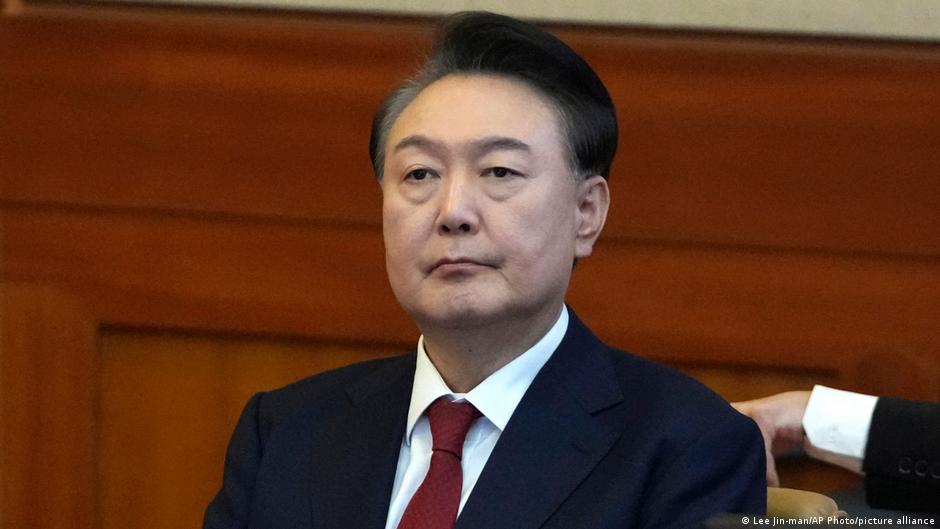
South Korea's Supreme Court has affirmed the seven-year prison sentence previously handed down to former President Yoon Suk Yeol. The ruling, delivered on Thursday, addresses charges stemming from the contentious 2024 martial law declaration and the ensuing political unrest. The court's decision effectively dismisses all appeals filed by Yoon's legal team, stating that there was no misinterpretation of legal principles in the earlier judgments.
A presiding judge, in a televised statement, declared, "All appeals are dismissed," reiterating the absence of any legal misinterpretations in the preceding court's verdict. This ruling marks a significant development in the ongoing legal challenges faced by the former president.
In response to the Supreme Court's decision, Yoon's legal representatives expressed profound disappointment, alleging that the high court reached its conclusion without adequate deliberation. A lawyer for Yoon indicated their intention to challenge the constitutionality of this ruling through various legal avenues, including filing a constitutional complaint. This suggests that the legal battle surrounding the former president is likely to continue.
Overview of Yoon's Legal Challenges
The legal difficulties for Yoon Suk Yeol are extensive and multifaceted. In January, a lower court initially sentenced him to five years in prison. These charges included abuse of power and the alleged use of presidential security personnel to obstruct his arrest. This initial sentence was subsequently increased to seven years following an appeal by the prosecution.
Beyond this particular case, the impeached former president is currently in custody, appealing a separate life sentence. This more severe penalty was imposed for his role in leading an alleged insurrection, directly linked to his declaration of martial law. Yoon has consistently maintained that his actions were driven by public interest. However, the court has characterized his martial law declaration as an intentional conspiracy that led to "enormous social costs" for the nation.
Furthermore, Yoon faces a distinct 30-year prison sentence related to allegations of deploying drones into North Korean territory. Prosecutors contended that this action was a calculated effort to escalate tensions with Pyongyang, thereby providing a pretext for his failed attempt to declare martial law in December 2024. In addition to these significant sentences, Yoon is also contending with five other ongoing trials, indicating a complex and prolonged period of legal scrutiny.
The December 2024 Martial Law Declaration
The core of many of Yoon Suk Yeol's legal issues traces back to his brief declaration of martial law in December 2024. At the time, he accused the political opposition of actively undermining his administration. However, this order was swiftly overturned by lawmakers, who voted to revoke it.
The images that emerged from this period—armed soldiers positioned on the steps of the National Assembly and surrounding the parliament building—sent shockwaves across South Korea. These scenes evoked painful memories of the military dictatorships that governed the country from the mid-1960s until the late 1980s, a period marked by authoritarian rule and suppression of dissent.
The declaration plunged South Korea into its most severe political crisis in decades. It instigated widespread mass protests, led to tense standoffs with law enforcement, ultimately resulted in Yoon's impeachment, and ushered in several months of intense political turmoil. The events of December 2024 profoundly impacted the nation's political landscape and continue to be a focal point in discussions about democratic governance and executive power in South Korea.
Source: Original Article