
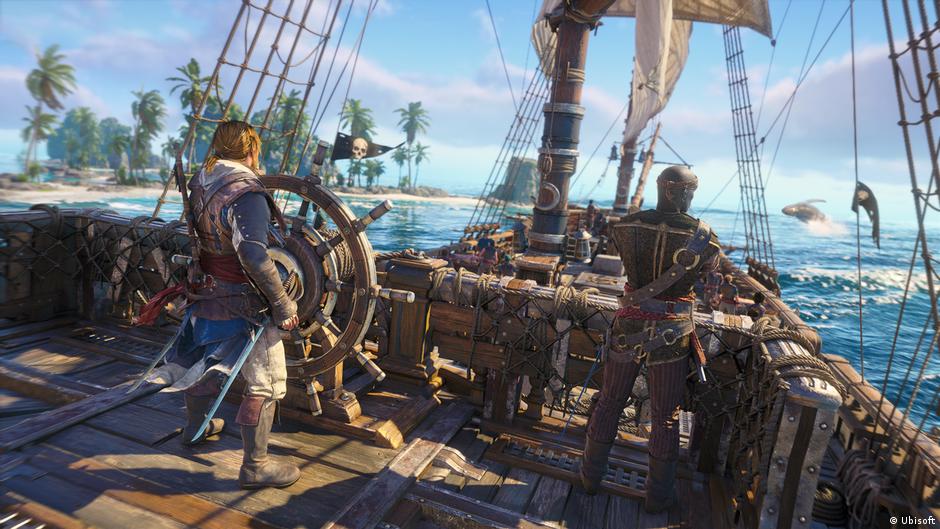
A Timeless Fascination with Maritime Outlaws
Pirates have long occupied a prominent position in human storytelling and cultural consciousness, their exploits resonating across generations. This persistent appeal is once again evident with the announcement of 'Assassin's Creed Black Flag Resynced,' a title that promises to immerse players in another high-seas adventure. The enduring popularity of pirate narratives raises questions about how our perception of these historical figures has been shaped and reshaped by various forms of media, from literature to video games.
Historical Roots and Early Portrayals
The historical reality of piracy, particularly during the Golden Age of Piracy (roughly 1650-1730), involved brutal violence, economic disruption, and a harsh existence. Yet, early literary works began to romanticize these figures. Authors like Robert Louis Stevenson, with his seminal novel Treasure Island (1883), played a significant role in cementing many of the archetypes we now associate with pirates: the one-legged captain, the parrot on the shoulder, and buried treasure. These fictionalized accounts, while often diverging from historical accuracy, established a compelling narrative framework that emphasized adventure, freedom, and defiance against established authority.
These early portrayals often overlooked the grim realities of pirate life, such as disease, mutiny, and the constant threat of execution. Instead, they focused on the perceived liberty of life at sea, the camaraderie among crew members, and the thrill of plunder. This selective representation laid the groundwork for the future evolution of pirate imagery in popular culture, prioritizing entertainment value over strict historical fidelity.
The Cinematic and Television Impact
The advent of cinema brought pirates to a global audience with unprecedented visual spectacle. Early films often depicted pirates as daring, albeit morally ambiguous, heroes. Actors like Errol Flynn in Captain Blood (1935) personified the dashing swashbuckler, further distancing the cinematic pirate from their historical counterparts. These films emphasized sword fights, daring escapes, and romantic subplots, solidifying the pirate as an adventurous and charismatic figure rather than a ruthless criminal.
More recently, the Pirates of the Caribbean film series, starring Johnny Depp as Captain Jack Sparrow, reignited public interest in pirates on a massive scale. This franchise blended fantasy elements with traditional pirate tropes, creating a whimsical yet action-packed universe. Captain Jack Sparrow's eccentric personality and anti-heroic charm redefined the modern pirate archetype, demonstrating that even flawed characters could be immensely popular. Television series and animated shows have also contributed to this phenomenon, often adapting pirate themes for younger audiences, further embedding these narratives into the cultural fabric.
Video Games and Interactive Narratives
Video games have offered a unique avenue for experiencing pirate life, allowing players to directly engage with the fantasy. Titles like the original 'Assassin's Creed IV: Black Flag' provided open-world environments where players could command their own ships, engage in naval combat, and explore vast seas. This interactive element allows for a deeper immersion into the pirate fantasy, giving players a sense of agency and freedom that static media cannot fully replicate.
The ability to 'become' a pirate, to chart one's own course, and to experience the thrill of discovery and conquest, is a powerful draw in the gaming world. This interactive storytelling has significantly contributed to the enduring appeal of pirates, offering a blend of historical context and fantastical escapism.
The upcoming 'Assassin's Creed Black Flag Resynced' aims to build upon this legacy, likely enhancing the visual fidelity and gameplay mechanics, thus reintroducing a new generation of players to the allure of the high seas and the life of a buccaneer. The game's premise suggests a continued emphasis on historical settings blended with fictionalized adventure, a formula that has proven highly successful.
The Psychological and Cultural Appeal
The persistent fascination with pirates can be attributed to several psychological and cultural factors. Pirates represent ultimate freedom from societal norms and laws. They operate outside the established order, embodying a spirit of rebellion and self-determination that many find appealing, at least in a fictional context. Their lives, as portrayed in popular culture, are often depicted as exciting and unpredictable, a stark contrast to the routines of modern life.
Furthermore, pirates are often associated with hidden treasures and exotic locales, tapping into a universal human desire for discovery and wealth. The idea of uncovering ancient riches or exploring uncharted territories adds an element of mystery and adventure that resonates deeply. This combination of freedom, rebellion, and adventure ensures that pirates will likely continue to be a source of inspiration and entertainment for the foreseeable future, perpetually adapting to new media and cultural interpretations while retaining their core appeal.
Source: Original Article