Prince Harry's Privacy Lawsuit Dismissed by UK Judge
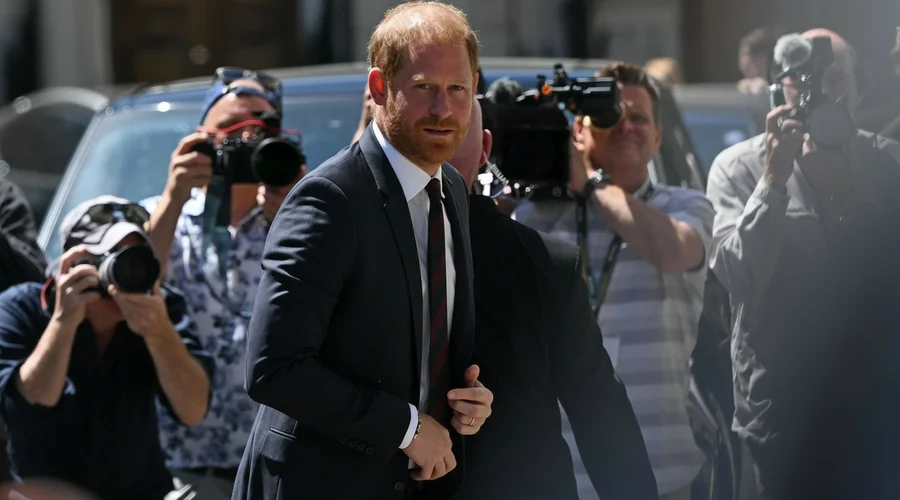
A High Court judge in the United Kingdom has ruled against Prince Harry in his privacy lawsuit targeting Associated Newspapers Limited (ANL), the publisher of the Daily Mail. The decision, delivered on Tuesday, marks the conclusion of the Duke of Sussex's legal actions against British tabloids, asserting that he failed to substantiate his allegations of privacy invasion by the media organization.
The lawsuit centered on accusations that ANL, specifically through the Daily Mail, had unlawfully obtained private information concerning Prince Harry and his wife, Meghan, the Duchess of Sussex. These claims included allegations of phone hacking, illicit information gathering, and the use of private investigators to monitor their activities.
Judge Matthew Nicklin, presiding over the case, stated that while "suspicion, even where understandable," might exist, it did not equate to legal wrongdoing. He emphasized a lack of concrete evidence presented against ANL. The judge noted that the journalists involved had provided "lawful explanations for the sourcing of the disputed articles and incidents," thus undermining the claimants' case.
Following the verdict, a spokesperson for ANL welcomed the ruling, describing it as a "vindication" for the Daily Mail, reinforcing the newspaper's position regarding its journalistic practices.
The Final Chapter in a Series of Legal Battles
This particular lawsuit was not exclusively Prince Harry's; it also involved a group of six other prominent individuals, including musician Elton John, and actresses Elizabeth Hurley and Sadie Frost. These co-claimants had sought substantial legal damages from ANL, alleging similar breaches of privacy.
However, the judge also highlighted an additional impediment for some of the claimants: the passage of time. In certain instances, the court determined that too much time had elapsed since the alleged offenses for them to be legally pursued under current statutes, effectively rendering those specific claims inadmissible.
The dismissal of this case signifies the end of Prince Harry's three-pronged legal campaign against the British media. His previous legal endeavors against UK tabloids have been characterized by accusations of widespread unethical practices, including phone hacking and the employment of private detectives to gather personal information.
One notable case involved a contentious dispute with Rupert Murdoch's The Sun, which was ultimately resolved through a settlement reached last year. Additionally, in 2024, Prince Harry achieved a partial victory in a separate phone-hacking case, where a judge ruled in his favor on some aspects of his claims, demonstrating a mixed record in his legal challenges.
At the time of the ruling, Prince Harry was reportedly in the UK for the promotion of the Invictus Games, his non-profit international multi-sport event for wounded, injured, and sick servicemen and women, both serving and veterans. It was not anticipated that he would issue a public statement regarding the court's decision.
The Duke of Sussex has consistently articulated his concerns about the impact of British tabloids on his personal life and that of his wife, Meghan. He has frequently spoken about the immense pressure and scrutiny they have faced, attributing much of their distress to the relentless pursuit of private information by certain media outlets. This latest judicial outcome, while not in his favor, underscores the ongoing tension between public figures and the press, particularly concerning the boundaries of privacy and journalistic freedom in the digital age. The legal proceedings have brought to light the complexities of proving privacy breaches and the challenges individuals face when confronting large media organizations in court.
Source: Original Article