Prime Minister to Address Historical Injustice
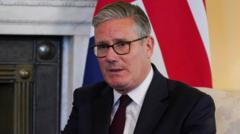
Sir Keir Starmer is scheduled to deliver a formal apology representing the British state for its role in historical forced adoptions within England and Wales. This long-awaited apology follows years of advocacy from mothers, adopted individuals, and their relatives who were impacted by these practices.
Background of Forced Adoptions
During the 1950s, 1960s, and 1970s, approximately 185,000 infants were separated from their mothers. Many women, particularly those who were unmarried, faced significant pressure to relinquish their children for adoption. This societal environment was largely shaped by government policies, as highlighted by a parliamentary inquiry.
Recommendations from Parliamentary Inquiry
In March, the Joint Committee on Human Rights (JCHR) released a report recommending an urgent government apology. The inquiry determined that state decisions had fostered an environment where unmarried mothers were often shamed and coerced into giving up their children. The JCHR report also called for improved access to adoption records and enhanced support for individuals seeking to connect or reunite with their families. While not recommending financial compensation, the committee urged the government to thoroughly evaluate how other nations, such as Australia, Northern Ireland, and the Republic of Ireland, have addressed historical forced adoption cases.
Confirmation and Precedent for Apology
Education Secretary Bridget Phillipson confirmed two weeks prior that a formal apology from the UK government was imminent. She stated that the Prime Minister would address this "shameful period in our history," acknowledging the gravity of the events. This upcoming apology follows similar actions by the devolved governments in Wales and Scotland, which apologized to victims of forced adoption three years ago. An apology is also anticipated in Northern Ireland, pending the completion of a public inquiry initiated after a 2021 report on mother and baby institutions, Magdalene laundries, and workhouses.
Personal Accounts and Institutional Involvement
Previous BBC investigations into forced adoptions contributed to the parliamentary inquiry. Individuals like Gaynor Weatherly, born in 1963 to a 16-year-old mother, expressed feeling "cheated out of a different life." Diana Defries recounted the traumatic experience of having her baby taken immediately after birth in 1963, stating, "I yelled to bring her back, but the nurse then just walked past me and put my daughter on a table out of my reach."
The JCHR report also noted the involvement of charities and religious institutions, which operated mother and baby homes, in facilitating these state policies. In June, the Church of England issued its own apology, with Archbishop of Canterbury Dame Sarah Mullally expressing profound sorrow for its role, acknowledging the "pain and trauma and suffering and fear" experienced by victims and stating, "The shame is ours."
Source: Original Article