President Trump Declares Interim Truce with Iran 'Over'
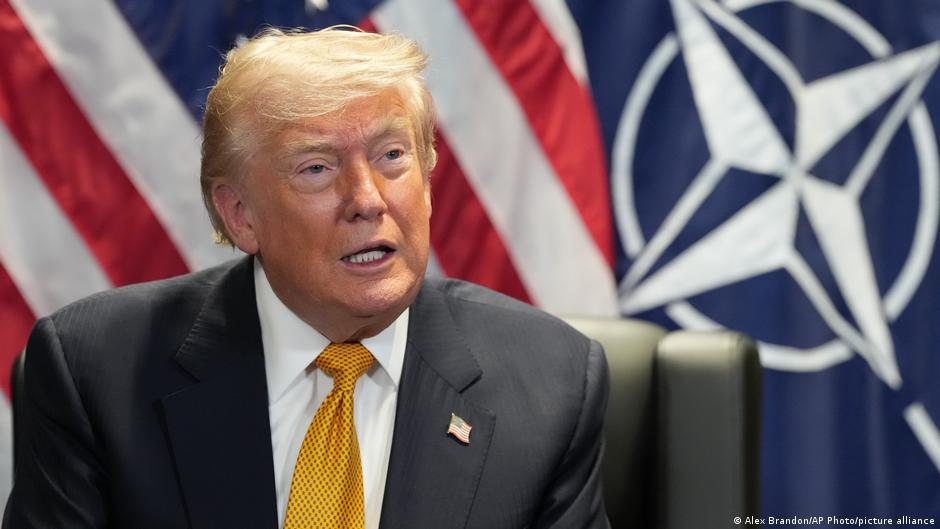
In a significant development, US President Donald Trump announced that the interim peace agreement with Iran is concluded, branding further engagement with Tehran as a "waste of time." The declaration came during the NATO summit in Ankara, Turkey, following a series of retaliatory strikes. The US military conducted dozens of strikes on Iranian targets overnight, which were a response to alleged Iranian attacks on three vessels in the Strait of Hormuz. Iran subsequently retaliated by targeting US sites in Kuwait and Bahrain, further intensifying the conflict.
Oil Markets React Sharply to Escalation
The news of the ceasefire's termination immediately impacted global oil prices. Brent crude oil saw a jump of over 5%, surpassing $78 per barrel, while the US benchmark crude surged by nearly 6%, briefly exceeding the $75 mark. This increase contrasts with a prior decline in prices, which had soared well over $100 a barrel at the onset of the US-Iran conflict in late February. The volatility underscores the global economic sensitivity to stability in the Middle East.
Overview of the Now-Defunct 14-Point Peace Plan
The interim agreement, signed in June, aimed for an "immediate and permanent" cessation of military operations across all fronts, including Lebanon, for a period of 60 days. Key provisions of the memorandum of understanding (MOU) included mutual respect for sovereignty, non-interference in internal affairs, and the gradual reopening of the Strait of Hormuz. The agreement stipulated that Iran would facilitate the safe passage of commercial vessels through the strait for 60 days without charge, following de-mining operations and the removal of other obstacles. The vital waterway's closure had significantly disrupted the global economy. Crucially, Point 8 of the agreement addressed Iran's nuclear ambitions, with the Islamic Republic reaffirming its commitment "not to procure or develop nuclear weapons."
- The US and Iran, along with their allies, were to declare an immediate and permanent termination of military operations.
- Both nations committed to respecting each other's sovereignty and territorial integrity.
- Negotiations for a final deal were to commence within 60 days, with potential for extension.
- The US was to begin removing its naval blockade in the Strait of Hormuz immediately, completing it within 30 days.
- Iran was responsible for arranging safe, charge-free passage for commercial vessels through the strait for 60 days.
- A plan for the reconstruction and development of Iran, amounting to at least $300 billion, was to be developed by the US and its partners.
- The US committed to lifting all sanctions against Iran.
- Iran reaffirmed its pledge against developing nuclear weapons and agreed to down-blend its highly enriched uranium under IAEA supervision.
- Pending a final deal, the existing nuclear program status quo was to be maintained, with no new US sanctions or troop deployments.
- The US Department of Treasury was to issue waivers for Iranian crude oil exports, petroleum products, and related services, including banking and insurance.
- Frozen or restricted Iranian funds and assets were to be made fully available for use by the US.
- An executive mechanism was to be established to monitor the implementation of the MOU and future compliance with the final deal.
- Negotiations for the final deal were to begin after the implementation of specific paragraphs of the MOU, and the final deal was to be endorsed by a binding UNSC resolution.
International Reactions and Regional Impact
German Foreign Minister Johann Wadephul supported the recent US attacks on Iran, stating that "Iran must now truly understand that serious negotiations are necessary and that further military strikes are warranted." Despite the escalation, Wadephul expressed belief in the possibility of future negotiations, viewing the recent actions as a potential "show of force" before talks. He emphasized the importance of maintaining freedom of navigation in the Strait of Hormuz, which he noted Iran was largely impeding.
Meanwhile, NATO Secretary General Mark Rutte also endorsed the US strikes, deeming them "absolutely necessary." Speaking at the NATO leaders' summit in Ankara, Rutte asserted that Iran's violation of the ceasefire warranted a forceful US response. He highlighted that Iran's nuclear capabilities and the freedom of navigation in the Strait of Hormuz would be key topics of discussion among NATO allies.
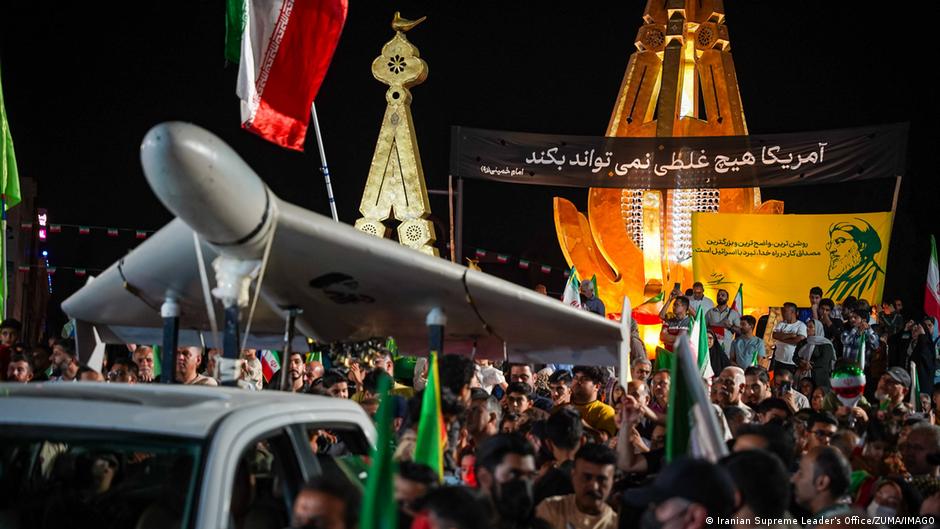
In the region, Iranian state-linked media reported explosions in Bushehr, a port city home to Iran's sole civilian power plant and near a critical oil export terminal. Sirens also sounded in Bahrain and Kuwait, with reports of explosions in Bahrain after Iran claimed to have struck US military sites in both countries in retaliation for the overnight US bombings. Kuwait's state news agency confirmed that its air defenses were confronting "hostile" missile and drone attacks.
Khamenei's Funeral Procession and Leadership Questions
Amidst the escalating tensions, the funeral procession for the late Iranian leader Ayatollah Ali Khamenei continued, moving into Iraq's holy city of Najaf. Thousands have accompanied Khamenei's coffin on its six-day journey, which holds significant religious importance for Shiite Muslims. The procession is scheduled to proceed to Karbala before returning to Iran for Khamenei's burial in Mashhad. The absence of his son, Mojtaba Khamenei, from the public eye during the mourning period has raised questions regarding Iran's future leadership trajectory.
Source: Original Article