US Military Presence in Iraq Nearing End
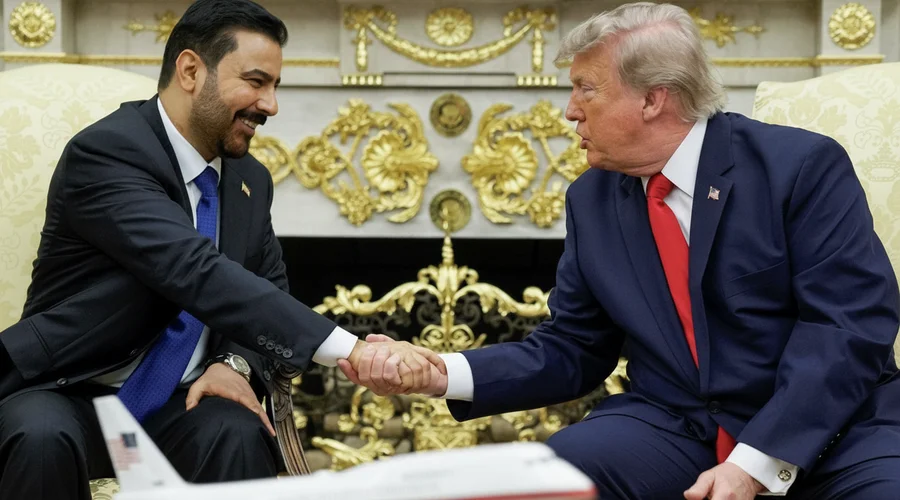
The United States is scheduled to conclude the full withdrawal of its military forces from Iraq by September 30th. This development was confirmed by Iraqi Prime Minister Ali al-Zaidi during a recent meeting with President Donald Trump in Washington. The departure signifies a shift in the nature of the US-Iraq relationship, moving away from direct military engagement towards enhanced economic cooperation.
President Trump commented on the impending withdrawal, stating, "Well, we don't think we need the military there anymore." This statement underscores a change in the strategic assessment of the US role in Iraq, particularly concerning counter-terrorism operations. Previously, approximately 2,500 US troops were stationed in Iraq, primarily engaged in efforts against the Islamic State. This number has seen a gradual reduction in recent months leading up to the current announcement.
Strategic Context of the Withdrawal
The decision to withdraw US forces is closely intertwined with the Iraqi government's broader objective of asserting its sovereignty and control over all armed groups within its borders. Prime Minister al-Zaidi's administration has explicitly linked the American departure to its commitment to disarm and integrate powerful Iran-backed militias into the state's security framework. "On September 30th, American forces will leave, and American companies will enter," al-Zaidi stated, emphasizing a transition from military presence to economic partnership. He further affirmed, "After 30 September, we will not allow any entity to bear arms outside the state." This declaration highlights Baghdad's intent to consolidate state authority and eliminate non-state actors wielding military power.
US troops have maintained a presence in several key locations across Iraq. These included the Kurdish region in Erbil, a base situated near Baghdad International Airport, and within the heavily fortified Green Zone in the capital. The phased reduction and eventual withdrawal from these strategic points mark a significant milestone in the post-2003 era of US involvement in Iraq.
Focus on Economic Partnership and Investment
Beyond military considerations, Prime Minister al-Zaidi's visit to Washington primarily focused on attracting substantial US investment into Iraq's critical economic sectors. Discussions centered on the oil, gas, and power industries, which are vital for Iraq's reconstruction and long-term stability. During their meeting in the Oval Office, al-Zaidi hinted at an upcoming announcement regarding a significant "economic partnership" between the two nations.
President Trump expressed optimism about Iraq's economic prospects, particularly its vast oil reserves. "We're going to be doing a lot of deals," Trump remarked, indicating a strong desire for increased bilateral trade and investment. He added, "We're going to create a lot of jobs for both countries, and we're going to be taking out a lot of oil," though specific details of these ventures were not immediately provided. This emphasis on economic collaboration suggests a reorientation of the US-Iraq relationship, prioritizing mutual economic benefits.
Further underscoring this economic focus, reports from Iraqi officials suggest that a major agreement is on the horizon. Iraq, in collaboration with Chevron, TI Capital, and Qatar's UCC, is reportedly preparing to sign a deal to construct a new oil pipeline. This ambitious project aims to transport 2 million barrels of oil per day, connecting Basra to Haditha and extending to ports in Turkey and Syria. Such infrastructure projects are crucial for Iraq's energy sector development and its integration into regional and global energy markets.
Implications for Regional Stability
The withdrawal of US forces and the subsequent emphasis on economic ties could have profound implications for regional stability. The Iraqi government's commitment to disarming militias is a critical element in this transition. Success in this endeavor could strengthen state institutions and reduce internal conflict, while failure could potentially lead to renewed instability. The shift also signals a potential rebalancing of foreign influence within Iraq, as Baghdad seeks to assert its autonomy and pursue its national interests through economic diplomacy and internal security reforms.
The September 30th deadline represents a pivotal moment in the complex relationship between the United States and Iraq. It marks the end of a significant military chapter and the beginning of a new phase focused on economic cooperation and the strengthening of Iraqi sovereignty.
Source: Original Article