Volkswagen's Strategic Realignment in a Changing Automotive Landscape
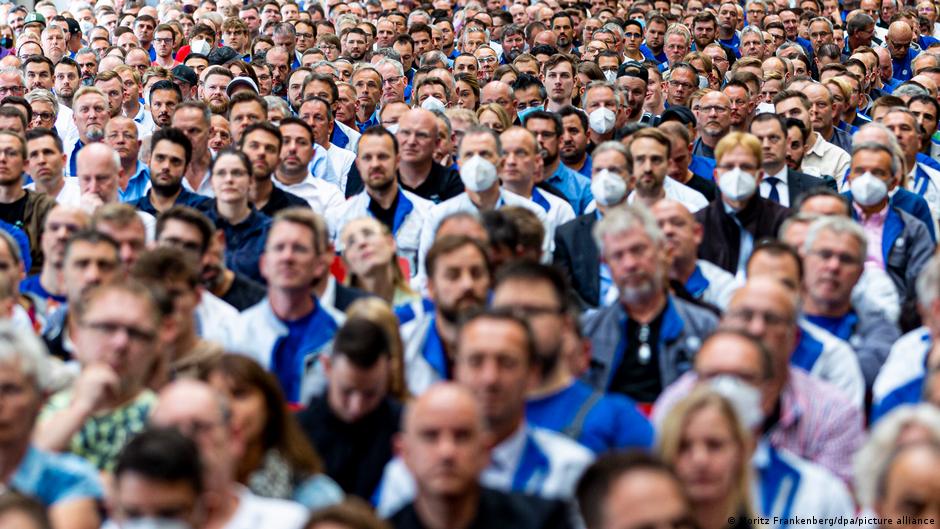
Volkswagen, a cornerstone of the German industrial sector and a global automotive giant, finds itself at a pivotal juncture, reportedly evaluating substantial adjustments to its extensive workforce. With an estimated 630,000 employees worldwide, the company's sheer scale has long been a defining characteristic, embodying its deep roots in manufacturing and engineering. However, in an era marked by rapid technological evolution, shifting consumer preferences, and fierce international competition, particularly from emerging electric vehicle (EV) manufacturers, the size and structure of this workforce are increasingly under scrutiny.
Reports suggest that Volkswagen is contemplating cuts that could affect a significant portion of its global staff, potentially reaching up to 100,000 positions. This potential restructuring reflects a broader acknowledgment within the company that its operational model, which has historically relied on high volume and a large, integrated workforce, may need to adapt to remain competitive and agile in the modern automotive landscape. The move is not merely an isolated cost-cutting measure but appears to be part of a more comprehensive strategy to streamline operations, enhance efficiency, and reallocate resources towards future-oriented technologies and market segments.
The Evolution of Volkswagen's Workforce: A Historical Perspective
To understand the current situation, it is crucial to examine the historical trajectory of Volkswagen's workforce expansion. For decades, the company's growth was intrinsically linked to its production capacity and its ability to manufacture a diverse range of vehicles for a global market. This expansion was often fueled by a philosophy that emphasized internal capabilities and a robust employee base, fostering a strong corporate culture and contributing significantly to regional economies, particularly in Germany.
The post-war economic boom and the subsequent globalization of the automotive industry saw Volkswagen expand its manufacturing footprint and product portfolio exponentially. Each new factory, each new model line, and each new market entry typically led to an increase in its employee numbers. This model was highly successful for many years, enabling Volkswagen to become one of the world's largest car manufacturers by volume and revenue. The company's strong ties with labor unions and a tradition of co-determination also played a role in maintaining a stable and often growing workforce, with a focus on long-term employment.
Challenges in the Modern Automotive Sector
However, the automotive industry is currently undergoing a transformative period that presents unique challenges to established players like Volkswagen. The most prominent of these is the accelerating shift towards electric vehicles. This transition requires massive investments in research and development for new battery technologies, software, and charging infrastructure. It also necessitates a re-evaluation of traditional internal combustion engine (ICE) manufacturing processes, which often employ different skill sets and production methods.
Furthermore, the rise of new competitors, particularly from China, has intensified market pressure. Chinese EV manufacturers, often starting with a clean slate, have demonstrated an ability to innovate rapidly, produce cost-effectively, and quickly capture market share, particularly in the critical Chinese market, which is the world's largest for new vehicles. This 'onslaught' of new EV models from agile, digitally native companies puts immense pressure on traditional automakers to accelerate their own EV transitions while maintaining profitability.
Beyond electrification, other factors contributing to the need for restructuring include increasing digitalization across all aspects of vehicle design, manufacturing, and customer interaction. The demand for advanced driver-assistance systems, connectivity features, and autonomous driving capabilities requires a different mix of engineering talent, emphasizing software development and artificial intelligence rather than traditional mechanical engineering. Economic headwinds, supply chain disruptions, and geopolitical uncertainties also add layers of complexity to strategic planning.
The Path Forward: Restructuring for Resilience
The proposed workforce reductions at Volkswagen, if implemented, are likely to be part of a multi-faceted strategy aimed at enhancing the company's resilience and competitiveness. Such a strategy typically involves:
- Operational Efficiency: Streamlining processes, reducing bureaucracy, and optimizing production methods to cut costs and improve output.
- Skill Transformation: Retraining existing employees for new roles in EV development, software, and digital services, while potentially reducing positions in areas related to ICE technology.
- Strategic Investments: Reallocating freed-up capital towards critical areas such as battery technology, software platforms, and advanced manufacturing techniques for EVs.
- Market Adaptation: Developing a more agile and responsive organizational structure that can quickly adapt to changing market demands and technological advancements.
The question of whether these cuts will be 'enough' to withstand the challenges, particularly the aggressive competition from Chinese EV manufacturers, remains a complex one. The automotive industry is dynamic, and success will likely depend not just on workforce size, but on the speed of innovation, the quality of new products, and the ability to capture consumer trust in new segments. Volkswagen's journey through this transformation will be a significant case study in how legacy automakers adapt to a rapidly evolving global market.
Source: DW.com