Prevalence of Screen Time Among European Youth
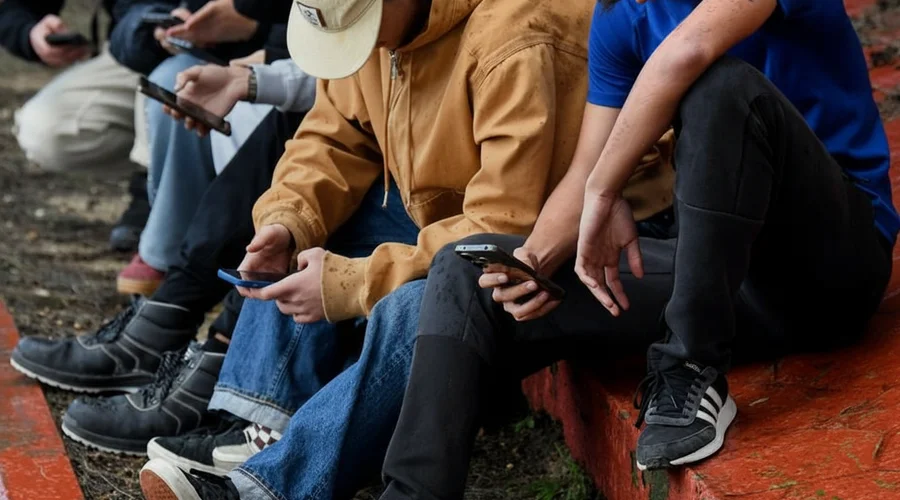
Recent data from the European Union indicates a substantial amount of time spent by adolescents in front of screens. On an average school day, young people dedicate approximately 4.5 hours online, with this figure rising to over 6 hours during weekends. A more concerning statistic reveals that nearly 14% of teenagers in the EU, equating to one in seven, report spending eight hours or more daily on screens. This extended usage can escalate to over ten hours on Saturdays and Sundays for some.
When surveyed about the personal impact of screen time, a notable 40% of adolescents perceived it as positive, while 29% identified negative effects. Furthermore, about half of 13 to 18-year-olds expressed optimism regarding social media's influence, with 48% believing it positively affects their mental well-being. Conversely, approximately one-third of adolescents reported experiencing feelings of sadness, stress, or social exclusion directly attributable to social media. Around 40% also cited difficulties with concentration or sleep disturbances.
The survey also reinforced existing concerns about young people's exposure to potentially harmful content. Over a third of European teenagers reported encountering false or misleading information online, a quarter witnessed hate speech, and nearly one in five had been exposed to unwanted violent content.
Distinguishing Screen Time from Social Media Engagement
Tanya Notley, a professor at Western Sydney University and an expert in digital media literacy, cautions against automatically correlating social media use with a decline in young people's well-being. She emphasizes the need for a more nuanced understanding, stating, "None of the research in this survey shows a link between mental health and social media. I think it's much, much more nuanced than that."
Notley suggests that policymakers should differentiate between general screen time and specific social media engagement. She explains that the term "screen time" is overly broad, encompassing activities from watching television to completing homework. Focusing on social media use specifically, she argues, provides a more insightful perspective into its potential effects.
Policy Responses: Calls for Regulation and Education
Addressing the challenges posed by teenagers' social media exposure, the survey indicated varied opinions on effective solutions. Nearly half of the young people polled advocated for social media platforms to enhance the enforcement of their existing rules, while 44% stressed the importance of increased social media education. Additionally, almost half of the adolescents consulted expressed support for the introduction of further restrictions and age limits.
A growing movement supports the implementation of legal age restrictions. Susie Davies, a former clinical psychologist and co-founder of the UK-based charity PAPAYA (Parents Against Phone Addiction in Young Adolescents), advocates for a ban for individuals under 16. Davies highlights concerns about the mental health implications, noting that modern platforms are designed to exploit dopamine reward pathways, making users susceptible to overconsumption and compulsive behavior. She views a social media ban as a necessary response to the digital world's realities, particularly given that the prefrontal cortex, responsible for decision-making and impulse control, is still developing in adolescents.
Several countries are already taking action or considering bans. Earlier this June, the UK announced a social media ban for under-16s across England, Scotland, Wales, and Northern Ireland, set to commence in spring 2027. Australia led the way with a comprehensive ban for minors accessing social media platforms, implemented last December. Norway and Canada are also exploring similar restrictions. Despite the EU's robust digital regulations, including the Digital Services Act and Digital Fairness Act, some member states, such as France, Spain, Greece, Austria, and Denmark, are investigating national bans and advocating for a bloc-wide implementation. In Germany, a government-appointed commission recently recommended a total ban for children under 13.
Skepticism and Alternative Perspectives
However, not all stakeholders support blanket bans. Rares Voicu, president of the European Youth Forum, views such measures as overly simplistic, failing to address the intricate nature of social media use among young people. He emphasizes that social media has become a fundamental aspect of modern life, serving as a primary source for news, socialization, and community building for youth.
Nandi Vijayakumar, a research fellow at Deakin University in Australia who co-authored a report on social media and adolescent mental health, also highlights the potential benefits. She notes that much of contemporary life unfolds online, and social media can be instrumental in helping young people develop their identity, forge friendships, and connect with peers. For some, online communities offer a sense of belonging that might be less accessible offline.
Voicu raises important questions about the potential consequences of banning social media for under-16s, suggesting that alternative activities would need to emerge to foster similar senses of community. Notley from Western Sydney University advises caution, particularly regarding the Australian ban, which she describes as a "high-risk policy" lacking strong evidence. She urges governments to consider pilot initiatives, evaluate existing regulations, and prioritize digital media literacy rather than immediately following suit. She also points out that the initial research on the Australian ban's impact on young people's mental health, well-being, and safety is expected later this year, advising governments to await these findings before making significant policy shifts due to the "massive repercussions for young people."
Source: Banning social media for teens: Solution or overreaction?