The Emergence of Fabricated Visuals in Global Sporting Contexts
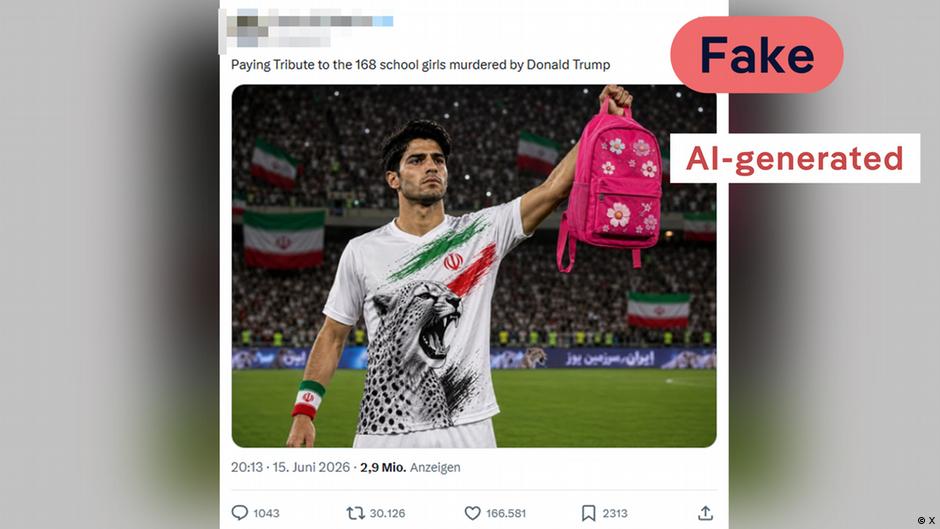
Major international sporting events, such as the World Cup, typically serve as global platforms for athletic competition and cultural exchange. However, recent tournaments have also become unwitting stages for the spread of digitally manipulated content, specifically through the use of artificial intelligence. These AI-generated images, often highly convincing at first glance, have been employed to fabricate scenarios that align with specific political agendas or to promote narratives that are entirely divorced from reality.
The proliferation of such imagery poses a significant challenge to the integrity of information in the digital age. As AI technology becomes more sophisticated and accessible, the ability to create realistic but entirely false visual evidence has increased dramatically. This development complicates efforts to distinguish genuine reporting from deliberate deception, particularly in fast-moving news cycles and on social media platforms where content spreads rapidly.
Examples of AI-Generated Political Narratives
Several high-profile instances during recent World Cups illustrate the breadth and nature of these AI-driven fabrications. One such image depicted Keir Starmer, a prominent political figure, ostensibly wearing a Croatian national team jersey. This visual, while seemingly innocuous, could be interpreted in various ways depending on the political context and the intentions of its creators and disseminators. Such images can be used to associate individuals with specific national identities or to create a false sense of endorsement or affiliation.
Another notable fabrication involved an image purporting to show an Iranian protest against a United States military strike. The inclusion of such a politically charged event within the context of a global sports spectacle is designed to draw attention and potentially influence public opinion or incite strong reactions. The strategic placement of these fabricated events against the backdrop of a widely viewed international event amplifies their potential reach and impact.
Further examples include calls for the arrest of Brazil's President Lula, visually presented as if originating from or being supported by attendees at the World Cup. These types of images aim to create an impression of widespread public dissent or legal action against political leaders, thereby undermining their authority or legitimacy. The use of a major public gathering like the World Cup to frame such narratives lends them a false sense of authenticity and collective endorsement.
Perhaps one of the most disturbing instances involved an image depicting Adolf Hitler among the German fan section. This particular fabrication is highly provocative and designed to shock, stir controversy, or even to associate a national team's supporters with extremist ideologies. Such imagery can have profound negative implications, fueling stereotypes or historical revisionism, and causing significant public outrage.
The Mechanism of Dissemination and Impact
These AI-generated images are typically disseminated across various social media platforms, often shared by accounts that may be automated, politically motivated, or simply unaware of the content's fabricated nature. The ease with which these visuals can be created and shared contributes to their rapid spread, often outpacing the efforts of fact-checkers and platform moderators.
The impact of such misinformation can be multifaceted. At a minimum, it can sow confusion and distrust regarding the information people consume. More significantly, it can contribute to the polarization of public discourse, reinforce existing biases, and even incite real-world actions based on false premises. The blurring of lines between reality and simulation challenges the fundamental principles of journalistic integrity and public understanding.
The motivations behind creating and spreading these fakes are varied but often converge on political objectives. These can include discrediting political opponents, swaying public opinion on specific issues, creating division, or simply generating engagement and attention for particular narratives. The anonymity offered by the internet further emboldens those who seek to manipulate public perception through these means.
Addressing the Challenge of AI-Generated Misinformation
Combating the spread of AI-generated misinformation requires a multi-pronged approach. Technological solutions, such as improved AI detection tools, are crucial for identifying fabricated content. However, these tools are in a constant race against the evolving sophistication of AI generation techniques. Equally important are educational initiatives aimed at improving media literacy among the public, empowering individuals to critically evaluate the information they encounter online.
Social media platforms also bear a significant responsibility in mitigating the spread of such content. This includes implementing stricter content moderation policies, investing in fact-checking partnerships, and increasing transparency around the origins and potential manipulation of images. Collaborative efforts between technology companies, governments, media organizations, and educational institutions are essential to develop robust strategies against this growing threat to informational integrity.
The instances observed during recent World Cups serve as a stark reminder of the evolving landscape of misinformation and the critical need for vigilance in a world where digital content can be easily manufactured and widely distributed. The ability to discern truth from fiction has never been more vital.
Source: Original Article