Zambians Displaced by Anti-Migrant Sentiment in South Africa
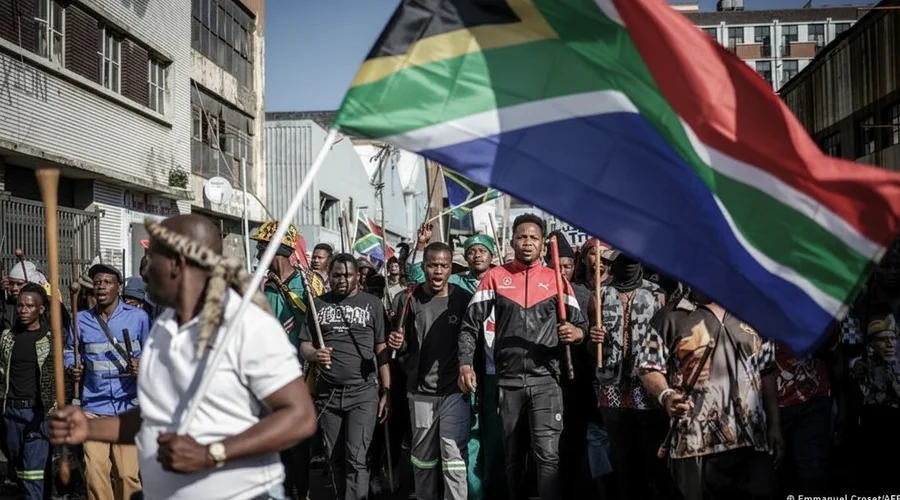
Recent anti-migrant demonstrations in South Africa have compelled numerous foreign nationals, particularly Zambians, to abandon their established lives and return to their home countries. Many describe a rapid and devastating loss of property, businesses, and the sense of security they once held in South Africa, necessitating a difficult fresh start back in Zambia.
Glenda Banda, who had resided in South Africa for a decade, found herself crossing back into Zambia with minimal possessions. She recounted how, within days, her decade of efforts was undone. Banda stated that local authorities allegedly instigated her eviction, leading to her landlord being pressured to remove her family's belongings and lock them out of their home. This forced departure meant leaving everything behind.
Similarly, Bernadette Mwelwa shared her experience of returning to Zambia after more than two decades in South Africa. She lost her livelihood and the life she had meticulously built. Mwelwa noted that the protests targeted all foreign nationals, irrespective of their legal status. Her salon was reportedly seized by the mayor, and a supermarket managed by her Congolese husband was looted and destroyed.
International Concerns and Government Responses
The anti-migrant protests have not only affected individuals but have also drawn official concern from several African nations. Nigeria, Mozambique, and Ghana have all voiced worries regarding attacks on their citizens residing in South Africa. Nigeria specifically condemned the deaths of two of its citizens, asserting that foreign nationals were being unfairly targeted. South Africa's primary police watchdog has initiated an investigation into these incidents.
Mozambique's government reported that five of its citizens died as a direct result of what they termed 'xenophobic attacks' that emerged after a march against undocumented migrants in Mossel Bay. However, South African police stated that only two Mozambicans died following an assault and did not confirm a link to anti-migrant sentiment. Ghana also reported one of its citizens fatally wounded during demonstrations, a claim South Africa disputes, suggesting the killing was unrelated to the protests and accusing Ghana of disseminating misinformation.
Despite these differing accounts, thousands of migrants have departed South Africa due to ongoing anti-migrant sentiment, threats, and instances of physical violence. Several African governments, including those of Nigeria, Malawi, Ghana, Zimbabwe, and Mozambique, have facilitated voluntary repatriation efforts, organizing flights and buses for their citizens.
Underlying Causes of Recurring Tensions
South Africa has a history of anti-foreigner violence, with significant outbreaks occurring since 2008. These incidents often coincide with periods of high unemployment, widespread poverty, and public dissatisfaction with government services. Foreign nationals are frequently accused of taking jobs or contributing to crime. However, researchers suggest that migrants are often scapegoated for broader economic and governance challenges.
Zambia's Vice President, Mutale Nalumango, emphasized the importance of safety for Zambian citizens, stating, 'The most important thing for the Zambians is to stay safe and come back home. Home is home.' She added that authorities would assess individual cases to determine appropriate assistance.
South African President Cyril Ramaphosa has rejected the notion that South Africans are inherently xenophobic. He acknowledged that migration presents complex challenges requiring political solutions. 'South Africans are not xenophobic. South Africans are Africans, and they want to live with other Africans peacefully,' Ramaphosa stated in a national address, recognizing that citizens expect leaders to address migration-related issues.
Calls for De-escalation and Support for Migrants
The International Organization for Migration (IOM) has highlighted the urgent need to protect migrants and prevent further violence. Yitna Getachew, the IOM's Chief of Mission for South Africa, expressed deep concern over the situation, stressing the immediate danger of escalating tensions and calling for de-escalation and calm.
While returning home may offer physical safety, emotional recovery is a separate challenge. Lisa Thompson-Smeddle, a psychologist in Stellenbosch, noted that 'Returning home after experiencing xenophobic violence does not automatically bring healing, safety or health.' She explained that many survivors grapple with grief, anxiety, and trauma from losing their homes, livelihoods, and communities.
Loren Landau, a senior migration researcher at the African Centre for Migration and Society, argues that anti-foreigner sentiment is often fueled by wider governance and economic problems, such as unemployment, inequality, and inadequate service delivery, rather than by migration itself. Landau suggests that governments should prioritize strengthening social cohesion and improving governance instead of attributing socioeconomic issues to migrants.
For individuals like Glenda Banda and Bernadette Mwelwa, these policy discussions are distant realities. They have found physical safety back in Zambia, but the arduous process of rebuilding their lives, restoring their livelihoods, and healing from the emotional scars of displacement has only just begun.
Source: Original Article