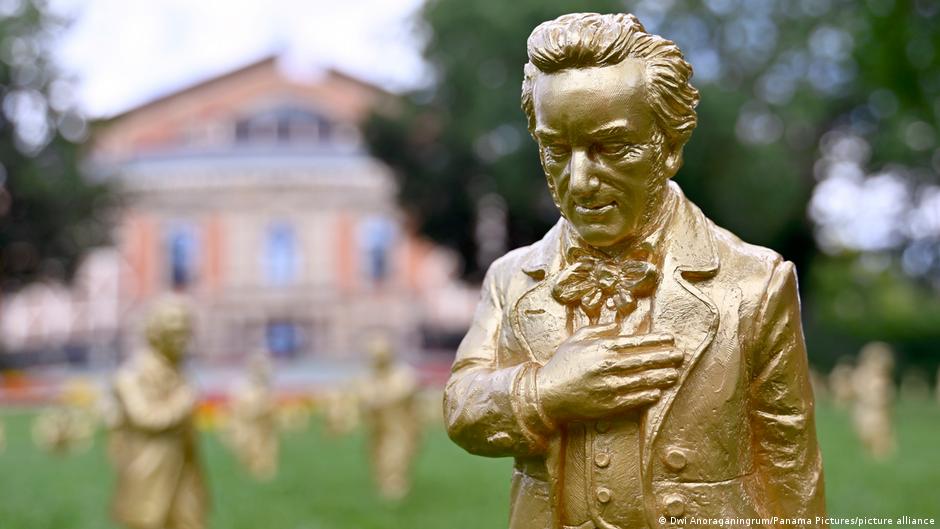
The Bayreuth Festival's Enduring Challenge
The Bayreuth Festival, a globally recognized event dedicated to the works of Richard Wagner, is commemorating its 150th anniversary. This milestone, however, is overshadowed by persistent scrutiny regarding the festival's approach to its complex and often troubling history, particularly its connections to antisemitism and the Nazi regime. The debate surrounding its legacy continues to spark significant public discussion and internal reflection within the organization.
A recent incident involving Jewish public intellectual Michel Friedman highlighted the ongoing tensions. Friedman was initially invited to deliver a speech at a memorial for victims of National Socialism, focusing on Wagner's antisemitism and the festival's historical links to the Nazis. His subsequent disinvitation, followed by his reinstatement after widespread public outcry, became a focal point of criticism. The German newspaper Süddeutsche Zeitung characterized the episode as indicative of a "chronic German desire to be spared from confronting its own history," underscoring the deep-seated challenges in addressing this sensitive past.
Adding to the criticism, Anno Mungen, director of the Research Institute for Music Theater Studies at the University of Bayreuth, accused the festival's leadership of being "historically oblivious" in an interview with Die Zeit. Mungen's concerns were particularly directed at the decision to stage Wagner's opera "Rienzi" for the first time during the anniversary season, a work known to have been Adolf Hitler's favorite. Richard Wagner himself remains a deeply divisive figure, celebrated for his revolutionary operatic compositions but also condemned for his virulent antisemitic views.
The Unique Vision of Richard Wagner
Richard Wagner (1813-1883) conceived his operas as Gesamtkunstwerke, or "total works of art," aiming to unify music, drama, staging, and design under a singular artistic vision. To realize this ambitious concept, he personally oversaw the construction of his own opera house, the Bayreuth Festspielhaus, which first opened its doors in 1876 with the monumental 16-hour opera cycle, "The Ring of the Nibelung." Wagner's involvement extended to every aspect of his productions, from designing the theater's architecture and writing his own librettos to directing and overseeing stage designs. Many of his heroic narratives, especially in "The Ring of the Nibelung," drew inspiration from Germanic and Norse mythology, often exploring themes of unconditional love and sacrifice.
Adhering to Wagner's original intentions, the festival exclusively features a select number of his 10 mature operas each year. Annually, approximately 60,000 visitors from across the globe journey to Bayreuth's "Green Hill" to experience these performances in the unique environment Wagner envisioned. Despite the famously uncomfortable wooden seating, limited legroom, and the absence of air conditioning in the auditorium, audiences readily accept these conditions, often paying high ticket prices, for the unparalleled experience of a Wagnerian performance at its original home.
The Festspielhaus's distinctive atmosphere is largely attributed to its innovative design. The orchestra is concealed beneath the stage, performers are brightly lit while the audience remains in darkness, and the wood-paneled auditorium ensures exceptional acoustics throughout. Sven Friedrich, director of the Richard Wagner Museum in Bayreuth, notes the anachronistic nature of this experience in the digital age, yet suggests, "But perhaps that's exactly what makes it fascinating again."
Wagner's Influence on Adolf Hitler and the Shadow of Nazism
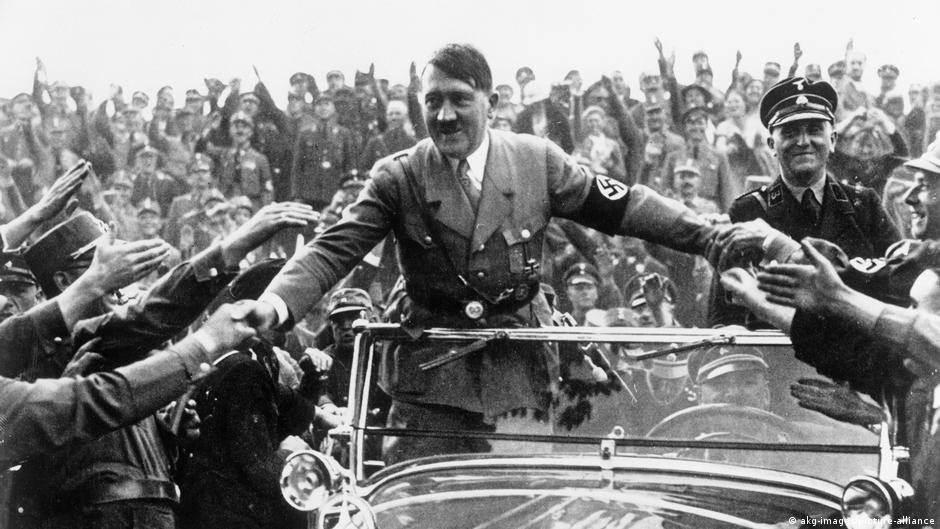
Long after Wagner's death, his dramatic use of light and darkness and monumental musical style captivated Adolf Hitler, who regarded Wagner as his favorite composer and "Rienzi" as his preferred opera. The Nazi regime extensively appropriated Wagner's music for propaganda, utilizing it in films and even as a tool of psychological torment in concentration camps. The festival's historical association with Hitler, who frequently attended and developed close ties with the Wagner family, remains a profound stain on its legacy. The opera "The Mastersingers of Nuremberg," for example, was traditionally performed on the eve of the Nazis' annual Nuremberg Party Rally. These historical connections, coupled with Wagner's explicit antisemitism, continue to cast a long shadow over Bayreuth.
Artistic director Katharina Wagner has actively confronted this difficult past, notably by inviting German-Australian director Barrie Kosky in 2017. Kosky's production of "Die Meistersinger" controversially interpreted the character of Beckmesser as embodying stereotypical antisemitic traits, portraying him as a "scapegoat for the trauma of an entire people."
The Enduring Problem of Wagner's Antisemitism
Richard Wagner's antisemitism was overtly expressed in his 1850 essay, "Judaism in Music," where he asserted that Jews lacked genuine artistic identity and merely mimicked others. Sven Friedrich highlights that "There has always been an undercurrent of antisemitism in Bayreuth, and Cosima, Wagner's wife, was antisemitic as well." He adds that the children and grandchildren, growing up in a relatively isolated provincial setting, partially absorbed these attitudes. Hitler forged a close friendship with Wagner's son Siegfried and especially with Siegfried's wife, Winifred Wagner. The dictator was a frequent guest at the Wagner family villa, now the Richard Wagner Museum, finding both refuge and a sense of belonging there. Friedrich characterizes the Festspielhaus during this period as "something like his royal court theater."
Post-War Rebirth and Modern Innovations
Following World War II, Winifred Wagner and her son Wieland underwent the Allied denazification process. To disassociate the festival from its Nazi past, Winifred formally transferred her rights to her sons, Wieland and Wolfgang. However, this decision also drew criticism due to Wieland's preferential treatment from Hitler during the war. Facing financial difficulties and a pressing need to redefine its identity, Wieland Wagner spearheaded a "New Bayreuth" style, characterized by sparse, minimalist productions of his grandfather's operas. After Wieland's passing, Wolfgang Wagner assumed sole leadership, opening the festival to external directors and fostering a broader range of artistic interpretations.
In recent years, Richard Wagner's great-granddaughter, Katharina Wagner, has endeavored to modernize the festival. In 2022, she invited director Valentin Schwarz to reinterpret "The Ring" as a contemporary family saga, drawing inspiration from streaming platforms like Netflix. The 2023 festival saw director Jay Scheib utilize augmented reality to add a digital visual layer to his production of "Parsifal." This year's new "Ring" production will feature stage designs developed with artificial intelligence. The upcoming "Rienzi" production by Hungarian directors Alexandra Szemeredy and Magdolna Parditka is anticipated to reframe "the Rienzi case" as a courtroom drama, drawing parallels to contemporary populist societies. Prior to the performance, the festival plans to host a concert featuring music by Jewish composers, followed by Michel Friedman's lecture, signaling an ongoing effort to engage with its complex history.
Source: Original Article