A New Energy Hub in East Africa?
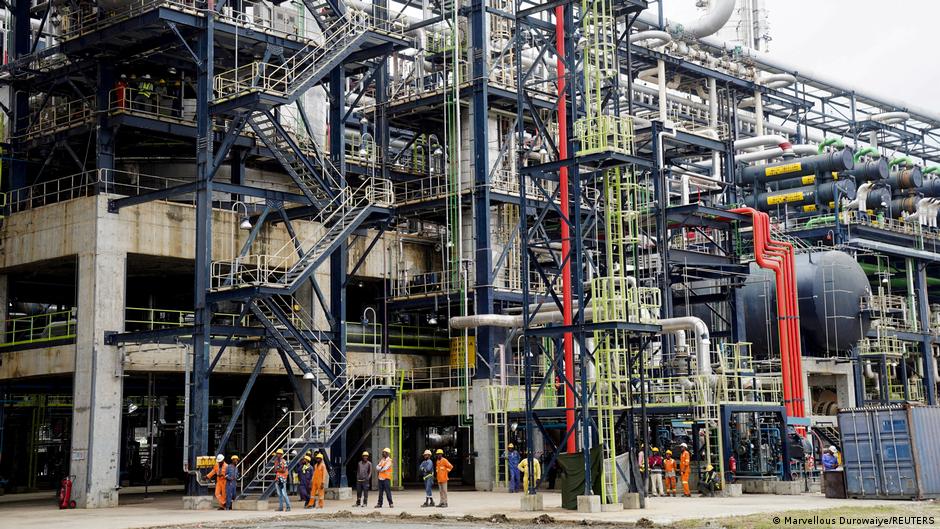
The potential development of a substantial oil refinery by Nigerian industrialist Aliko Dangote on Lamu Island, off the Kenyan coast, is attracting considerable attention across East Africa. This proposed facility, envisioned to process 700,000 barrels of oil daily, aims to become Africa's second-largest refinery, significantly altering the dynamics of fuel supply, trade, and economic development in the region. The project mirrors the scale of the existing Dangote Petroleum Refinery in Lagos, Nigeria, which currently stands as the continent's largest.
Oge Onubogu, a director and senior fellow at the Center for Strategic and International Studies in Washington, DC, noted the positive reception on the ground in Kenya. She highlighted the widespread belief that such an investment would be beneficial, citing the potential for job creation not only within local Kenyan communities but also across the broader East African region. Onubogu emphasized the project's substantial nature, acknowledging its necessity for the continent and specifically for East Africa.
Project Scope and Financial Considerations
The selection of Lamu Island followed a period of competition between Tanzania and Kenya to host the ambitious venture. While Dangote Industries Limited has not publicly disclosed the projected cost, estimates from Bloomberg suggest the refinery could require an investment of up to $17 billion. This figure would position it as one of the largest privately funded industrial undertakings in the region to date, underscoring its economic significance.
However, specific details regarding the agreement between the Kenyan government and Dangote remain largely undisclosed. Leo Kemboi, an economist at the Institute of Economic Affairs Kenya, pointed out the lack of official pronouncements from the Kenyan government concerning guarantees. Nevertheless, he indicated that frequent meetings between Kenyan President William Ruto and Dangote suggest ongoing negotiations and discussions about potential incentives. Reuters reported that Dangote Industries intends to finance the project through a combination of internal revenue, bond issuances, and proceeds from a planned initial public offering (IPO) of Dangote Petroleum Refinery. This funding strategy has faced scrutiny, particularly after Nigeria's Securities and Exchange Commission stated that it had not received or approved any IPO application, raising questions about the finality of the financing arrangements.
Furthermore, Dangote has reportedly expressed the need for anti-dumping protections for any East African refinery project. Such measures would aim to shield local refining operations from cheaper imported fuels. Kemboi voiced concerns that excessive tax incentives or protections could be met with public disapproval in Kenya, citing past instances where perceived unfair advantages led to public backlash. He suggested that any appearance of market manipulation or undue favoritism could ultimately undermine the project's success in the country.
Environmental and Sustainability Debates
Despite some reservations, geotechnical investigations are reportedly underway on Lamu Island, a UNESCO-protected World Heritage Site. Media reports confirm that engineering and design work has commenced, with construction anticipated to span three to five years. The project's location within a sensitive ecological area has sparked discussions about its potential environmental impact, presenting a challenge for authorities to balance economic development with ecological preservation.
Kemboi offered an optimistic perspective on Kenya's commitment to sustainable technologies, noting that a significant portion of the country's energy mix is derived from green sources. He highlighted that 35% of Kenya's electricity is from renewable sources, with over 90% of that being green energy, primarily from geothermal and hydro resources. In contrast, Onubogu adopted a more cautious stance, emphasizing the importance of integrating environmental considerations into feasibility studies and development plans. She drew parallels to the Niger Delta in Nigeria, where decades of oil exploration have resulted in significant environmental damage. Onubogu believes a complete transition from fossil fuels to alternative energy sources will take considerable time.
“As they conduct the different feasibility studies, as they work to bring this refinery online, I hope that these considerations will feature in their conversations, based on lessons learned from elsewhere on the continent.”
Regional Self-Sufficiency and Geopolitical Shifts
Beyond Kenya's direct benefits, the refinery is expected to play a crucial role in enhancing East Africa's energy security by supplying refined petroleum products across the region and beyond. This increased self-reliance could mitigate the region's vulnerability to global geopolitical events and their impact on oil prices, such as the war in Ukraine or disruptions in key shipping routes like the Strait of Hormuz.
Onubogu stressed the importance of African governments proactively developing strategies to protect themselves from global shocks. She noted that the continent has increasingly recognized the interconnectedness of global events and their local impacts.
Political Dimensions and Future Prospects
The refinery project also carries potential political implications for Kenyan President William Ruto, particularly as his re-election campaign approaches. The project's promise of job creation and economic revitalization could be a key component of his platform, especially in addressing discontent among Kenya's youth regarding unemployment. Kemboi suggested that the investment could significantly transform coastal counties, which are often considered swing regions in electoral contests.
However, Onubogu cautioned against overestimating the immediate political sway of the project, noting that it is still in its early stages. She acknowledged that while Ruto's supporters would view it positively, his overall popularity has seen shifts since his initial election. Ultimately, Onubogu views the endeavor as a significant win, not just for Kenya's economy but also as an example of African-led investment that fosters regional integration and creates opportunities.
Source: Original Article