New European Ballistic Missile Defense Coalition Launched
A significant alliance has been forged between Ukraine and nine other European countries, aiming to create a robust and integrated ballistic missile defense system for the continent. This collaborative effort, announced during a summit in Paris, seeks to utilize Ukraine's practical experience in missile defense from the ongoing conflict to strengthen Europe's protective capabilities. The initiative underscores a continued commitment to supporting Ukraine and projects a unified stance against potential aggression.
Participating Nations and Strategic Goals
The coalition comprises Denmark, France, Germany, Italy, the Netherlands, Norway, Spain, Sweden, the United Kingdom, and Ukraine. In a joint declaration, the member states articulated their shared objective: to construct a comprehensive ballistic missile defense capacity for Europe. Leaders emphasized that this project is intended to develop 'purely defensive' anti-ballistic capabilities, responding to what they describe as a 'growing threat' posed by ballistic missiles. The new system is designed to augment existing national European missile defense frameworks, either those already operational or in the planning stages.
The statement from the coalition members highlighted the belief that "the protection of Europe requires a global solution of integrated missile defense architecture to deter and defeat future missile threats." This suggests a vision for a interconnected defense network capable of addressing a wide range of aerial threats.
Ukraine's Role and Priorities
Ukrainian President Volodymyr Zelenskyy has underscored the critical importance of anti-ballistic defense for his nation. He stated that the discussions in France could unlock "significantly greater opportunities" for Ukraine's security. Zelenskyy announced that Ukraine would present its Anti-Ballistic Program to its partners and convene a high-level meeting involving leaders, national security advisors, and defense industry representatives from contributing countries. This gathering aims to facilitate concrete contributions towards establishing the new anti-ballistic system.
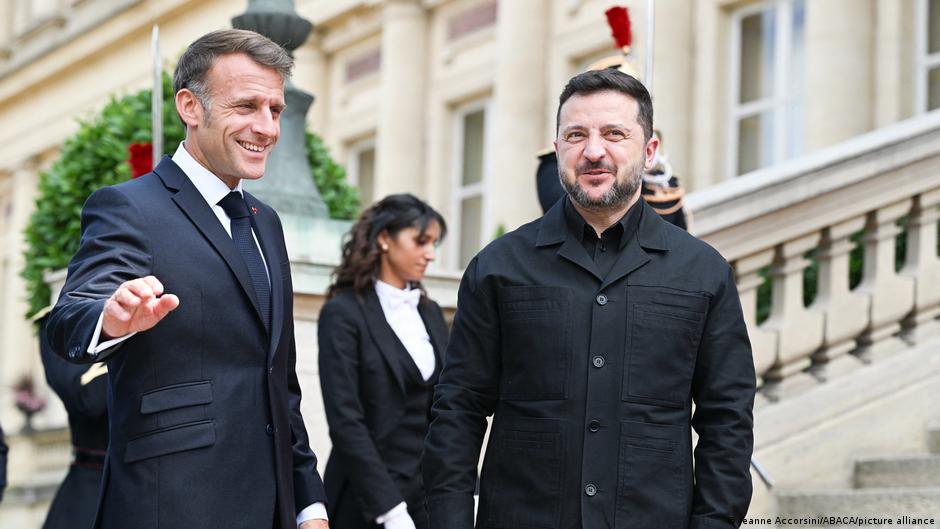
President Zelenskyy's participation in the 'Coalition of the Willing' talks in Paris, alongside French President Emmanuel Macron, signals Ukraine's active role in shaping this defense initiative. He expressed a desire to inject new momentum into this collaborative format, leveraging Ukraine's firsthand experience in countering missile attacks.
Broader European Defense Context
French President Emmanuel Macron, speaking to armed forces personnel prior to the Paris meeting, conveyed a resolute message regarding Europe's commitment to defending freedom and the rule of law. He asserted that Europe is prepared to make the ultimate sacrifice if necessary. "The message we send to the world is this: Yes, peace is our goal. Yes, we cherish freedom and the rule of law. And yes, we stand ready to fight to defend them. Always, and at the cost of blood if necessary," Macron declared. This statement reinforces the strategic significance of the new defense coalition within a broader context of European security and determination.
Related Diplomatic and Security Developments
In a separate but related development, Russia summoned Germany's ambassador to Moscow, Alexander Graf Lambsdorff, to formally protest Berlin's ongoing support for Ukraine. The Russian Foreign Ministry expressed its strong objections to Germany's increasing assistance to Kyiv, including military and military-technical agreements. Moscow additionally accused Berlin of aiding in the development of capabilities allegedly used to target civilian areas within Russia. Germany's Foreign Office dismissed these allegations as 'completely baseless,' characterizing the summons as an unwarranted measure. This diplomatic incident occurred amidst broader tensions, including Germany's prior summoning of Russia's ambassador over cyberattacks attributed to Russia's FSB intelligence service.
Furthermore, reports emerged of a Russian attack on a Togolese-flagged vessel, resulting in three crew fatalities and five injuries. Ukraine's Deputy Prime Minister condemned the incident, highlighting it as another instance of Russia's targeting of civilian shipping and port infrastructure. Such actions, he argued, threaten international shipping safety, global trade stability, and food security. The vessel was reportedly unloading mineral fertilizers in the Odesa region at the time of the strike.
These events underscore the complex and evolving security landscape in Europe, where diplomatic tensions and direct military actions continue to shape international relations and defense strategies. The formation of the new ballistic missile defense coalition represents a concrete step by European nations and Ukraine to enhance their collective security posture in response to these challenges.
Source: Original Article