Independent Climate Initiative Emerges Amidst Federal Science Reductions
In response to substantial reductions in publicly funded science and research within the United States, a collective of former federal workers has revitalized a previously discontinued climate information website. This initiative aims to uphold the flow of critical climate data and insights, particularly as the current administration continues to scale back support for scientific endeavors.
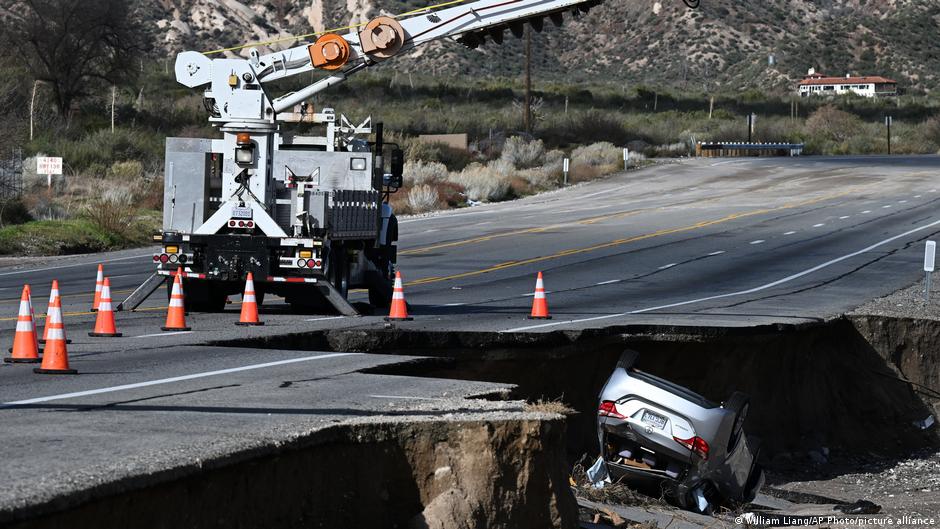
Experts emphasize the crucial role of federal science agencies in safeguarding communities against the escalating impacts of extreme weather events, such as the severe storms that affected California in late 2025. With an estimated 100,000 federal science agency positions eliminated and funding for essential weather and ocean monitoring significantly curtailed, there are growing concerns that the U.S. is relinquishing its prominent position in global climate research.
However, a determined group of former government employees has successfully secured funding to maintain public access to vital information concerning the realities of a warming planet. The platform, Climate.us, was developed by former personnel from the National Oceanic and Atmospheric Administration's (NOAA) Climate.gov website. Its primary objective is to restore access to information that is described as “accurate, accessible, and scientifically rigorous,” thereby enhancing public awareness of phenomena such as heatwaves, severe storms, and sea-level rise.
The Genesis of Climate.us: A Response to Policy Shifts
The original Climate.gov project faced termination and funding cutbacks shortly after President Donald Trump, who has publicly dismissed climate change as a fabrication, assumed office for his second term in early 2025. Climate.gov, which recorded approximately 15 million page views in 2024 and was experiencing consistent annual growth, was subsequently redirected to an alternative NOAA site overseen by political appointees whose views are perceived as unfavorable to climate action.
Rebecca Lindsey, the managing director of Climate.us and a former editor at Climate.gov, articulated the project's foundational principle: “Trusted climate information should not disappear when politics change.” Lindsey informed DW that the substantial popularity of the former Climate.gov site demonstrated a clear public demand in the U.S. for impartial and reliable climate information, indicating a widespread interest and concern among the populace.
Climate.us initially launched in 2025 as a repository for content from the former government website. However, its latest iteration is expanding to offer a broader range of content, including news articles, expert blogs, data visualizations, reports on climate indicators, and educational resources for classrooms. Scientists are volunteering their time to meticulously vet all content for accuracy. The project is sustained by thousands of small donations originating from both the U.S. and international contributors.
Lindsey, who lost her position at Climate.gov in February 2025, expressed profound encouragement by the international support the initiative has received. She noted, “It’s just so heartening to get this outreach from other countries because I’m aware that other nations would have every right to think, well, America, you’ve shot yourself in the foot.” This relaunch is part of a broader effort to safeguard access to scientific data and knowledge in the face of reduced government funding for public science.
Implications of Federal Workforce Reductions
Jules Barbati-Dajches of the Union of Concerned Scientists warned that proposed cuts, including a potential $1.6 billion reduction from NOAA in the upcoming federal budget, could lead to the U.S. losing “hundreds of years of collective expertise in a variety of areas” and poses a significant “threat to innovation.”
The federal workforce has seen a reduction of approximately 12% under the current administration, with science agencies accounting for roughly 40% of these losses, according to data from the Partnership for Public Service. Between September 2024 and February 2026, federal science agencies shed nearly 118,000 employees. Concurrently, grant funding for environmental research and innovation, which includes studies on how chemicals and heat impact human health, plummeted by 79%.
Brandon Lardy, data director for the Partnership for Public Service, highlighted the tangible consequences of these reductions, citing instances of abruptly canceled contracts and research facilities being suddenly closed. These actions leave communities vulnerable to issues such as contaminated water and air, extreme weather events, and the spread of infectious diseases by insects whose habitats are expanding due to rising temperatures. Lardy emphasized that these impacts directly affect the long-term health and well-being of communities.
Notably, around 10,000 individuals who departed the government workforce in 2025 held PhDs in STEM (science, technology, engineering, and mathematics) or health-related fields. Deep budget cuts and regulatory rollbacks are significantly impeding the capacity of agencies like the U.S. Environmental Protection Agency to monitor critical issues, such as “forever chemicals.” Barbati-Dajches underscored the necessity of retaining experts in fields like environmental toxicology, epidemiology, and meteorology, drawing a parallel to trusting the expertise of a dentist or an airplane pilot for safety.
The Future of Scientific Expertise and Government Service
Rebecca Lindsey recounted the personal stress of losing her job, initially worrying about health insurance, which is often tied to employment in the U.S. She then faced the decision of early retirement or pursuing a different career path. Lindsey described this experience as “extremely stressful and scary,” a sentiment echoed by thousands of other former government employees.
Ultimately, Lindsey and her colleagues chose to establish Climate.us, driven by a sense of vocation. She stated, “It was something that we felt really mattered to the country and to the public. And we felt proud of being involved in it.” However, she expressed deep concern about the implications for young scientists, particularly regarding specialized government functions such as regulating the nuclear industry or protecting fisheries and communities. These are areas where the private sector typically does not engage due to a lack of profit incentive. Lindsey questioned the future appeal of government service for young scientists if job security and career paths become uncertain.
The Partnership for Public Service has observed that some former federal scientists remain unemployed, while others have transitioned to state or local government roles, or joined other organizations. Some are even contemplating relocating internationally. A Nature poll indicated that 75% of 1,600 U.S. scientists were considering seeking employment abroad. Lardy, whose parents dedicated their careers to federal service, described this as a “brain drain,” noting reports of scientists moving to countries like Canada, China, or the EU, which raises concerns about the U.S.’s continued leadership in scientific fields.
Despite these challenges, there have been some instances of resistance. Federal lawmakers, for example, rejected significant funding cuts to science agencies earlier in the year, and the administration was compelled to reverse a decision to dismantle a deep-sea monitoring system. However, Lardy cautioned that even when decisions are reversed, it could take “generations to fix a lot of the damage that’s been done” and to rebuild confidence among young people that government service offers a viable and attractive career path.
Source: Original Article