Agonizing Wait for Treatment Abroad
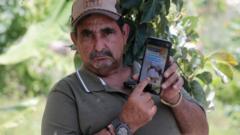
For many patients in Gaza, securing medical treatment outside the enclave has become a desperate and often unsuccessful endeavor. Amina Abu al-Kas, suffering from a severe necrotizing infection, was approved by Gaza's medical board for treatment abroad, a development her son Saber described as a renewed hope. However, despite the approval, Amina passed away on May 29th. Two weeks after her death, her family received a call informing them that her paperwork was finally ready for travel.
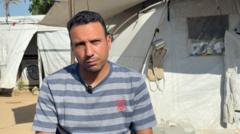
Saber recounted the immense pain his mother endured, stating that doctors in Gaza lacked the necessary medicines and therapies for her condition. The family waited extensively for security clearances and acceptance by a foreign country, both crucial steps for leaving Gaza. Saber expressed the family's constant hope for a 'miracle' call that would allow her to travel for treatment.
Hundreds Die Awaiting Evacuation
According to Gaza's Hamas-run health ministry, Amina is among approximately 300 Palestinians who have died waiting for medical evacuations since a US-brokered ceasefire began last October. These figures are also utilized by the World Health Organization (WHO), which facilitates patient transfers through Israeli-controlled border crossings with Israel and Egypt. The health ministry estimates that around 15,000 individuals are still awaiting treatment abroad, including those with war-related injuries and chronic conditions like cancer.
The WHO reports that 1,977 people have been medically evacuated from Gaza since the ceasefire, more than eight months ago. Officials warn that at the current pace, evacuating all those in need could take years.
Complex Approval Process and Delays
The process for medical evacuation is multifaceted and fraught with delays. After approval by Gaza's medical referral board, patients must undergo security checks by Israel, the host nation, and any transit countries. Additionally, acceptance by a host nation for treatment is required, a process that can be challenging as many countries have specific criteria for the types of patients they can accommodate, such as children or those requiring shorter treatments.
Dr. Reinhilde Van de Weerdt, WHO Representative for the occupied Palestinian territory, highlighted the additional requirements for visas and further security checks by various authorities. Maher Shamia, acting undersecretary for Gaza's health ministry, attributed the primary causes of delays to lengthy security screenings and Israeli restrictions on departure numbers. He noted that departures via the Rafah crossing with Egypt are permitted only three days a week, while medical evacuations via the Kerem Shalom crossing with Israel occur just once a week.
Cogat, the Israeli defense ministry body overseeing civil affairs in Gaza, stated that departures are contingent on an official request from a receiving country and the completion of security screening. They maintained that the "vast majority" of requests submitted by countries and organizations have been approved since the start of 2025.
Protests and Dire Conditions
Amidst the devastated landscape of Gaza City's al-Shifa hospital, protests have erupted against these delays. Individuals like Nidal al-Arir, whose son needs a corneal transplant, and Raeda Nuaizi, a cancer patient reliant on painkillers, voiced their desperation. Fourteen-year-old Muath al-Dini, who lost a leg in an airstrike and has battled spinal cancer since infancy, awaits two separate medical evacuations. His mother, Umm Samir al-Dini, described the dire lack of specialized care in Gaza, where even crucial medical devices for his spine have come loose.
The healthcare system in Gaza remains severely crippled, with hospitals bearing the scars of conflict and facing critical shortages. Pat Griffiths, spokesman for the International Committee of the Red Cross (ICRC) in Jerusalem, emphasized that the extensive medical evacuation list signifies a fundamental lack of access to essential healthcare, which Israel, as the occupying power, is obligated to facilitate under international humanitarian law. He asserted that preventable deaths are occurring due to restrictions on medical supplies, ranging from basic dressings to advanced equipment.
Cogat, in response to reports of shortages, stated that 17,000 tons of medicines and medical aid, including vital equipment, have entered Gaza since the ceasefire, and that all requests for medicines from international aid organizations have been approved. However, a humanitarian official, speaking anonymously, countered that Israeli authorities often use isolated examples to mask ongoing shortages, and that aid supplies remain restricted.
Mazen al-Arayeshi, director of engineering and maintenance at Gaza's ministry of health, reported that while fuel for generators is now permitted, the power supply is often insufficient, leading to canceled surgeries. He warned of an impending catastrophe if spare parts and new generators are not allowed in, citing a recent generator failure at Nasser Medical Complex that caused power cuts to several departments.
The desperation has led some patients to reportedly pay self-proclaimed agents thousands of pounds to expedite their cases, prompting a "Beware of fraud" warning from the WHO. Saber, Amina's son, reflected on the grim reality, stating that a patient in Gaza faces challenges unlike anywhere else in the world, encapsulated by the condolence, "At least she is at peace now."
Source: Original Article