Overview of Recent Developments in Germany
Germany is facing a confluence of notable developments, ranging from domestic policy impacts to international trade disputes. Recent data indicates a significant increase in conscientious objection applications, a concerning rise in heat-related deaths during a recent heatwave, and a German shipping giant's strong disapproval of new proposed fees for transit through the Strait of Hormuz. These events highlight both internal societal shifts and external economic pressures on the nation.
Spike in Conscientious Objections to Military Service
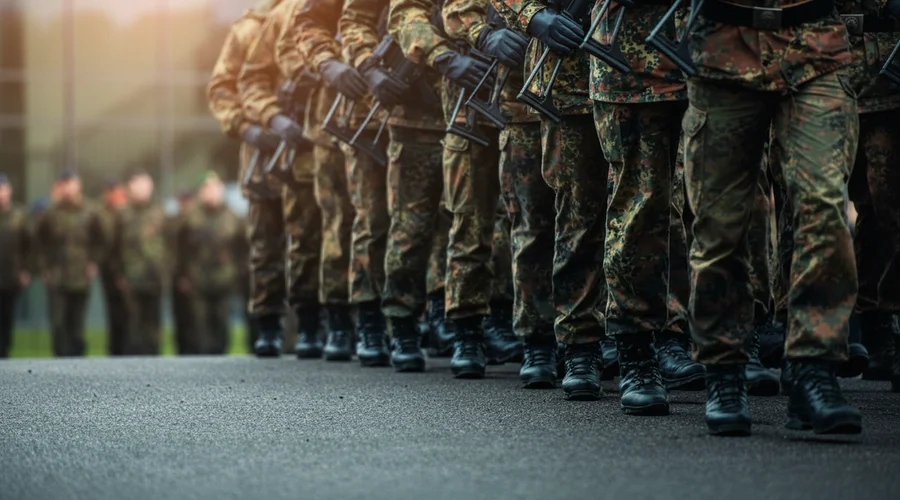
The Federal Office for Family Affairs and Civil Society Functions (BAFzA) has reported a substantial surge in applications for conscientious objection to military service in Germany. In the first half of 2026 alone, 5,862 applications were submitted. This figure represents a considerable increase compared to previous years, with 3,867 applications recorded in the entirety of 2025 and 2,998 in 2024. This trend follows the implementation of a new military service law in January, which mandates screening for young men born in 2008 or later. The law aims to bolster voluntary military recruitment, with provisions allowing for the activation of compulsory service if recruitment targets are not met. While compulsory military service was suspended in Germany in 2011, it remains constitutionally enshrined. The BAFzA emphasized that the right to refuse military service on grounds of conscience is protected under Article 4 of the Basic Law.
Concerns Over June Heatwave Deaths
Germany experienced a severe heatwave in June, leading to a significant increase in fatalities. The Federal Statistics Office reported that 23,900 deaths occurred during the week of June 22-28, which is approximately 7,100 more than the preceding two weeks. This revised figure slightly adjusts an earlier estimate of 6,800 excess deaths. Furthermore, the Robert Koch Institute (RKI), Germany's public health body, estimated that around 5,120 deaths in June were heat-related. Over 4,300 of these fatalities reportedly took place in the last week of June alone. The heatwave saw temperatures surpass 40 degrees Celsius (104 degrees Fahrenheit) in various regions across Germany and much of Western Europe, establishing a clear correlation between the extreme heat and the elevated mortality rates.
Hapag-Lloyd Criticizes Proposed Strait of Hormuz Fees
German international shipping company Hapag-Lloyd has voiced strong opposition to a plan announced by US President Donald Trump to impose a 20% fee on all cargo transiting the Strait of Hormuz. Trump stated that these fees would cover the costs associated with ensuring safety and security in the critical waterway. Hapag-Lloyd, based in Hamburg, described the proposed levy on international waters as "fundamentally wrong." The company informed Reuters that it could not accurately quantify the financial implications of the escalating tensions in the Gulf region on its operations. This criticism underscores growing concerns within the global shipping industry regarding increasing risks due to geopolitical conflicts and trade disputes, which could lead to higher operational costs and disruptions.
Investigation into Prison Misconduct
In a separate development, law enforcement authorities have conducted searches at the Rheinbach Correctional Facility (JVA) and several private residences across North Rhine-Westphalia and Rhineland-Palatinate. These actions are part of an ongoing investigation into alleged misconduct involving multiple correctional services officers. The Bonn police confirmed that the inquiry includes both current and former inmates. Reports from the German news agency DPA indicate that the case centers on allegations of smuggling contraband, such as cell phones and drugs, into the prison in exchange for money. A total of nine search warrants were executed during the operation, with six in North Rhine-Westphalia and three in Rhineland-Palatinate, as authorities continue to gather evidence related to the alleged illicit activities.
Concluding Thoughts
These concurrent events illustrate a period of significant challenge and adaptation for Germany. The rise in conscientious objections reflects a societal response to evolving military policies and geopolitical circumstances. The tragic increase in heat-related deaths highlights the urgent need for robust climate adaptation strategies. Meanwhile, the dispute over shipping fees points to the broader economic and political complexities impacting international trade. Together, these stories paint a picture of a nation grappling with a diverse array of domestic concerns and global pressures.
Source: Original Article