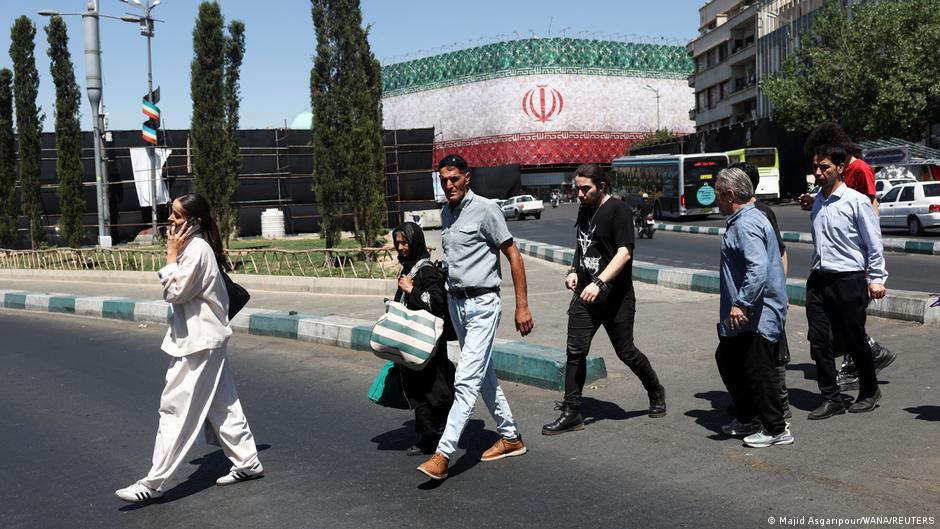
Amid Uncertainty: Iran's Complex State of Affairs
The announcement of a ceasefire between Iran, the United States, and Israel should have marked a transition towards peace. However, despite this agreement, Iranians find themselves in a state of confusion due to frequent ceasefire violations, mixed political messages, and continued emergency measures.
While news of progress and potential sanctions relief surfaces, threats to Iran's infrastructure and warnings of retaliation are also prevalent. This ongoing cycle of war and diplomacy has left many Iranians vacillating between hope and anxiety, creating a psychological burden that many find more taxing than the conflict itself.
Challenges of Planning in Uncertainty
A Tehran-based lawyer, who wishes to remain anonymous, expressed the difficulty of navigating the current crisis without knowing when it might end. She noted that the inability to plan for the future amid ongoing hardship places immense pressure on individuals.
She described a pervasive sense of paralysis, impacting not only personal motivation but also fundamental life decisions regarding work, family, and future prospects. This, coupled with economic instability and the fear of potential violence, has led to widespread fatigue and social stagnation.
"We are completely hopeless," said a resident of Isfahan, highlighting the mental toll of living in a state of unresolved conflict.
The Impact on Younger Generations
The situation is particularly disorienting for younger Iranians, many of whom lack firsthand experience of prolonged conflict, unlike older generations familiar with the Iran-Iraq war. For them, this is their first encounter with an indefinite regional conflict.
A nurse from western Iran shared that societal trust in the future has diminished. People are now hesitant to make long-term decisions, opting to focus on immediate survival instead. This lack of a mental framework for enduring such periods has led to heightened uncertainty and fatigue.
In healthcare settings, this societal stress manifests as patients exhibiting increased dissatisfaction and irritability, even when receiving high-quality services, reflecting the broader emotional climate.
Widespread Discontent and Emotional Strain
Professor Saeed Paivandi from the University of Lorraine in France noted that research and surveys indicate widespread despair and anger towards the government's handling of daily life and governance.
A survey by Iran's Interior Ministry in May 2026 revealed that approximately 60% of the population felt hopeless about the future, with more recent findings showing significant levels of anger, despair, depression, and anxiety.
This emotional strain has worsened since recent anti-government protests and the subsequent government crackdown, as well as military actions by the US and Israel, impacting public sentiment about life and politics.
Additionally, there is a growing desire to emigrate, particularly among younger and more educated demographics, highlighting a lack of faith in future opportunities within the country.
Beyond External Conflicts
Experts suggest that Iran's current psychological crisis is not solely due to external conflicts. The situation is compounded by internal issues such as inflation, repression, and a longstanding sense of limited opportunities.
The absence of clear, credible solutions or future prospects has made uncertainty a constant part of daily life in Iran. This ongoing limbo challenges the restoration of public confidence and the ability to envision any future stability.
Source: Original Article