Dispute Over Historical Records
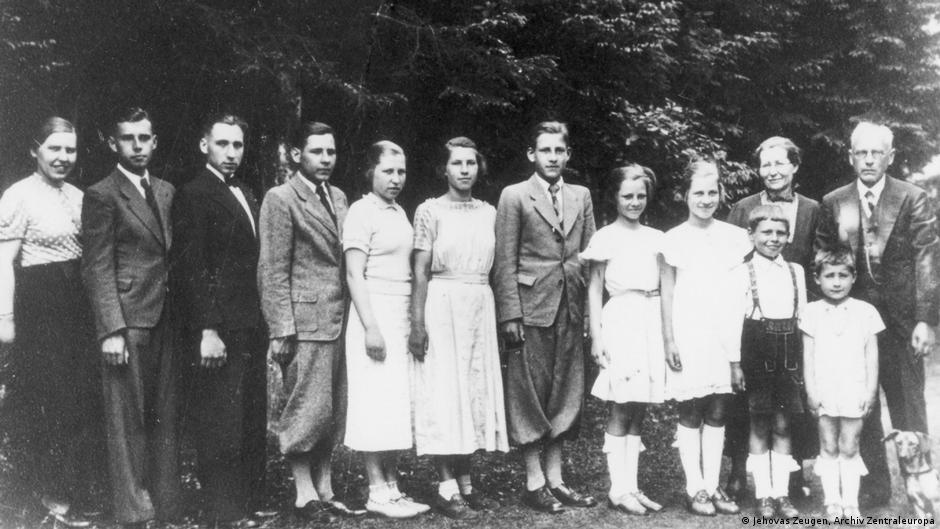
A protracted legal and ethical debate concerning a distinctive collection of documents chronicling the persecution of Jehovah's Witnesses during the Nazi era has seen a recent development. The religious community has secured a partial victory in its bid to assert greater control over these invaluable historical records. This outcome emerges as a new memorial dedicated to the victims of Nazi atrocities was recently unveiled in Germany's capital, Berlin, further emphasizing the importance of preserving and understanding this dark chapter of history.
The archive in question contains a wealth of materials, including personal testimonies, official correspondence, and other artifacts that vividly illustrate the severe repression faced by Jehovah's Witnesses under the Third Reich. Unlike many other victim groups, Jehovah's Witnesses were targeted not for their ethnicity or political affiliation, but specifically for their religious beliefs and their refusal to conform to Nazi ideology, particularly their refusal to salute Hitler or participate in military service. This unique aspect of their persecution makes the archive a vital resource for historians and researchers studying the broader scope of Nazi terror.
The Significance of the Archive
The collection's importance extends beyond the narrative of a single religious group. It provides crucial insights into the mechanisms of state-sponsored persecution, the resilience of individuals facing extreme pressure, and the diverse forms of resistance that emerged during the Nazi era. Scholars often highlight how the experiences of Jehovah's Witnesses offer a distinct lens through which to examine the Nazi regime's totalitarian ambitions and its systematic efforts to suppress any form of dissent or non-conformity.
For the Jehovah's Witnesses community, the archive is more than just a historical repository; it represents a profound testament to the faith and endurance of their members who suffered immensely. They view the documents as an integral part of their collective memory and identity, a tangible link to those who were imprisoned, tortured, and even executed for their beliefs. The desire to manage these records stems from a deep-seated commitment to accurately represent their history and ensure that the sacrifices of their predecessors are never forgotten or misrepresented.
Legal Battle and Custodianship
The core of the dispute revolves around the custodianship and management of this sensitive collection. For decades, the archive has been housed and maintained by state-funded institutions, which argue for its continued public accessibility and professional preservation under established archival standards. These institutions emphasize their expertise in conservation, cataloging, and making historical materials available to a wide range of researchers and the public, irrespective of their background or affiliation.
Conversely, the Jehovah's Witnesses argue that as the direct descendants of the victims and the community most intimately connected to the history, they should have primary control over how these records are preserved, interpreted, and presented. They express concerns about the potential for misinterpretation or an inadequate understanding of the theological and historical nuances of their persecution if the archive remains solely under state purview. Their partial legal victory indicates that courts are acknowledging the community's legitimate interest and connection to these historical assets.
The conflict underscores broader questions about the ownership of historical narratives and the role of victim communities in shaping the remembrance of traumatic events. It highlights the tension between universal access to historical records and the specific interests and perspectives of those directly affected by the events documented.
The legal proceedings have centered on various aspects of intellectual property, historical ownership, and the rights of religious organizations to manage their cultural heritage. While the exact details of the partial victory have not been fully disclosed, it suggests that a compromise or a more collaborative approach to the archive's management may be on the horizon, potentially involving joint oversight or increased input from the Jehovah's Witnesses community.
A New Memorial and Ongoing Remembrance
The backdrop to this legal development is the recent inauguration of a new memorial in Berlin, dedicated to the victims of Nazi persecution. Such memorials serve as crucial focal points for public remembrance and education, ensuring that the lessons of the past are not lost. The establishment of this new site, alongside existing memorials, reinforces Germany's commitment to confronting its history and honoring all who suffered under the Nazi regime.
For Jehovah's Witnesses, the struggle for control over their archive is intrinsically linked to this broader effort of remembrance. They seek to ensure that their distinct experience of persecution is accurately integrated into the larger historical narrative of the Holocaust and that future generations understand the specific challenges and sacrifices made by their community. The outcome of this ongoing dispute will undoubtedly influence how the history of Jehovah's Witnesses during the Nazi era is preserved and presented for generations to come.
Source: Original Article