
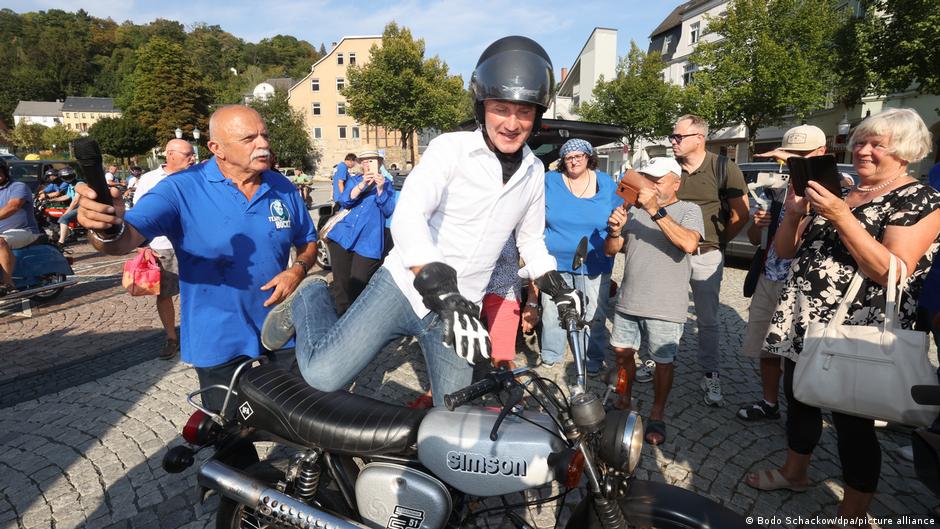
The Schwalbe Moped: A Symbol Co-opted by the Far-Right
The Schwalbe, an iconic moped once a common sight on the roads of East Germany, has unexpectedly found itself at the center of a contemporary political dispute. The far-right Alternative for Germany (AfD) party has been utilizing the nostalgic imagery of the Schwalbe in its electoral campaigns, particularly in the eastern regions of Germany where the party has established a significant base of support. This appropriation of a culturally resonant symbol has drawn criticism and legal action from the heir of the original Jewish manufacturer, who seeks to safeguard his family's legacy from association with a political movement he views as antithetical to its origins.
The Schwalbe, meaning 'swallow' in German, was produced by the Simson factory in Suhl, Thuringia, during the era of the German Democratic Republic (GDR). Beyond its practical function as a mode of transport, the moped became a symbol of East German ingenuity and everyday life, evoking a sense of shared history and collective memory for many who lived under the communist regime. The AfD's strategic deployment of this imagery aims to tap into this nostalgia, appealing to voters who may feel disenfranchised or overlooked in post-reunification Germany. By linking their political message to a beloved symbol of a bygone era, the AfD attempts to project an image of championing traditional German values and identity, a narrative that resonates with certain segments of the population in the eastern states.
A Family's Legacy and a Political Challenge
The current legal challenge comes from Akiva Weissenberg, the great-grandson of Arthur Simson, one of the Jewish founders of the original Simson factory. The Simson family, a prominent Jewish industrial dynasty, established the company in the 19th century, developing it into a significant manufacturer of firearms, bicycles, and eventually, motorcycles and mopeds. Their story, however, is deeply intertwined with the tumultuous history of 20th-century Germany. Under the Nazi regime, the family was dispossessed of their factory, forced to flee the country, and their legacy systematically erased. The factory was Aryanized, and its Jewish origins were deliberately obscured, a common practice during that dark period.
For Weissenberg, the AfD's use of the Schwalbe is not merely a matter of intellectual property or brand association; it is a profound affront to his family's history and the memory of the persecution they endured. He views the AfD, with its nationalist rhetoric and historical revisionism, as embodying ideologies that bear unsettling resemblances to those that led to his family's displacement and the broader atrocities of the Holocaust. The party's attempts to downplay or reinterpret Germany's Nazi past are particularly concerning for Weissenberg, who sees a direct contradiction between the AfD's platform and the values represented by his family's contributions to German industry and culture.
Legal and Ethical Dimensions of Symbolism
Weissenberg's legal team is exploring various avenues to prevent the AfD from continuing its use of the Schwalbe. This includes examining trademark law, copyright, and potentially broader claims related to the misuse of historical symbols and the protection of a family's reputation. The challenge highlights the complex interplay between historical memory, cultural symbols, and contemporary political movements. It raises questions about who has the right to claim and interpret historical artifacts, particularly when those artifacts are imbued with layers of meaning and connected to painful historical events.
The AfD, for its part, maintains that its use of the Schwalbe is simply an homage to East German culture and a way to connect with voters in the region. They dismiss accusations of historical insensitivity, framing their campaign as a celebration of local heritage. However, critics argue that the party's choice of symbols is often deliberate, designed to evoke a sense of national pride that can, at times, border on exclusionary nationalism. The Schwalbe, in this context, becomes more than just a moped; it becomes a contested space where competing narratives about German identity and history are played out.
The Broader Implications for German Society
This dispute extends beyond the specific case of the Schwalbe and the AfD. It reflects a larger societal debate in Germany about how to confront its past, particularly in the face of rising far-right sentiment. The re-emergence of nationalist parties and the increasing normalization of rhetoric that challenges established historical consensus are deeply troubling for many, especially those with direct connections to the victims of past atrocities. Weissenberg's stand is therefore not just a personal fight but also a symbolic one, representing a broader resistance against attempts to whitewash history or co-opt symbols for purposes that contradict their original spirit or the values they should represent.
The outcome of this legal and moral battle could set a precedent for how historical symbols are protected from political exploitation, particularly in a country grappling with its complex heritage. It underscores the importance of vigilance in safeguarding historical truth and ensuring that the lessons of the past are not forgotten or twisted for present-day political gain. The Schwalbe, once a simple means of transport, has become a powerful emblem in the ongoing struggle for historical integrity and ethical remembrance in modern Germany.
Source: Original Article