
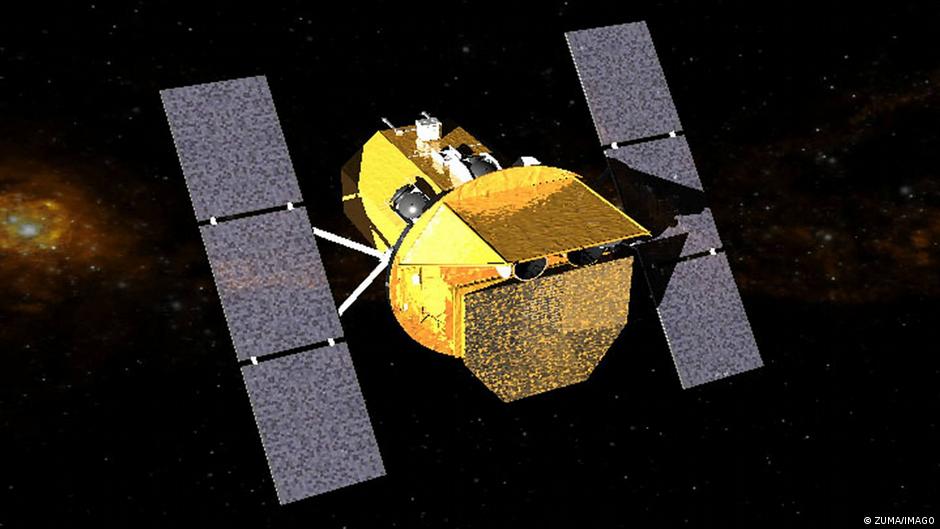
NASA Initiates Swift Telescope Recovery
NASA has embarked on a mission to salvage the Swift Observatory, a telescope that has been experiencing accelerated descent due to solar storms. The recovery effort commenced with the launch of a specially designed spacecraft meant to intercept and stabilize the observatory's orbit.
Mission Details
On Friday, a spacecraft equipped with three robotic arms was launched from the Marshall Islands in the Pacific Ocean. The spacecraft's task is to rendezvous with and secure the Swift telescope, which has been in orbit since 2004. Weighing 1.6 tons (1.4 metric tons), the telescope currently orbits Earth at an altitude of 224 miles (360 kilometers).
The mission is spearheaded by Katalyst Space Technologies, with the spacecraft being launched using Northrop Grumman's Pegasus rocket, which was deployed from an aircraft. The goal is to reach the telescope within a month.
"This is a high-risk, high-reward mission," stated Katalyst Space CEO Ghonhee Lee. "Our main concern was avoiding the scenario where Swift would burn up in Earth's atmosphere."
Swift's Challenges and Mission Objectives
Since its launch, the Swift telescope has been instrumental in observing significant cosmic events, such as gamma-ray bursts and supernova explosions. However, recent solar activity has accelerated its descent towards Earth, necessitating urgent intervention. NASA has allocated $30 million (€26 million) to Katalyst Space Technologies for this operation.
The mission involves the Link spacecraft gently raising Swift's orbit by approximately 150 miles. The aim is to accomplish this without subjecting the telescope to excessive vibrations, thereby allowing it to potentially resume operations by September.
Timely Execution and Challenges
NASA estimates that without intervention, Swift would descend beyond the point of recovery by fall, likely disintegrating in Earth's atmosphere by October. The mission was organized in nine months, but faced setbacks due to weather conditions and technical issues.
"There are numerous firsts occurring in this mission," commented Shawn Domagal-Goldman, Director of NASA's Astrophysics Division. "The fact that we're attempting this is something I'm profoundly grateful for."
Source: Original Article