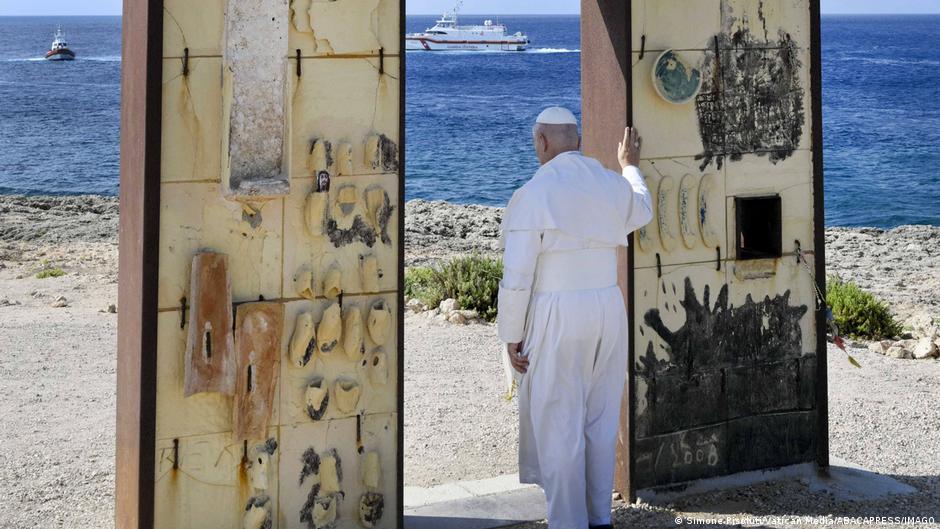
Pontiff Calls for Greater Migrant Assistance in Europe and the US
Pope Leo XIV has issued a strong appeal to European leaders, advocating for increased efforts in the protection and integration of migrants. These statements were made during a significant visit to Lampedusa, Italy, an island serving as a primary entry point for individuals undertaking perilous journeys across the Mediterranean from Africa into Europe. The pontiff's visit underscores a growing concern regarding rising intolerance and indifference towards migrants, echoing sentiments previously expressed by his predecessor, Pope Francis, who also visited Lampedusa to highlight migrant rights.
During his address, Pope Leo emphasized Europe's capacity to manage the migration crisis effectively. He stated, "Europe is capable of addressing the crisis, in this region, in a comprehensive manner, integrating immediate relief efforts into a long-term strategic plan capable of receiving, protecting, supporting and integrating migrants." He further elaborated that such efforts should be complemented by assistance to developing countries, aiming to mitigate circumstances that compel individuals to emigrate in the first place.
Lampedusa, a small Italian island, has become a critical nexus for thousands of migrants seeking asylum and new beginnings in Europe. The Pope engaged in several symbolic acts during his visit, including offering prayers at a migrant cemetery, meeting with migrants at the local port, and presiding over a mass for the community. He reflected on the island's unique vantage point, noting, "From this far-flung corner of Europe on the Mediterranean Sea, one can more clearly perceive the momentous challenge that the phenomenon of migration poses to European societies."
Recent data from the UN refugee agency indicates the significant scale of arrivals. In the first half of the current year, over 14,000 individuals landed in Italy, with a substantial majority — nearly 60% — arriving via Lampedusa, primarily having departed from Libya. Pope Leo extended his gratitude to the island's 6,000 residents, comprising fishing and tourism communities, for their demonstrated solidarity and compassion towards the new arrivals.
An Appeal to the United States
Beyond his message to Europe, Pope Leo also directed an appeal to the United States, coinciding with the 250th anniversary of American independence. In a letter addressed to his home country, he urged Americans to embrace and safeguard immigrants, reinforcing the Catholic principle that defending life encompasses "welcoming, protecting and assisting immigrants."
He articulated that providing a compassionate and generous reception to immigrants is not merely an act of charity but also a fundamental acknowledgment of the inherent dignity of every human being. This message follows his recent remarks highlighting the historical role of "successive waves of immigrants" in the foundational development and growth of the United States. In a video address delivered to the National Constitution Center in Philadelphia, the Pope described "America" as a global "byword for freedom," attributing this reputation to the nation's historical openness to immigrants.
These recent pronouncements by Pope Leo come after previous instances where his stance on immigration garnered attention. Last year, his critiques of certain hardline anti-immigration policies, which he characterized as inhumane, reportedly drew criticism from political figures, including President Donald Trump. The pontiff's consistent advocacy underscores a deeply held conviction within the Catholic Church regarding the moral imperative to support and integrate those displaced from their homes.
The Pope's twin appeals to both European and American leaders reflect a broader global call for humanitarian action and policy reform in response to the complex challenges of contemporary migration. His messages emphasize a holistic approach that combines immediate relief with long-term integration strategies, rooted in principles of human dignity and international solidarity.
Source: Original Article