
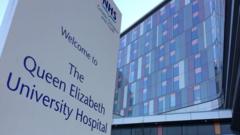
Patient Undergoes Ebola Testing in Glasgow
A patient admitted to Glasgow's Queen Elizabeth University Hospital (QEUH) is currently being tested for the Ebola virus. The individual was admitted in the early hours of Tuesday, with tests underway to confirm a potential diagnosis.
Should the diagnosis be confirmed, it would mark the first case in the United Kingdom since an outbreak emerged in the Democratic Republic of Congo and Uganda in May.
Public Health Response and Risk Assessment
NHS Greater Glasgow and Clyde has stated that no ward closures are in effect at QEUH, and visitors are not being advised to stay away. Public Health Scotland (PHS) is collaborating with the UK Health Security Agency (UKHSA) to evaluate potential routes of entry for travelers from affected regions.
A spokesperson for PHS confirmed, "There are currently no confirmed cases of Ebola in Scotland and the risk to the general public remains low." They also highlighted that established protocols are in place for assessing and testing travelers arriving from areas impacted by Ebola. This includes contact tracing and precautionary testing where necessary.
The UKHSA's Returning Workers Scheme (RWS) has been activated. This program monitors the health of individuals who travel from the UK to affected areas for work purposes. Organizations deploying workers to such regions are encouraged to register them with the scheme.
Understanding Ebola
Ebola is a rare, often fatal, viral disease that targets the body's immune system and organs. It typically originates in animals, such as fruit bats, and can spread to humans through contact with infected animals. Human-to-human transmission occurs through direct contact with blood or other bodily fluids, or contaminated objects.
Symptoms, which can appear between two and 21 days after exposure, often begin suddenly with flu-like signs such as fever, headache, and fatigue. As the disease progresses, vomiting and diarrhea may develop, potentially leading to organ failure. Some patients may experience internal and external bleeding.
Unlike airborne viruses such as influenza or COVID-19, Ebola requires direct contact with infected bodily fluids for transmission. Individuals typically become contagious only after symptoms manifest.
Previous Cases and Global Context
Last week, France reported its first Ebola case, involving a doctor returning from a humanitarian mission in the Democratic Republic of Congo. In December 2014, Pauline Cafferkey, a nurse from Blantyre, South Lanarkshire, contracted Ebola after returning to the UK from Sierra Leone. She recovered but later experienced a relapse and developed meningitis. In June 2019, she gave birth to twin boys, remarking, "This shows that there is life after Ebola."
The World Health Organization (WHO) has declared the current African outbreak a public health emergency of international concern.
Source: Original Article