
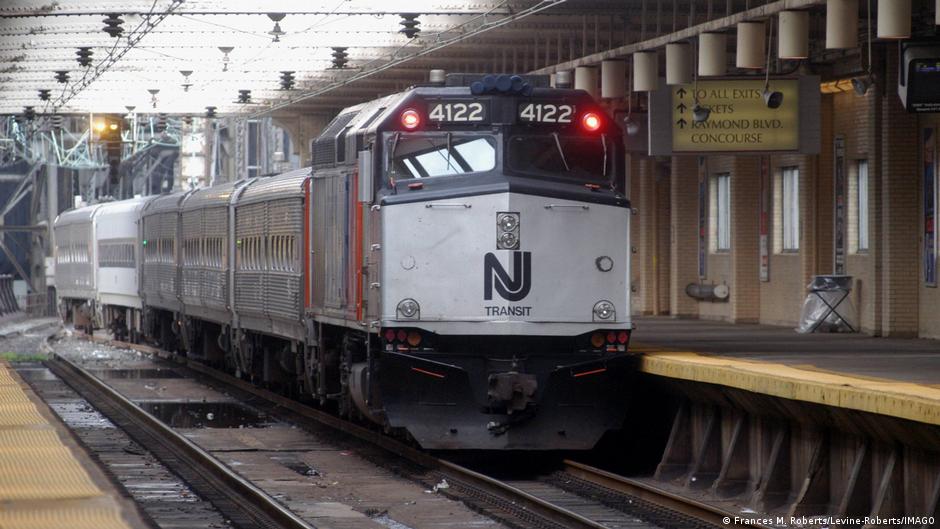
The Resurgence of Rail Travel Amidst Systemic Hurdles
In recent years, an increasing number of American travelers have turned to train journeys, driven by rising airfare and fuel costs. This renewed interest has led to record-breaking passenger numbers over the past two years, signaling a potential shift in transportation preferences. However, many who explore the US rail network for the first time encounter a system predominantly structured for cargo transport rather than efficient passenger movement. This presents a paradox, given that the United States boasts the most extensive railway infrastructure globally, yet often lags behind other developed nations in passenger rail efficiency.
Historical Context: Freight Dominance and Funding Priorities
The mid-to-late 19th century marked a golden age for rail travel in the US, with vast networks established to connect the nation's coasts and facilitate the movement of both people and goods. This era, however, gradually gave way to a different transportation landscape. By the mid-20th century, federal funding priorities shifted dramatically, favoring the development of highways and airports. This strategic pivot made automobile and air travel considerably more efficient and accessible, effectively sidelining passenger rail in the national transportation agenda.
Unlike many European countries, which have consistently viewed passenger rail as a vital public service and invested accordingly, the US prioritized the more profitable freight rail sector. This historical legacy continues to shape the current infrastructure, with much of the nation's track designed to accommodate heavy goods rather than high-speed passenger services. A prime example is Amtrak's Northeast Corridor, its most popular route, which spans 457 miles (735 kilometers) between Boston and Washington D.C. This journey typically takes around seven hours. In stark contrast, trains in Italy can cover a slightly longer distance between Naples and Milan in under five hours, highlighting the disparity in speed and efficiency.
Allan Zarembski, director of the railroad engineering and safety program at the University of Delaware, points out that the curvature of the Northeast Corridor's tracks, designed to conform to the landscape, significantly limits its capacity for high-speed trains. Modifying these tracks to allow for higher speeds would be an immensely costly undertaking, requiring extensive land acquisition and navigating through densely populated areas, making it a complex and expensive proposition.
California's High-Speed Rail Ambitions: A Case Study in Challenges
California embarked on an ambitious project in 2008, aiming to establish a high-speed rail link between Los Angeles and San Francisco. This initiative promised to drastically reduce travel time between the two major cities, from a 12-hour indirect route to under three hours. Initially slated for completion by 2020, the 800-mile line has faced considerable delays and cost escalations, earning it the moniker 'California's train to nowhere' from some critics.
The project, initially budgeted at $33 billion with an appropriation of $9.95 billion, has seen its cost projections soar to over $100 billion. Zarembski suggests that initial estimates were likely understated for political expediency. Beyond financial hurdles, the project has also encountered resistance from local communities concerned about the railway's impact on their neighborhoods. While the full route remains a distant prospect, with a revised target of connecting San Francisco to Northern California by 2038, a smaller segment is currently under construction, anticipated to open in the early 2030s.
The Environmental and Economic Imperatives for Modernization
Beyond passenger convenience, a shift towards high-speed rail offers significant environmental benefits. Amtrak reports that its electric trains generate substantially fewer emissions—up to 72% less than planes and 83% less than cars. However, transforming the US rail system into a high-speed, efficient network is a capital-intensive endeavor. Historical governmental support for Amtrak has fluctuated, with recent administrations proposing substantial cuts to federal funding for passenger rail infrastructure.
Amtrak estimates that it would require over $100 billion and more than 15 years to implement all necessary improvements for the Northeast Corridor alone. These upgrades would encompass modernizing signal systems, rebuilding aging tunnels and bridges, and introducing new fleets, among other critical infrastructure enhancements.
Alon Levy, a transportation and land use fellow at New York University's Marron Institute, offers a different perspective, suggesting that significant improvements could be achieved with considerably less investment. Levy co-authored a report indicating that a high-speed rail system on the Northeast Corridor could be built for approximately $17 billion beyond existing commitments. He argues that rather than a complete system overhaul, adopting technical and operational standards prevalent in Europe and Asia, and implementing proven rail technologies from abroad, would be more effective. Levy believes a primary obstacle for the US is not a lack of funds, but a reluctance to integrate innovations developed elsewhere. This mindset, he contends, often hinders progress, making it challenging for the US to adopt best practices even when aware of its comparative lag.
Source: Original Article