World Cup 'Pride Match' Stirs Controversy Between Egypt and Iran
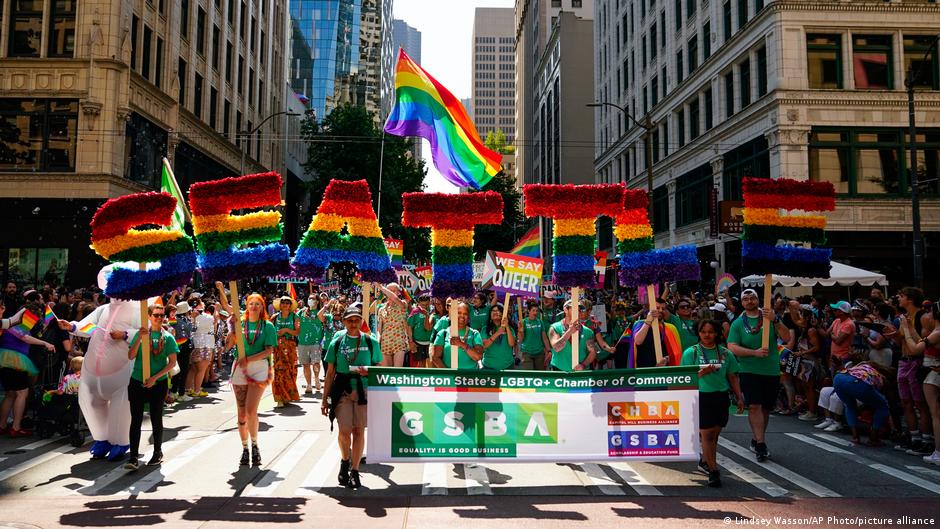
A scheduled World Cup Group G fixture between Egypt and Iran in Seattle has unexpectedly become a focal point of political and cultural tension. The match, set to determine progression to the knockout stages, was designated a 'Pride Match' by local organizers well in advance of the World Cup draw, coinciding with Seattle's annual Pride celebrations. This designation has drawn strong objections from the football federations of both Egypt and Iran, nations where LGBTQ+ rights are severely restricted, and homosexuality is criminalized.
The confluence of events highlights a complex interplay between sports, human rights, and international relations. Seattle's Pride festivities, characterized by rainbow flags, city-wide events, and colorful celebrations, will host a football match involving two countries whose legal and societal frameworks are at odds with the LGBTQ+ inclusive message. This marks the first official 'Pride Match' in World Cup history, and its participants hail from Muslim-majority nations where the LGBTQ+ community faces significant challenges, including potential criminal prosecution and, in some cases, the death penalty.
Federations Voice Strong Objections to 'Pride Match' Designation
The situation, though largely coincidental in its origin, has not been well-received by the football federations of the participating nations. The local organizing committee in Seattle had earmarked the game as a 'Pride Match' as part of a festival planned for the last weekend of June, long before the specific team matchups were known following the December group draw. However, the inclusion of the fixture within the city's Pride celebrations has prompted a unified protest from the Egyptian and Iranian football authorities.
A spokesperson for the Iranian national team conveyed to The Athletic that they are addressing the matter with considerable gravity. Both federations, emphasizing their shared cultural and religious values as 'two Muslim countries with deep cultural and religious commonalities,' have joined forces to protest the 'Pride Match' designation. This joint stance underscores their collective discomfort with the promotion of LGBTQ+ themes within the context of the World Cup.
The Iranian federation has formally urged FIFA to intervene, requesting that the organization take 'the necessary steps' to 'ensure that no such ceremonies or promotional activities take place in the stadium.' Their primary objective is to prevent the display of symbols associated with 'the movement' — their term for the LGBTQ+ community — such as rainbow flags, inside the stadium. Reports of a potential boycott or cancellation of the match have circulated for weeks, although experts consider such drastic measures improbable. The LGBTQ+ community faces intense pressure in Iran, where homosexual acts can be punishable by death, and in Egypt, where they can lead to criminal prosecution.
FIFA's Stance on Political Messages Varies by Host Nation
FIFA, the global governing body for football, has maintained its position on the matter so far. In response to inquiries from The Athletic, the organization affirmed that the World Cup is an 'inclusive event' and that fans of all sexual orientations are 'welcome' at the matches. This statement suggests that FIFA's approach to political messages often adapts to the prevailing conditions in the host countries, rather than adhering to a uniform, clear-cut policy.
This flexible stance was evident during the 2022 World Cup in Qatar, where the display of the 'One Love' captain's armband was prohibited, and fans attempting to enter stadiums with certain symbols, including the rainbow flag, were denied entry. Qatar, like Iran and Egypt, criminalizes homosexuality. In contrast, the current tournament, co-hosted by Canada, Mexico, and the United States, presents a different scenario. The stadium code of conduct for these host nations explicitly permits 'rainbow flags and other flags representing sexual orientation and gender identity.'
In Seattle, local organizers have expressed their resolve not to be swayed by the objections from the Iranian and Egyptian federations. Hedda McLendon, a member of Seattle's World Cup organizing committee, told Outsports, 'Let's welcome people to Seattle. And let's show them how proud we are.' This statement encapsulates the determination of the host city to uphold its values of inclusivity and celebrate Pride, even amidst international controversy.
Source: Original Article