
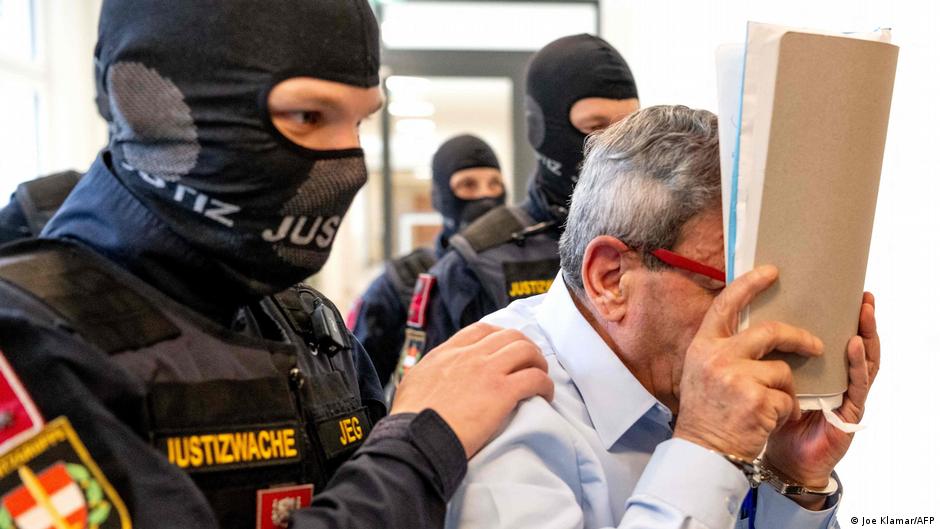
Vienna Court Delivers Verdict in Landmark Case
In a significant legal development, a court in Vienna, Austria, has issued convictions against two former Syrian security officials. The charges, which included torture and sexual assault, were brought in connection with their alleged actions against individuals perceived as opponents of the Bashar al-Assad regime. This verdict marks a notable instance of a European court prosecuting individuals for crimes committed during the Syrian conflict, utilizing principles of universal jurisdiction.
Defendants Identified as Former Intelligence Personnel
The convicted individuals were identified as former members of the Syrian security apparatus. One of the defendants held a prominent position as the former intelligence chief in Raqqa, a city that became a focal point during the early stages of the Syrian civil war. The identities of the defendants have been protected in some reports due to Austrian legal norms, but their roles within the Syrian intelligence structure were central to the prosecution's case. The court proceedings aimed to establish their involvement in systematic abuses targeting civilians and dissidents.
Charges and Evidence Presented
The prosecution presented a range of evidence, including witness testimonies from victims and defectors, to substantiate the charges of torture and sexual assault. These testimonies detailed horrific experiences within Syrian detention facilities, describing methods of abuse allegedly employed by the security forces. The court heard accounts of severe physical and psychological torment, often inflicted upon individuals solely for expressing dissent or being suspected of opposition sympathies. The scope of the alleged crimes extended beyond isolated incidents, painting a picture of widespread and systemic human rights violations.
Universal Jurisdiction: A Key Legal Principle
The Austrian court's ability to prosecute these individuals stems from the legal principle of universal jurisdiction. This principle allows national courts to prosecute individuals for certain grave international crimes, such as war crimes, crimes against humanity, and torture, regardless of where the crimes were committed or the nationality of the perpetrator or victim. In the context of the Syrian conflict, where the International Criminal Court (ICC) has been unable to intervene due to geopolitical impasses, universal jurisdiction has become an increasingly important avenue for seeking justice for victims of atrocities.
Implications for International Justice
The conviction of these former Syrian officials in Austria carries significant implications for international justice and accountability. It sends a clear message that individuals suspected of committing severe human rights abuses may face legal repercussions, even if they manage to leave the country where the crimes occurred. This case contributes to a growing body of jurisprudence in European courts where similar prosecutions have been initiated against alleged perpetrators of crimes committed in Syria. Such cases help to document atrocities, provide a measure of justice for victims, and potentially deter future abuses.
The Syrian Conflict and Human Rights
The Syrian conflict, which began in 2011, has been characterized by widespread human rights violations committed by various parties. Reports from numerous international organizations, including the United Nations, have consistently documented instances of torture, arbitrary detention, enforced disappearances, and extrajudicial killings. The targeting of political opponents and civilians has been a recurring theme throughout the conflict, leading to an immense human cost and a deep humanitarian crisis. The Austrian court's verdict underscores the international community's continued efforts to address these grave breaches of international law.
Victims' Quest for Justice
For the victims of the alleged abuses, the verdict in Vienna represents a crucial step in their long and often arduous quest for justice. Many survivors of torture and other human rights violations have sought refuge in Europe, where they have found opportunities to share their stories and participate in legal proceedings. These trials not only hold perpetrators accountable but also serve as a platform for victims to have their experiences acknowledged and validated. The emotional toll on witnesses and victims testifying in such cases is immense, highlighting their courage and determination in seeking redress.
Future Prospects for Accountability
While the Austrian case is a positive development, the broader challenge of achieving comprehensive accountability for crimes committed in Syria remains. Thousands of individuals are still missing or detained, and countless perpetrators are yet to be brought to justice. However, the increasing number of universal jurisdiction cases in Europe offers a glimmer of hope. These trials demonstrate that even in the absence of a direct international tribunal, national legal systems can play a vital role in upholding international law and providing avenues for justice for victims of mass atrocities. The ongoing efforts of human rights organizations and legal professionals are crucial in gathering evidence and supporting such prosecutions.
The Vienna verdict reiterates the international community's commitment to holding perpetrators of severe human rights abuses accountable, irrespective of their former positions or the location of their crimes. It serves as a testament to the enduring principle that such acts will not go unpunished.
Source: Original Article