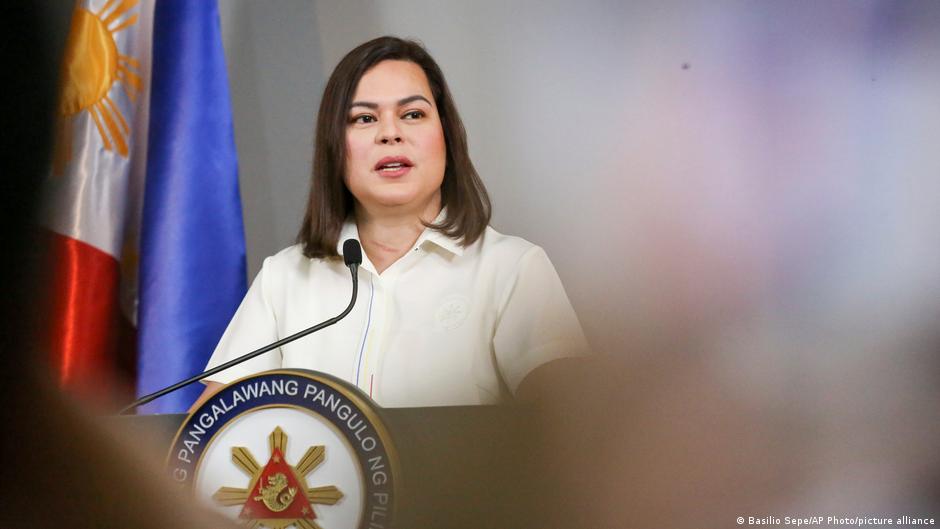
Impeachment Proceedings Against Vice President Sara Duterte Begin
The political arena in the Philippines is currently dominated by the impeachment trial of Vice President Sara Duterte, which began on Monday. The proceedings, anticipated to last for 92 days, have ignited public discourse and generated significant attention, with initial clashes reported between law enforcement, supporters of Duterte, and those advocating for her removal from office. The trial follows the House of Representatives' overwhelming approval of impeachment charges against Duterte. In May, the lower chamber, largely composed of allies of President Ferdinand 'Bongbong' Marcos Jr., voted 257 to 25, with nine abstentions, to impeach the Vice President. The articles of impeachment cite accusations of public fund misappropriation, unexplained wealth, bribery of public officials, and an alleged death threat directed at President Marcos Jr.
Vice President Duterte, who was not present at the initial proceedings, has vehemently denied all charges. Her legal counsel asserted on Monday that the impeachment case is politically motivated. Jean Franco, a political science professor at the University of the Philippines, remarked to DW that the trial is a critical test for the nation's democratic framework. "Philippine democracy is also on trial here. The public will want to be assured that the proceedings are completed and legitimate," Franco stated, underscoring the necessity for transparency and integrity in the process.
The Intricacies of Philippine Political Dynasties
Franco further elaborated on the nature of Philippine politics, noting its foundation in political families rather than stable political parties. "Philippine politics is dominated by political families rather than political parties. We don't have stable parties — we have coalitions," she explained. Sara Duterte's political journey includes serving as Mayor of Davao City, a position previously held by her father, former President Rodrigo Duterte. She then ascended to the Vice Presidency in 2022, running alongside President Marcos Jr., whose father was ousted in the 1986 People Power Revolution.
However, the alliance between Duterte and Marcos Jr. has significantly deteriorated, giving rise to a prominent feud between two of the country's most influential political dynasties. Vice President Duterte has publicly accused President Marcos Jr. of collaborating with the International Criminal Court (ICC) to facilitate the arrest of her father, in connection with charges related to the anti-drugs campaign during his 2016-2022 presidential term. In February, Duterte officially announced her intention to contest the 2028 presidential election. Despite the ongoing controversies, she maintains a notable level of public support. A survey conducted in March indicated that 51% of respondents would vote for Duterte if the presidential elections were held at that time.
Public Scrutiny and Future Political Aspirations
The public is expected to closely monitor the presentation of evidence and the conduct of the trial. "The public will be closely watching the evidence and the proceedings. Even if Sara is not convicted, her allies will ensure that that process is not damaging to her presidential aspirations," Franco observed. Dino de Leon, a human rights lawyer, commented to DW, "Ultimately, regardless of the final verdict, this will test the political capital and strength of the Dutertes."
The impeachment proceedings are unfolding against a backdrop of weeks of political turbulence within the Senate, a period colloquially referred to as #SenateFlix by netizens. This period has included dramatic events such as a reported shootout and Senator Ronald dela Rosa, a former police chief, evading an International Criminal Court (ICC) arrest warrant related to alleged crimes against humanity during the previous Duterte administration's anti-drug campaign.
Youth Perspectives on Governance and Accountability
For many young Filipinos, the impeachment trial represents a pivotal moment that could significantly influence the Vice President's political future and the perceived credibility of the nation's democratic institutions. Amid concerns over legislative regression, the dominance of political dynasties, and personality-driven politics, a segment of the youth expresses feelings of disappointment, dismay, and neglect.
Frank Araneta, a 20-year-old university student and deputy secretary general of Akbayan Youth, shared his perspective with DW: "We deserve a system, a country that upholds justice and accountability." Araneta articulated a sentiment common among his peers, stating, "We feel the youth is 'decoration' for politicians to describe the country as having a vibrant young workforce. But the issues that matter to us, like education and better governance by dismantling political dynasties, are continuously sidelined." These views are consistent with a observed decline in Duterte's approval ratings among younger demographics. A survey in May revealed a 16-point drop in her net satisfaction rating among 18 to 24-year-olds, from +49 to +33.
Source: Original Article