Spielberg's Enduring Fascination with Extraterrestrials
Filmmaker Steven Spielberg continues his long-standing exploration of extraterrestrial life with his new movie, 'Disclosure Day.' Throughout his career, Spielberg has consistently presented a vision of alien encounters as potentially profound and peaceful, a stark contrast to the more common narrative of invasion and threat. Iconic works such as 'Close Encounters of the Third Kind' (1977) and 'E.T. the Extra-Terrestrial' (1982) have profoundly influenced the science fiction genre, shaping public perception of what humanity's first contact might entail. 'Disclosure Day,' starring Josh O'Connor, reportedly aligns with this optimistic perspective, described by O'Connor as a film centered on 'hope and humanity and understanding.'
'Disclosure Day': Bridging Fiction and Evolving Realities
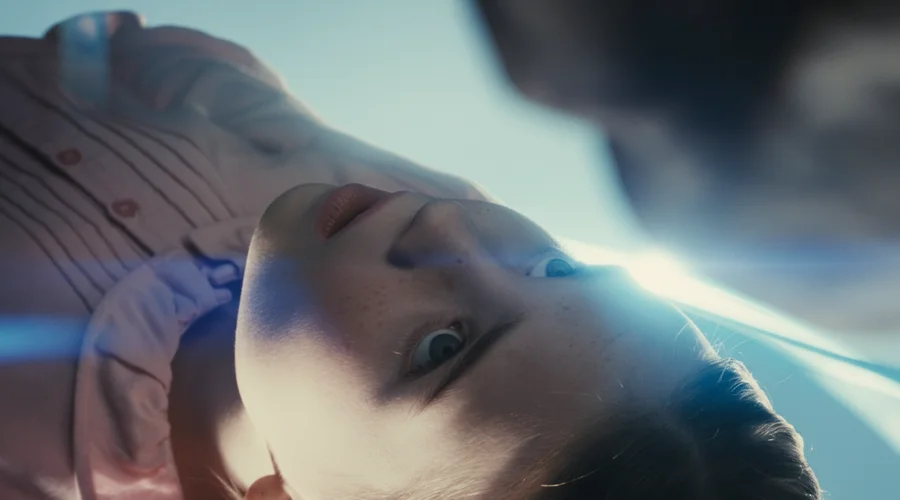
In 'Disclosure Day,' Josh O'Connor portrays a cybersecurity whistleblower determined to unveil the truth about aliens, collaborating with a Kansas City TV meteorologist, played by Emily Blunt, who experiences a mysterious extraterrestrial phenomenon during a live broadcast. For Spielberg, despite the film's classification as science fiction, 'Disclosure Day' holds a deeper resonance. In an interview with AP, he stated, 'It's much more reflective of the world as it is evolving and discoveries that are being made as we speak.' Spielberg, a self-proclaimed 'believer' since making 'Close Encounters' five decades ago, suggests that the 'overwhelming circumstantial evidence' accumulated over recent decades leads him to believe that extraterrestrials may have already attempted to communicate with humanity.
For many years, discussions surrounding unidentified flying objects (UFOs) were largely relegated to the fringes, often associated with conspiracy theories and popular culture, with most sightings attributed to natural phenomena or hoaxes. However, in recent times, the scientific community has adopted a more rigorous, data-driven approach to investigate what are now referred to as unidentified anomalous phenomena (UAPs).
Government Transparency and Scientific Inquiry into UAPs
Spielberg's inspiration for 'Disclosure Day' was partly drawn from the 2023 House Subcommittee on National Security hearing on UAPs. During this hearing, former Air Force intelligence officer David Grusch testified that the government was allegedly concealing a multi-decade UAP program focused on capturing and reverse-engineering advanced technological objects. Following these revelations, the Pentagon has released two substantial sets of declassified UAP files, with a third release anticipated. While these documents have not provided definitive proof of alien spacecraft, alien bodies, or a government reverse-engineering program, they do highlight that numerous sightings remain unexplained due to insufficient data.
The declassified files encompass decades of reports, including an account from a senior US intelligence officer detailing mysterious 'orange orbs flaring up and down.' Another notable inclusion is a video filmed by a US military drone over Syria in 2021, depicting an object that suddenly accelerates and appears to vanish. These instances underscore the ongoing mystery surrounding certain aerial phenomena.
The Scientific Imperative to Investigate Anomalies
Avi Loeb, a distinguished Harvard astrophysicist and proponent of the scientific search for extraterrestrial intelligence, emphasized the importance of scientific inquiry into these unexplained phenomena. Following the release of the second batch of Pentagon files, Loeb told DW, 'I do think it's the obligation of scientists to pay attention to anomalies, especially if they are reported by reliable authorities.'
Loeb further noted that the subject of UAPs has been extensively discussed among military personnel, intelligence officers, and high-level politicians within the US government over recent decades. He argued that even if the unknown aircraft observed in the footage were of human origin, 'if the US intelligence agencies and the Pentagon are not familiar with the kind of motion that it exhibits, at the very least it poses a national security threat, because apparently someone else on Earth was capable of developing such an object.'
Historical Alien Conspiracies and Modern Investigations
The intersection of science fiction, government secrecy, and conspiracy theories has long defined the public discourse around UFO incidents. The 1947 Roswell incident remains one of the most famous examples. After a rancher discovered unusual debris in New Mexico, the military initially announced the recovery of a 'flying disc,' only to retract the statement and identify the object as a weather balloon. This contradiction fueled decades of speculation, with later claims emerging of alien bodies and a government cover-up. The US government eventually explained the debris as originating from a classified program designed to detect Soviet nuclear tests, an explanation that many conspiracy theorists still dispute.
Area 51, a highly classified military installation used for testing advanced aircraft, is another focal point of alien conspiracies. The secrecy surrounding the base, coupled with reports of strange lights and experimental aircraft, has cemented its place in UFO mythology. During the Cold War, the US government inadvertently fueled these conspiracies by using the secrecy around Area 51 to mask its top-secret aerospace programs.
Influential alien abduction narratives also contribute to this history, such as the 1961 testimony of Betty and Barney Hill, who, under hypnosis, described being taken aboard a spacecraft and examined by nonhuman beings. More recently, the 'Tic Tac' incident involved US military pilots who, in 2004, observed a white, capsule-shaped object performing unusual maneuvers off the coast of California. Videos supporting their accounts were later made public, and government investigations acknowledged that the objects remained unidentified. Unlike older conspiracies, the Tic Tac incident incorporates radar data, military sensors, and official government reports, making it one of the most thoroughly documented modern UAP cases.
While Avi Loeb acknowledges that many sightings have been explained or debunked, he remains undeterred in his research. He posits, 'Even if one in a million objects that we look at is not from this Earth — that would be the biggest discovery ever made by humanity.' This sentiment underscores the ongoing scientific curiosity and the potential for groundbreaking discoveries in the study of UAPs.
Source: Original Article