Historic Sale of 'Gus' Sets New Fossil Auction Record
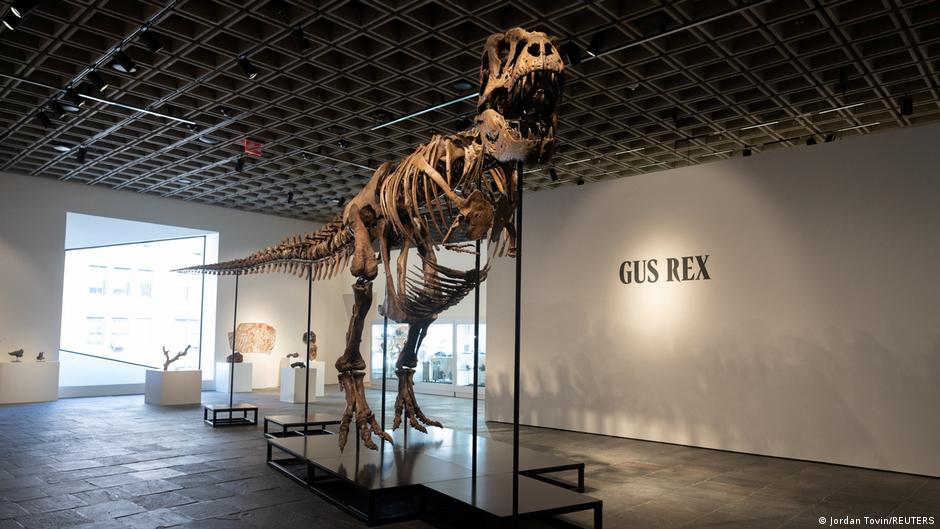
A Tyrannosaurus rex skeleton, identified as 'Gus,' has fetched an extraordinary $50.1 million (approximately €44 million) at a Sotheby's auction in New York. The sale, which concluded on Tuesday, established a new global record for a dinosaur fossil, significantly surpassing pre-sale expectations and previous auction highs. The intense bidding war lasted for approximately ten minutes, involving seven distinct bidders, and ultimately concluded with an anonymous buyer securing the prehistoric specimen.
This remarkable transaction eclipses the prior record held by 'Apex,' a Stegosaurus skeleton that sold for $44.6 million at Sotheby's in 2024. The 'Gus' skeleton is estimated to be approximately 61% complete by bone count, comprising 183 fossilized bone elements and an additional 30 gastralia, commonly known as belly ribs, according to details provided by Sotheby's.
Discovery and Significance of 'Gus'
The remains of 'Gus' were unearthed in 2021 on a cattle ranch situated in South Dakota. The ranch was formerly owned by the late Gary "Gus" Licking, after whom the fossil was subsequently named. Ahead of the auction, Cassandra Hatton, Sotheby's vice chairman and global head of science and natural history, highlighted the exceptional nature of this discovery. "Gus is one of the biggest and most complete T. rex ever found," Hatton stated, emphasizing its significance within paleontological findings.
The skeleton measures an impressive 38 feet (11.6 meters) in length and dates back to the Late Cretaceous period, approximately 67 million years ago. Hatton further elaborated on the unique attributes that made 'Gus' particularly stand out to experts and collectors alike. She cited "the completeness, the quality, the size, the preservation," as well as the meticulous effort invested in the excavation and preparation of the fossil, as key factors contributing to its rarity and value.
The Expanding Market for Dinosaur Fossils
The record-breaking sale of 'Gus' underscores a noticeable expansion in the market for dinosaur fossils. This growing interest, particularly from private collectors, has led to increasingly higher prices for significant specimens. While the financial value of these fossils continues to climb, it also sparks ongoing discussions within the scientific community regarding the implications of such sales.
Some scientists have voiced concerns that the acquisition of these invaluable specimens by private individuals or entities could potentially limit public access for research and educational purposes. The debate revolves around balancing the commercial interests of the auction market with the imperative of preserving scientific heritage for broader study and exhibition in public institutions. The sale of 'Gus' is expected to further fuel this discussion, as more paleontological discoveries enter the private market.
The increasing prominence of such auctions highlights a dynamic shift in how these ancient relics are valued and circulated, moving them from solely scientific contexts into the realm of high-value collectibles. This trend not only reflects a fascination with prehistoric life but also raises questions about the future accessibility of significant fossil discoveries for scientific advancement and public engagement.
Source: Original Article