Widespread Demonstrations in Albania Spark Debate Over Democratic Principles
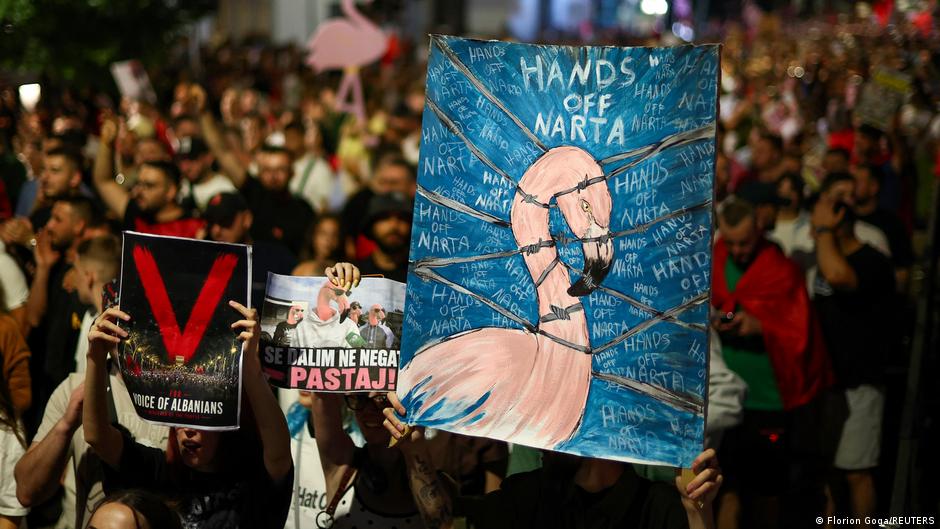
For several weeks, Albania has been the scene of significant public demonstrations, drawing international attention to the country's political landscape. These protests have been marked by large gatherings of citizens expressing a range of grievances and aspirations. The participants in these movements frequently articulate a desire for enhanced democratic governance and a more robust adherence to the rule of law within the country.
Conversely, the Albanian government, led by Prime Minister Edi Rama, has presented a contrasting interpretation of the events. The Prime Minister has publicly stated that these protest activities are not organic expressions of popular discontent but rather elements of what he describes as a 'hybrid war' aimed at destabilizing the nation. This characterization suggests an external or manipulated influence behind the protests, rather than a purely domestic origin.
Roots of the Protests: A Complex Tapestry of Grievances
Understanding the motivations behind the ongoing Albanian protests requires an examination of several interconnected factors. A primary concern frequently voiced by demonstrators centers on allegations of corruption. Public perception of corruption within governmental institutions and among political elites has been a long-standing issue in Albania. Protesters argue that this perceived corruption undermines public trust, distorts economic opportunities, and erodes the foundations of a fair and equitable society. The demonstrations serve as a platform for citizens to demand greater transparency and accountability from their elected officials and public administration.
Beyond corruption, issues related to governance and the functioning of democratic institutions are also prominent. Critics of the current government often point to what they perceive as a concentration of power, a weakening of checks and balances, and insufficient opportunities for genuine political opposition. These concerns are rooted in a broader discussion about the health of Albania's democratic system, a system that has been evolving since the post-communist transition.
Economic factors also play a role in fueling public discontent. Despite some economic growth, Albania continues to face challenges such as high unemployment rates, particularly among youth, and significant economic disparities. Many citizens express frustration over limited economic prospects, a lack of perceived social mobility, and the impact of economic policies on their daily lives. These economic pressures can often exacerbate other grievances and contribute to a general sense of dissatisfaction with the status quo.
The Government's Stance: Allegations of 'Hybrid War'
Prime Minister Edi Rama's assertion that the protests constitute a 'hybrid war' introduces a different dimension to the narrative. This term, typically used in geopolitical contexts, suggests a multifaceted conflict involving a combination of conventional and unconventional tactics, including disinformation campaigns, cyber attacks, and the manipulation of social unrest. By framing the protests in this manner, the government implies that the demonstrations are not solely a reflection of internal dissent but are potentially orchestrated or exploited by external actors or internal groups with malicious intent.
This perspective raises questions about the government's approach to dissent and its willingness to engage with the concerns raised by protesters. Critics of the government's stance argue that labeling protests as a 'hybrid war' can serve to delegitimize genuine citizen grievances and potentially justify a more robust response to suppress demonstrations. It also shifts the focus from internal issues to perceived external threats, potentially diverting attention from the underlying problems that might be contributing to public unrest.
International Scrutiny and Future Implications
The protests in Albania have not gone unnoticed by the international community. Observers from various international organizations and diplomatic missions are closely monitoring the situation, often emphasizing the importance of upholding democratic principles, including the right to peaceful assembly and freedom of expression. The European Union, with which Albania holds candidate status, places a strong emphasis on rule of law, anti-corruption efforts, and the strengthening of democratic institutions as key conditions for its integration process.
The ongoing situation presents a critical juncture for Albania. The manner in which the government responds to the protests, and how the protesters continue to articulate their demands, will have significant implications for the country's political stability, its democratic development, and its aspirations for further European integration. The dialogue between the government and civil society, the transparency of political processes, and the commitment to addressing the root causes of discontent will be crucial in navigating these challenges.
Ultimately, the protests in Albania underscore the complexities of democratic transitions and the continuous efforts required to build and maintain robust democratic institutions. The differing interpretations of the events by the protesters and the government highlight a fundamental disagreement over the nature of the challenges facing the country and the appropriate path forward.
Source: Original Article