Examining German Participation at the St. Petersburg International Economic Forum
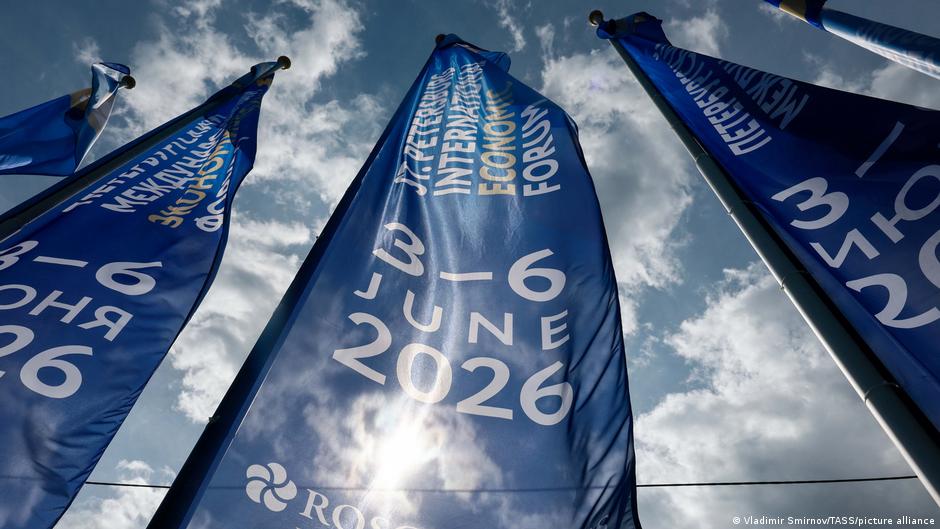
The St. Petersburg International Economic Forum (SPIEF), which commenced on June 3, marks the fifth iteration of the event since Russia’s full-scale invasion of Ukraine in 2022. Historically, SPIEF served as a crucial platform for securing substantial investment agreements with international corporations. In the pre-conflict era, the European Union was a primary economic partner for Russia, and the forum consistently attracted high-profile Western political figures, business leaders, and senior executives. However, in the wake of Russia's military actions in Ukraine, major Western economies significantly curtailed their ties. Consequently, the most prominent foreign attendees at SPIEF have increasingly originated from nations that are no longer considered key economic partners for Moscow. This year's forum, for instance, features leaders such as Uzbekistan's Shavkat Mirziyoyev and Tanzania's Samia Suluhu Hassan, who are slated to participate in a joint panel alongside Russian President Vladimir Putin.
Dissecting Claims of a German Delegation
In the days leading up to the forum, Russian media and officials generated headlines by suggesting a resurgence of German business engagement at SPIEF. Kirill Dmitriev, Putin's special envoy for investment and economic cooperation with foreign countries, expressed anticipation for a “large delegation of German companies” in St. Petersburg. Similarly, the Russian business daily Kommersant reported that “Germany is sending an official business delegation” to the event for the first time in many years. Nevertheless, a closer examination reveals that no such official German delegation is present, and the companies attending appear to have minimal direct ties to Germany's broader corporate landscape.
Individual German Connections and Their Russian Operations
Among the individuals listed in the official SPIEF program is Thomas Bruch, a shareholder in the German retail chain operator Globus and a notable figure among Germany's wealthiest individuals. Bruch, ranked 2,386th on the 2026 Forbes Billionaires List with an estimated net worth of $1.7 billion (€1.4 billion), is attending the forum. However, a spokesperson for Germany's Globus Holding clarified that Bruch is not participating on behalf of the German entity. Furthermore, it was emphasized that since January 2025, the company's Russian stores are no longer affiliated with Globus Holding, which manages supermarkets in Germany and the Czech Republic. Instead, Bruch is representing Russian Hyperglobus, an entity that exclusively operates hypermarkets within Russia. His participation, according to the spokesperson, aims to “maintain business contacts and exchange views with representatives of the business community and government agencies.”
Another German participant, Stefan Dürr, has extensive business roots firmly embedded in Russia. His Ekoniva Group stands as one of Russia's largest milk producers. Dürr's connection to Russia began in 1989 during an internship near Moscow, leading him to cultivate buckwheat and millet in the country. In an interview with the Financial Times last year, Dürr attributed a significant portion of his company's growth to Russia's 2014 embargo on EU products, which was imposed in response to Western sanctions following the annexation of Crimea. The Swiss newspaper Neue Zürcher Zeitung reported in 2023 that Dürr himself had advised Putin on implementing this ban. Beyond his German nationality, Dürr has also held Russian citizenship since 2013, a fact corroborated by numerous reports. A spokesperson for Ekoniva confirmed Dürr's attendance at the St. Petersburg forum but did not provide details regarding the purpose of his visit.
Leo Eppinger, another entrepreneur mentioned in the SPIEF program, holds both Russian and German citizenships, according to the business verification platform SPARK Interfax. After graduating from a Moscow university in 2016, Eppinger assumed leadership of the Russian office of the German-Swedish joint venture Metalock Engineering, as indicated on his social media profiles. Following the onset of the Russian invasion of Ukraine, Metalock Engineering ceased all collaboration with its Russian subsidiary. A spokesperson for Metalock Engineering stated that the company currently “has no business relations with Masterlock, the company founded by Mr. Eppinger.” Masterlock Engineering, registered in the Moscow region, identifies itself as the “full successor” of Metalock Rus, the Russian branch of German-Swedish Metalock. Its focus is on repairing industrial equipment in Russia and CIS countries. The Russian branch of Metalock Engineering was rebranded as Masterlock Engineering in 2024. Leo Eppinger did not respond to inquiries. Polina Sharova, confirmed as a forum participant, owns Hermes-Ural, an industrial equipment manufacturer based in Yekaterinburg. Her primary connection to Germany stems from acquiring the Russian assets of the German industrial group Viessmann Climate Solutions after the invasion of Ukraine. Neither Hermes-Ural nor Viessmann provided comments.
The Broader Context of German-Russian Economic Ties
The St. Petersburg Economic Forum also includes several lawmakers from Germany's far-right Alternative for Germany (AfD) party, holding positions in the European Parliament, the German Bundestag, and various regional parliaments. Holger Friedrich, owner of the German daily newspaper Berliner Zeitung, is also attending. Additionally, former German Chancellor Gerhard Schröder was observed in Moscow on the eve of the forum, though his potential attendance at the St. Petersburg event remains unconfirmed. The composition of what Russian officials and media characterize as a “German delegation” largely mirrors the current state of economic relations between the two countries. Sanctions, corporate withdrawals, and a significant decoupling from Russian energy have had a profound impact. In 2025, bilateral trade plummeted below €10 billion, a sharp decline from nearly €60 billion recorded in 2021. The German-Russian Chamber of Commerce, a Moscow-based lobbying group independent of the German government, refrained from commenting on the German participants at the meeting, citing DW's status in Russia. Russia designated DW as an “undesirable” organization in December as part of its broader crackdown on independent media, making any cooperation with such an entity a criminal offense under Russian law.
Source: Original Article