Yad Vashem's Mission to Preserve Holocaust Memory in Germany
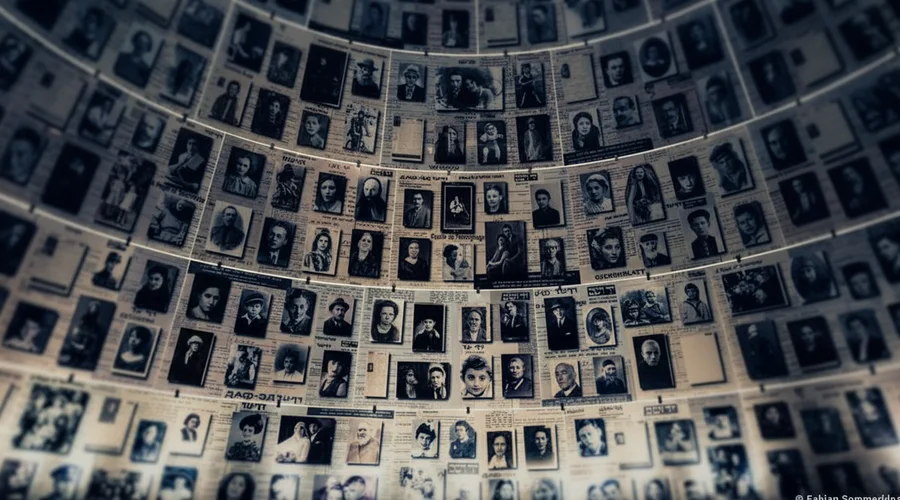
Yad Vashem, Israel's official memorial to the victims of the Holocaust, is poised to open its first international branches in Germany. This move is primarily motivated by a growing concern that awareness of the Holocaust is diminishing, particularly among younger demographics in the country where it originated. The institution's name, derived from the biblical phrase 'And to them I will give... a monument (Yad) and a name (Shem) — an everlasting name that shall not perish,' underscores its dedication to remembrance.
A 2025 study conducted by the Jewish Claims Conference highlighted significant gaps in Holocaust knowledge among young adults in Germany. The survey revealed that approximately 10 to 12% of individuals aged 18 to 29 had never encountered the term 'Holocaust,' and roughly 40% in this age group were unaware that six million Jews were systematically murdered during the Nazi era. These findings serve as a key impetus for Yad Vashem's decision to establish educational centers in Munich and Leipzig.
Addressing Fading Memory and Rising Antisemitism
Dani Dayan, chairman of Yad Vashem, clarified the institution's objectives in Germany. He stated that while their primary goal is to educate about the Holocaust, this educational endeavor inherently contributes to combating antisemitism and strengthening democratic values. Dayan explicitly linked the rise of certain political parties with roots in Nazi ideology, such as the AfD, to the necessity of their work. He emphasized that education is a critical tool in confronting the resurgence of antisemitism, which he observes as becoming a 'lingua franca' for extremists globally in an increasingly polarized world.
Antisemitism has a long and tragic history, stretching back over two millennia. Jews have been subjected to scapegoating during Roman crises, labeled 'killers of God' by Christians, and targeted by medieval myths of 'ritual murder,' leading to show trials and violent pogroms. This historical trajectory culminated in the racist ideology that fueled the Holocaust. Dayan expressed dismay that, despite the devastation wrought by the Shoah, antisemitism has not been eradicated, contrary to his earlier hopes for a prolonged period free from such hatred.
Strategic Locations and Educational Approach
The decision to open the first Yad Vashem education center in central Munich was partly influenced by the city's robust security infrastructure. While Munich's historical significance as the birthplace of the Nazi movement was not the sole determining factor, the center will be located in a building on Karolinenplatz, which formerly housed the Nazi Party's Supreme Party Court. A second branch is planned for Leipzig, with both locations intended to serve audiences across Germany, not just Bavaria and Saxony.
Dayan stressed the importance of presenting the Holocaust from the Jewish perspective, focusing on the experiences of victims and survivors, particularly in Germany, the 'land of the perpetrators.' Unlike traditional museums, the Yad Vashem centers will not feature exhibits with original artifacts. Instead, they are envisioned as interactive educational hubs. Meron Mendel, a German-Israeli journalist and director of the Anne Frank Educational Center in Frankfurt, has raised questions regarding the decision to establish new centers rather than integrating Yad Vashem's efforts into existing Holocaust education institutions in Germany.
Navigating Political Sensitivities and Institutional Independence
The announcement of Yad Vashem's expansion into Germany has been met with broad enthusiasm from German politicians, including members of the AfD. However, Mendel voiced concerns about Yad Vashem's independence, suggesting that as a state institution, it might be influenced by the current Israeli government, which he described as dominated by far-right politicians. He argued that such influence could lead to a definition of antisemitism that encompasses criticism of Israel, thereby reflecting a specific political agenda.
Dani Dayan, who previously chaired the Yesha Council (an organization representing Jewish settlers in occupied Palestinian territories) and served as Israel's consul general in New York, has faced scrutiny regarding the potential politicization of Yad Vashem since his appointment in 2021. He maintains that he has established a 'virtual firewall' between himself and politics, asserting the sacred nature of his mission. Dayan vehemently denies Mendel's accusations of politicization, stating that Yad Vashem, while a state institution, is not a governmental institution and operates with complete independence. He cited instances where Yad Vashem has taken positions contrary to the Israeli government, and noted that attempts by the Netanyahu government to remove him in 2023 were thwarted with support from the scholarly community.
The Urgency of Remembrance in a Post-Eyewitness Era
For Dayan, the imperative to expand Yad Vashem's reach is driven by the impending reality that the last Holocaust survivors are passing away. He emphasized that future generations will not have the profound experience of hearing survivors recount their stories firsthand. While acknowledging the limitations of artificial intelligence in filling this void, Yad Vashem is exploring innovative, immersive methods, such as theatrical productions and large-scale projections, to emotionally connect visitors with the destroyed Jewish world of the Holocaust.
Dayan expressed concern that the absence of eyewitnesses could embolden Holocaust deniers. He drew a crucial distinction between the 1930s and the present day: while the world is not identical to the 1930s, it is moving in a similar direction. However, unlike the past, contemporary society cannot claim ignorance, as the atrocities of the Holocaust serve as an undeniable historical precedent. This knowledge, he argued, eliminates the 'privilege' of believing that such events could not happen again, underscoring the enduring relevance and urgency of Holocaust education.
Source: Original Article