Rising Tide of Anti-Muslim Incidents in Germany
A recent report has shed light on the pervasive nature of anti-Muslim racism in Germany, describing it as an almost daily reality for many individuals. The findings, presented by experts, detail a concerning rise in various forms of prejudice, including insults, discrimination, and violence. Critics argue that policymakers need to address this growing issue more effectively.
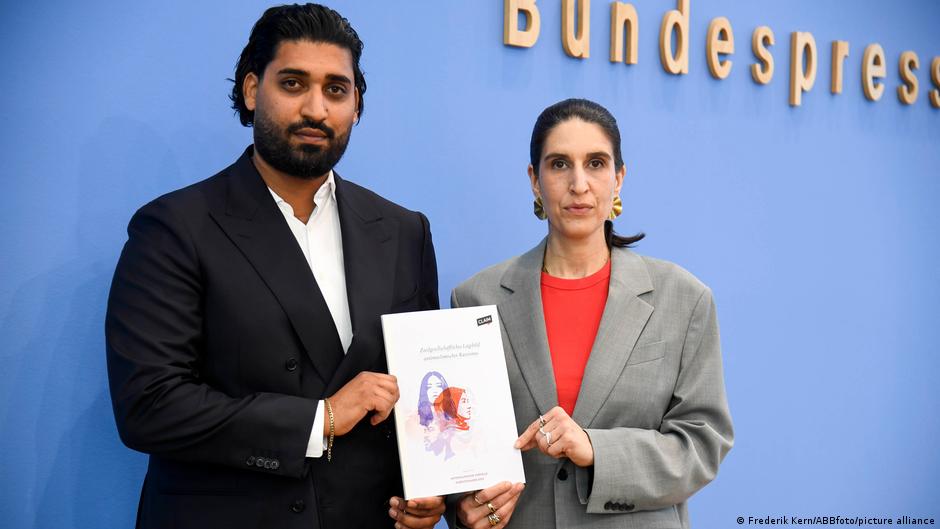
Said Etris Hashemi, 29, a key figure in the presentation of the 2025 report on anti-Muslim incidents, underscored the human impact behind the statistics. “The numbers are not just statistics. Behind every number is a face; behind every incident is a story,” Hashemi stated in Berlin. His personal experience profoundly shapes his advocacy. On February 19, 2020, Hashemi narrowly survived a right-wing extremist attack in Hanau, near Frankfurt, which claimed the lives of nine people with immigrant backgrounds, including his younger brother. Hashemi, the son of Afghan refugees, is now an active member of the 'February 19 Hanau Initiative,' an organization dedicated to preserving the memory of the victims and combating xenophobia. He emphasized that the Hanau murders serve as a stark reminder of where “exclusion, dehumanization, and racist stereotypes can lead.” Hashemi also holds the position of national chair for the Association of Binational Families and Partnerships.
Key Findings from the 2025 Report
The annual “Civil Society Assessment of Anti-Muslim Racism,” compiled by the Coalition Against Islamophobia and Anti-Muslim Hostility (CLAIM), is a comprehensive 90-page document. The 2025 report meticulously records 4,096 anti-Muslim incidents across Germany, marking a substantial increase of over a thousand incidents compared to the previous year's 3,080 cases in 2024.
The breakdown of these incidents reveals a troubling pattern:
- Over 60% of documented incidents (2,379 cases) were verbal attacks.
- 840 cases involved discrimination.
- 680 cases encompassed other harmful behaviors, including physical assaults and property damage.
The report also detailed severe acts of violence, documenting two homicides, 214 cases of bodily injury, four cases of aggravated assault or attempted murder, and five cases of arson. Furthermore, religious institutions were targeted, with 61 attacks on mosques out of a total of 64 incidents. These attacks ranged from bomb threats against mosque communities and the distribution of inflammatory flyers to the defacement of a university prayer room with a swastika.
To produce its assessment, CLAIM meticulously analyzed data from 38 counseling and documentation centers across 15 of Germany's 16 states. The organization also incorporated data on politically motivated crimes, media reports, and direct accounts from those affected. Crucially, incidents were recorded irrespective of whether they met the threshold for criminal prosecution, prioritizing the experiences and perspectives of the victims.
Societal Impact and Calls for Action
Rima Hanano, one of CLAIM’s executive directors, highlighted how Muslim individuals are often depicted “primarily as perpetrators, but not as victims of exclusion and violence.” She warned of the profound consequences for those targeted, explaining that experiences of racism foster a sense of “not belonging” and erode trust in political institutions. Hanano stressed that addressing discrimination and violence is fundamental to the “very core of our democracy,” and noted that various forms of racism—Islamophobia, antisemitism, and xenophobia—are currently “at an extremely high level.”
CLAIM has urged German policymakers to take decisive action, recommending enhanced support and protection for victims, improved investigation and prosecution of anti-Muslim hate crimes, and the establishment of more comprehensive counseling services.
Hope for the Future Generation
Despite the grim statistics, Said Etris Hashemi expresses optimism regarding the younger generation. In his work, he frequently visits schools to engage with students about their experiences. He acknowledges that “anti-Muslim racism in Germany is not a marginal phenomenon, but a reality for many people.” However, he sees potential for positive change among young people. “I myself have very high hopes for the new generation. I can see it, too — the way they grow up together, come from different places and backgrounds, yet all share a common goal: To graduate from school. That connects them in a whole new way, and that's why I'm firmly convinced that the next generation might do even better than we do.”
Hashemi views himself as a role model for adolescents from immigrant families. He believes they see him as someone with a similar background who has overcome challenges to achieve a platform where his voice can be heard. “They see me as someone with a migrant background who grew up no differently than they did, who perhaps also comes from a socially disadvantaged neighborhood and has somehow managed to speak on big stages or sit at tables where, as someone with that kind of background, you wouldn't necessarily be invited,” he explained.
Source: Original Article