China's Deep Space Ambitions Advance with Tianwen-2 Mission
The Chinese Tianwen-2 space probe has successfully completed its approximately 400-day journey, reaching its designated target, the near-Earth asteroid Kamo'oalewa. This achievement, announced by the China National Space Administration (CNSA), represents a pivotal moment in China's ongoing efforts to expand its capabilities in deep-space exploration. The mission, which commenced in May 2025, is China's inaugural attempt to retrieve samples from an asteroid, a scientific endeavor previously undertaken by Japan and the United States.
Scientists worldwide anticipate that analyzing asteroid samples can yield crucial information regarding the genesis and subsequent evolution of our solar system. These celestial bodies, primarily rocky fragments orbiting the sun, are considered primordial remnants, offering a window into the conditions that prevailed billions of years ago.
The Tianwen-2 Mission and its Target: Kamo'oalewa
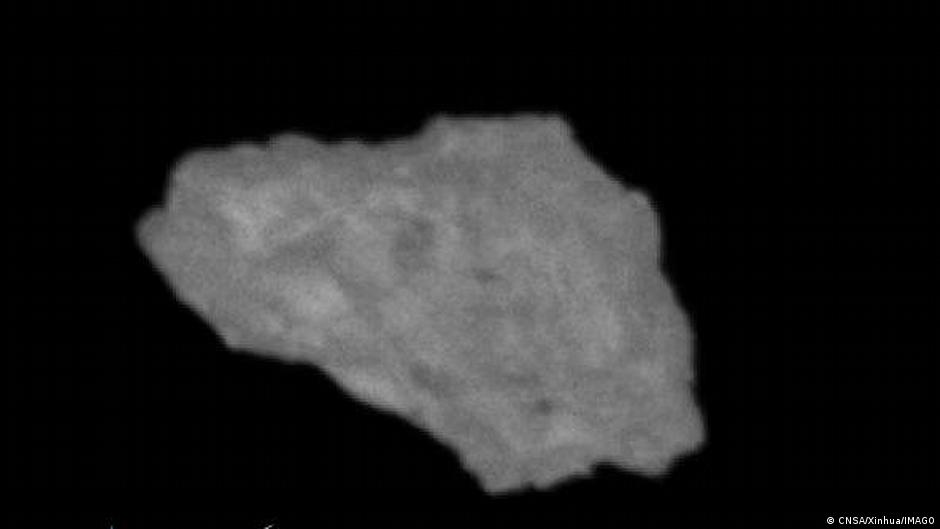
Upon its arrival, the Tianwen-2 probe established a position approximately 20 kilometers (12 miles) from Kamo'oalewa, also identified as 2016 HO3. This asteroid is relatively small, measuring only a few dozen meters (yards) in diameter. Discovered in Hawaii in 2016, Kamo'oalewa is characterized as a 'quasi-satellite' of Earth. This classification stems from its unique orbital path around the sun, which closely mirrors Earth's, maintaining a near-synchronous relationship with our planet.
The CNSA has outlined the next phases of the mission, stating that the probe will embark on a detailed scientific exploration of the asteroid. This phase will involve collecting data on Kamo'oalewa's morphological features, its material composition, and its internal structural characteristics. The comprehensive data gathered during this period is intended to establish a robust foundation for the subsequent and critical sample collection operations.
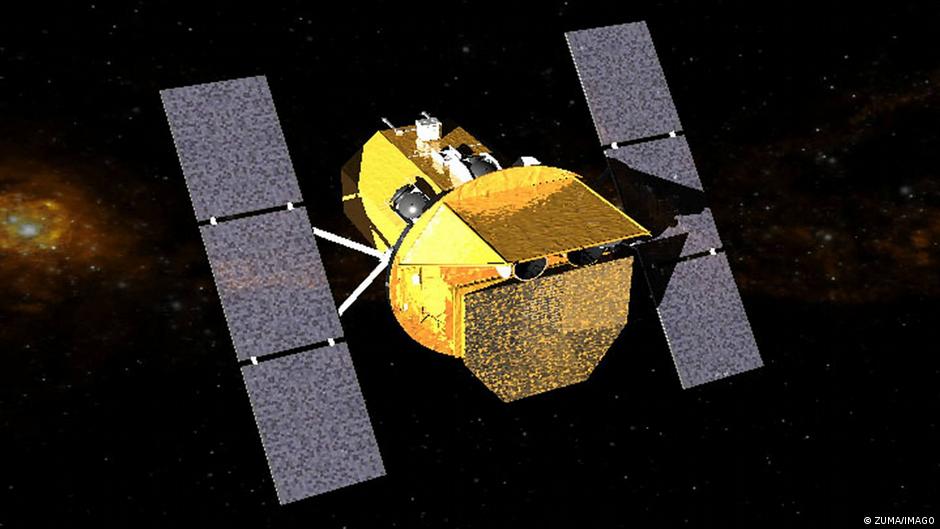
The Tianwen-2 probe was launched into space aboard a Long March-3B Y110 rocket, a testament to China's advancing capabilities in space launch technology.
Sample Return and Extended Mission Objectives
Following the successful collection of samples, the Tianwen-2 mission is designed to deploy a specialized module. This module will be tasked with transporting the precious asteroid samples back to Earth, with their anticipated arrival scheduled for late 2027. This return journey marks a significant logistical and technological challenge, requiring precise navigation and re-entry procedures.
Beyond its primary objective at Kamo'oalewa, the main Tianwen-2 spacecraft is slated for an extended mission. After concluding its operations at the asteroid, it is projected to journey further into space, heading towards a comet located within the asteroid belt. This ambitious extension is part of a broader mission plan that is expected to span approximately a decade, underscoring China's long-term commitment to deep-space exploration and scientific discovery.
China's Expanding Space Program and Global Context
The Tianwen-2 mission is a component of China's rapidly expanding space program, which has seen substantial financial investment over recent years. President Xi Jinping has frequently articulated what he terms the nation's "space dream," emphasizing the strategic importance of space exploration to China's national development and international standing. This vision includes not only scientific advancement but also potential future applications such as asteroid mining, a concept that envisions extracting valuable resources from celestial bodies.
Globally, China is actively working to position itself as a leading power in space exploration, aiming to rival or even surpass the capabilities of established space agencies in the United States and Europe. While Japan and the U.S. have previously achieved asteroid sample returns, China's current mission signifies its determined effort to catch up in this specialized field. The European Union and the U.S. have also been pushing forward with numerous missions beyond the moon, further intensifying the competitive yet collaborative landscape of international space endeavors.
Source: Original Article