Unveiling the Universe's Dawn: Euclid's Latest Discoveries
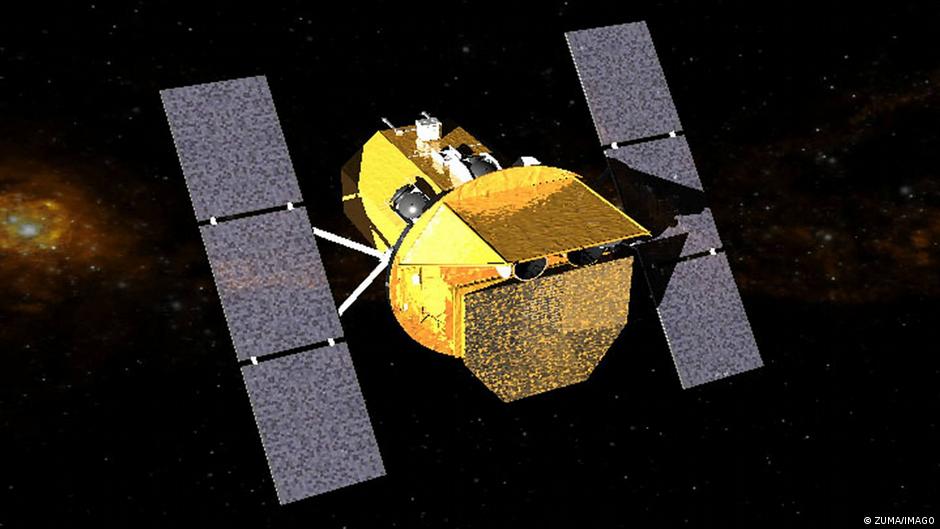
The European Space Agency's (ESA) Euclid space telescope, launched in 2024, has made significant strides in mapping the cosmos, with its latest findings offering an unprecedented look into the early universe. Astronomers have announced the detection of two of the oldest quasars ever located, alongside a broader collection of 29 other ancient quasars. These celestial objects provide a unique opportunity to study the universe when it was merely 670 million years old, representing the first 5% of its estimated current age.
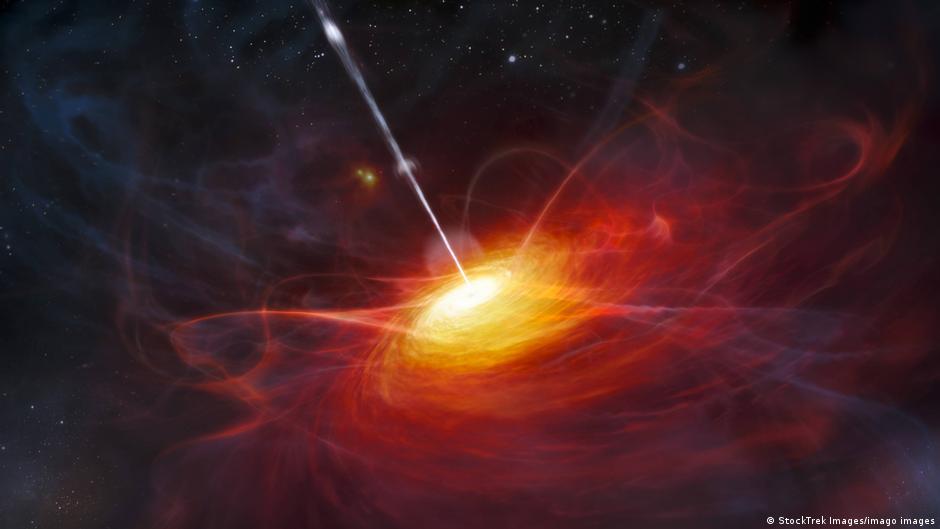
Quasars, often described as cosmic time machines, are exceptionally luminous galactic nuclei powered by supermassive black holes. Their immense brightness allows their light to travel across vast cosmic distances and eons, reaching Earth from the universe's nascent stages. By analyzing this primordial light, astrophysicists can deduce critical information about the formation and evolution of early galaxies and the supermassive black holes residing within them, including those similar to the one at the center of our Milky Way.
The Challenge of Quasar Detection
Detecting these distant and ancient light sources presents considerable challenges. Quasars are incredibly far away, both spatially and temporally, making them difficult to distinguish from closer, less significant celestial objects like stars. However, their unique spectral signatures and extreme distances provide invaluable data for understanding the universe's initial conditions and its subsequent development.
According to Daming Yang, lead author of a recent study detailing these discoveries, Euclid's capabilities represent a significant leap forward in quasar hunting. "Before, we could only find a handful of the very brightest ancient quasars, but Euclid lets us search far more efficiently across huge areas of [the night sky] to capture much fainter light. It's a unique tool for quasar hunting," Yang stated. This enhanced observational power has allowed researchers to more than double the known number of such ancient quasars, a feat that previously took over a decade for astronomers to achieve for only 10 quasars with similar characteristics.
Introducing the Ancient Quasars
Among the newly identified quasars, the two most ancient are designated EUCL J172902.75+641018.1 and EUCL J125308.55+705432.3. Several of the quasars discovered by Euclid exhibit a redshift of 7 or higher, a critical indicator of their immense distance and, consequently, their age. Redshift is a phenomenon where light from distant objects appears shifted towards the red end of the electromagnetic spectrum due to the expansion of the universe.
This concept can be compared to the Doppler Effect observed in sound waves. Just as the pitch of an ambulance siren changes as it moves towards or away from an observer, the wavelength of light from distant cosmic objects is stretched as the universe expands. When an object is moving away, its light waves are elongated, or 'redshifted.' For these ancient quasars, their light has traveled for billions of years across an expanding universe, causing their wavelengths to stretch significantly into the red zone of the spectrum, hence their 'redshifted' appearance.
"This finding more than doubles the number of quasars we know of that are so ancient," noted Antonio La Marca, an ESA Research Fellow involved with the Euclid team. "It took astronomers more than a decade to discover the first 10 quasars with redshifts of 7 or higher. The Euclid telescope has discovered more than that in a single year of operation."
The ability of Euclid to efficiently detect these faint, distant light sources marks a new era in cosmological research. By providing a clearer picture of the universe's early stages, these discoveries contribute significantly to our understanding of how galaxies and their central supermassive black holes co-evolved, ultimately leading to the cosmic structures we observe today, including our own Milky Way galaxy.
The ongoing mission of the Euclid telescope promises further revelations, continuing to push the boundaries of our knowledge about the universe's origins and its intricate evolutionary path.
Source: Original Article